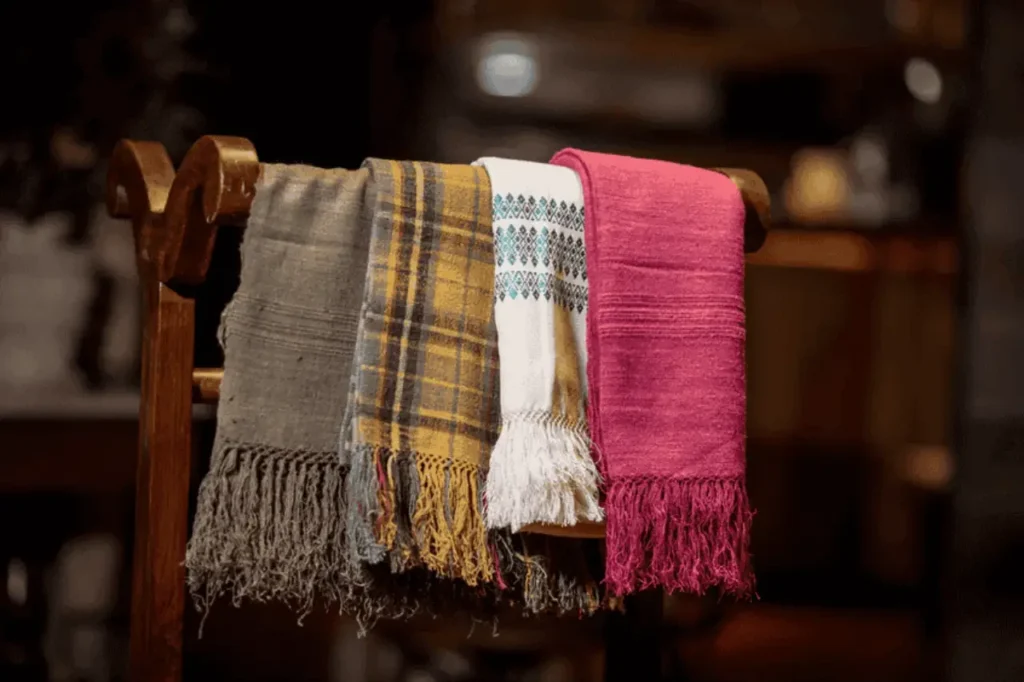
Meghalaya has achieved a milestone by securing a Geographical Indication (GI) tag for Ryndia—its hand-spun, hand-woven, naturally dyed and organically produced fabric—and for its broader suite of Meghalaya hand-loom products. This recognition not only safeguards the heritage craftsmanship of the state but also positions these textiles as distinct cultural and economic assets.
The achievement is the outcome of a sustained four-year effort led by the Department of Textiles, Government of Meghalaya, in close partnership with NABARD and textile-expert Dr. Rajnikanth. Back in February 2021, the journey formally began when Umden-Diwon was recognised as Meghalaya’s first Eri-silk village, setting the tone for the larger mission of preserving and promoting indigenous textile traditions.
A delegation—comprising officials of the Textiles Department, representatives from the Meghalaya Ryndia Producers Association and practising weavers—attended the final Consultative GI Group meeting in Kolkata on 20 November 2024, which paved the way for the official registration.
What makes Ryndia special is more than its craftsmanship: it’s a symbol of sustainable, women-driven weaving rooted in the distinctive culture of Meghalaya. The fabric is woven ethically—often without harming silkworms—and dyed using natural sources. The GI tag (for Ryndia: GI Tag No. 1112; for Meghalaya Khasi hand-loom products: GI Tag No. 1113) formally recognises the unique origin and authenticity of these textiles.
This recognition is expected to have multiple benefits. For one, it protects these hand-loom products from imitation. For another, it enhances their market visibility, both nationally and internationally—opening pathways for export, premium pricing, and a more sustainable livelihood for the weaving communities, many of whom are women.
Chief Minister Conrad K. Sangma hailed the GI tag as a major step forward in Meghalaya’s vision to build “Brand Meghalaya” rooted in its cultural identity and craftsmanship. He noted that this recognition reaffirms the state’s commitment to supporting the handloom and sericulture sectors, which provide livelihoods to thousands of artisans—many of them women—whose skills and creativity sustain one of Meghalaya’s most cherished traditions.
With this new recognition, Meghalaya’s centuries-old weaving heritage stands on the brink of a vibrant revival. The GI tag is not merely a label—it is an affirmation of authenticity and pride. It transforms Ryndia and other handloom products into global ambassadors of the state’s artistry and sustainable ethos. These fabrics, hand-spun and naturally dyed, embody the rhythm of the hills, carrying forward stories of resilience, creativity, and community that continue to define Meghalaya’s cultural soul.