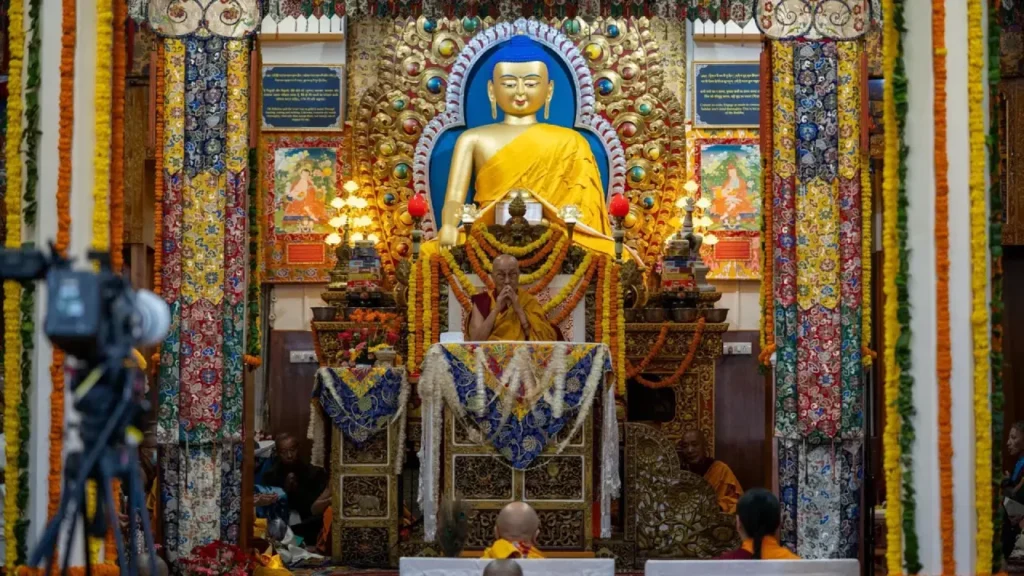
In a powerful message of unity and resilience, Tibetan youths from across the globe gathered to celebrate the 90th birthday of His Holiness the 14th Dalai Lama, turning the occasion into both a spiritual offering and a political statement. On September 10 2025, the Tibetan Youth Tenshug (TYT) offered a Long Life Prayer at the Dalai Lama’s temple in Dharamsala—an event that brought together over 5,000 registrants from 33 countries, with more than 1,000 young Tibetans participating in person and thousands more joining online.
Guided by Dorjee Lopon, His Eminence Namkhai Nyingpo Rinpoche, and blessed by the presence of His Eminence Avikrita Rinpoche, the Tenshug ceremony reflected not only devotion but also defiance. It was a declaration from the youth of Tibet—those in exile and those still under occupation—that they will safeguard their cultural and spiritual inheritance despite Beijing’s attempts to erase it.
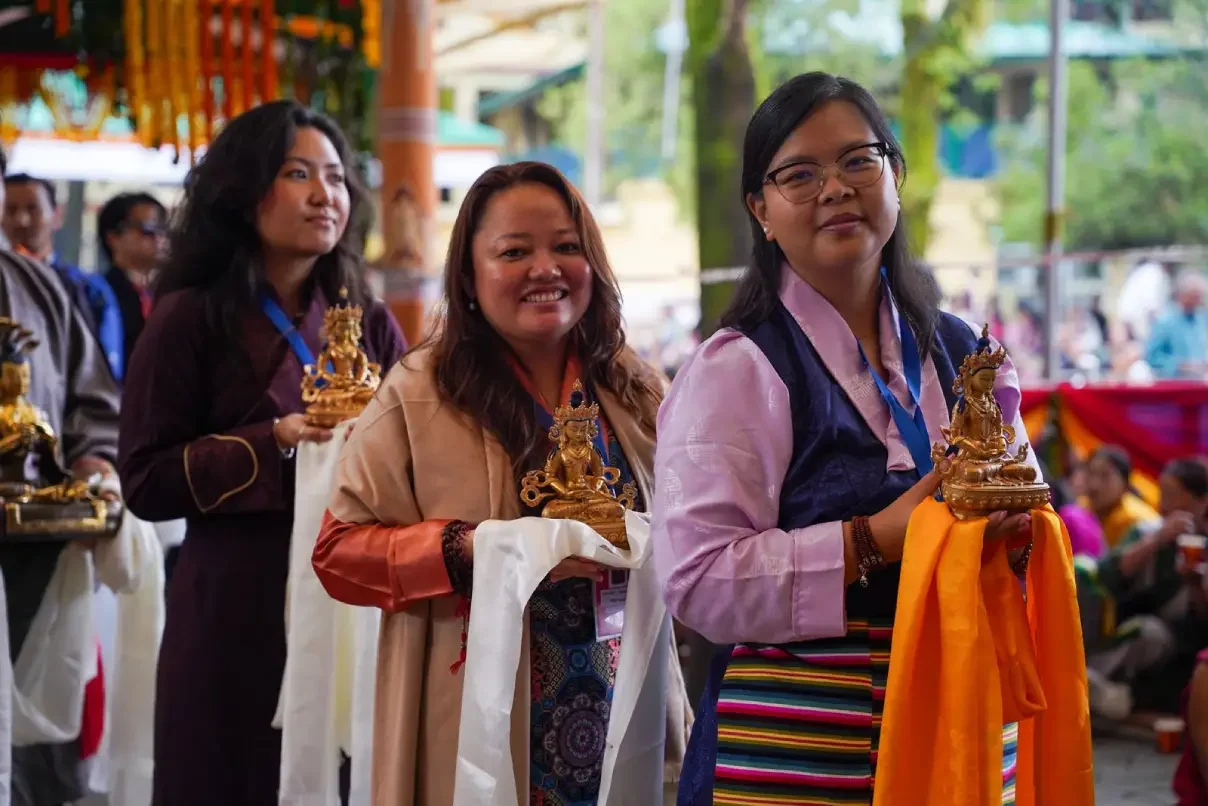
The offerings were deeply symbolic: the traditional Mandala for long life, prayers to Amitayus, Ushnish Vijaya, and White Tara, tributes to the great Nalanda masters, and a custom thangka embodying the pledges of over 5,000 young Tibetans. Each act of devotion was simultaneously a call for His Holiness’s continued guidance and a reminder of the collective pledge to uphold the Tibetan cause. “This Tenshug embodied the collective spirit of gratitude, reverence, and dedication,” said TYT president Dawa Choezom. “It was truly inspiring to witness young Tibetans come together with unwavering commitment to preserve our identity and heritage.”
The celebrations carried profound weight. Just weeks earlier, on July 2, the Dalai Lama had issued a statement that shook Beijing and inspired Tibetans everywhere—declaring unequivocally that the authority to recognise his reincarnation rests solely with the Gaden Phodrang Trust, his own office, and with no other entity.
This bold assertion reaffirmed the right of Tibetans to determine their spiritual destiny, free from Chinese interference. Messages of support poured in from across the Tibetan diaspora, from Buddhist communities in Mongolia, Russia, and even within mainland China. Most poignantly, appeals came from Tibetans inside Tibet, carried “through various channels,” urging His Holiness to ensure the continuity of the institution.
For Tibetan youth, the timing was significant. Their Long Life Prayer was not only a spiritual offering but also an expression of solidarity with this historic proclamation. By praying for His Holiness to live beyond 130 years, they were also pledging to carry forward his four priorities: promoting universal ethics, fostering interfaith harmony, preserving Tibetan language and culture, and reviving ancient Indian knowledge of the mind and emotions.
The TYT initiative now extends beyond ritual into mobilisation. It asks every participant to pledge something tangible in their own lives—whether through cultural preservation, community work, or advocacy—as a promise to His Holiness and to themselves. In this way, tradition is woven into modern activism, and spirituality becomes the foundation for political resilience.
The Tenshug was not an end but a beginning. It set the stage for a three-day Tibetan Youth Festival from September 11-13, themed Damtsik – Pledge, Drelam – Dialogue, Gahzom – Gathering and Celebration. Through dialogue, cultural exchange, and shared commitment, the festival underscored the vital role of Tibetan youth in shaping the movement’s future.
The celebrations continue later this month, when on September 20 His Holiness will attend a Long Life Cultural Performance at the Main Tibetan Temple in Dharamsala, offered by Buddhist communities from Southeast Asia and Korea. But already, the message has been delivered: Tibet’s youth, bound by faith and united across borders, are ready to carry the torch.
On His 90th birthday, they reminded the world—and China in particular—that while political power may occupy land, it cannot extinguish spirit. The future of Tibet lies in the resolve of its younger generation, whose pledges on this day have bound them inseparably to their leader, their culture, and their cause.