As Bangladesh navigates the political turbulence that has gripped the country since the fall of Sheikh Hasina’s government on August 5 last year, a new and unsettling trend is taking root. Hardline religious groups operating under the banner of Tawhidi Janata have begun asserting themselves with growing confidence, capitalising on the political uncertainty to expand their influence through aggressive public mobilisation.
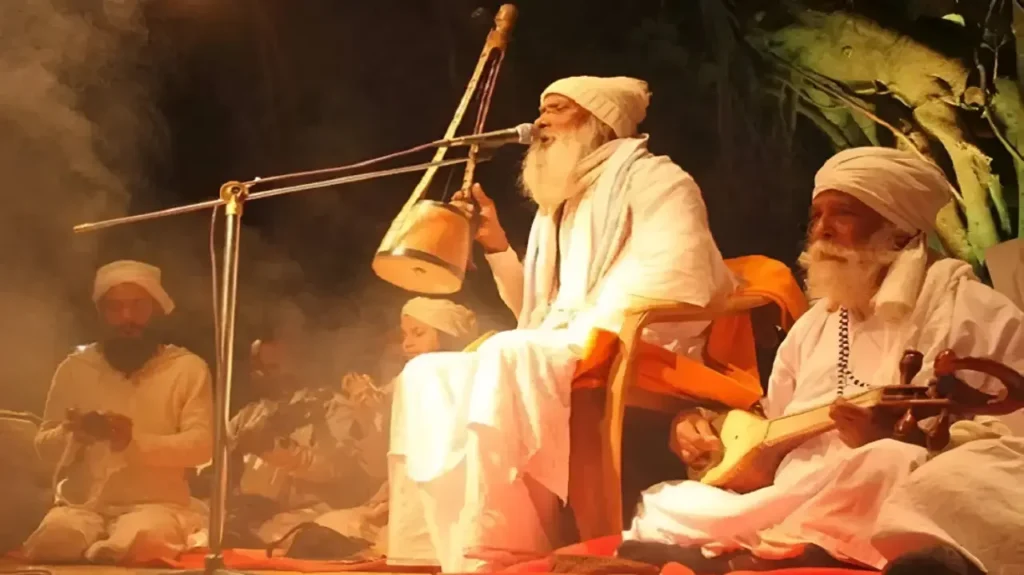
This shift took a disturbing turn in Manikganj, a district on the outskirts of Dhaka, where followers of Baul singer Abul Sorkar were violently attacked during what had begun as a peaceful demonstration. The incident has triggered widespread alarm that Bangladesh’s centuries-old syncretic traditions — embodied in the Baul philosophy of spiritual openness and cultural plurality — are now under organised assault.
A clash that cuts to the heart of Bangladesh’s identity
The violence in Manikganj is being seen by many as more than a local confrontation. It marks one of the most serious confrontations in recent decades between conservative religious activists and the Baul community — custodians of a Sufi-inspired school of thought rooted in tolerance, free inquiry and the rejection of dogma.
At the centre of the controversy lies Abul Sorkar, a Baul artist from Saturia whose performances often weave spiritual poetry with critiques of rigid orthodoxy. On November 20, Sorkar was arrested after a video — widely circulated on social media and believed by supporters to have been selectively edited, possibly using AI — portrayed him as insulting Islam during a Palagaan performance.
A criminal case was swiftly filed by the imam of Ghior Bazar Mosque and four others, and Sorkar was taken into custody that same night. But instead of quelling tensions, the arrest fueled them.
When protest turned into pursuit
On Sunday morning, Baul followers assembled near the Shahid Miraj-Tapan Stadium demanding Sorkar’s release. Almost simultaneously, hundreds of Tawhidi Janata supporters marched through Manikganj, calling for his punishment — some even chanting calls for the slaughter of Bauls.
Witnesses recount how the crowd swerved toward the Baul gathering, unleashing violence. Several Baul singers were beaten, while others leapt into a roadside waterbody to flee the mob, only to be pelted with stones as they tried to swim to safety. Local reports suggest at least ten Baul supporters were injured.
Police eventually intervened, but many criticised the security forces for failing to act decisively as the assault unfolded.
A manufactured outrage — or a cultural battleground?
Supporters of Sorkar insist that the viral video misrepresented his philosophical commentary on creation, arguing that Baul traditions frequently engage in theological exploration and metaphor. They claim that the entire incident may have been engineered to incite anger and mobilise conservative factions.
Civil society leaders argue that this fits a larger pattern since the Yunus-led interim administration took office. With Yunus navigating a fragile political landscape, critics say fundamentalist groups have gained ground due to inconsistent state responses and an unwillingness to confront religiously charged mobs.
Cultural scholars warn that Baul practices — recognised by UNESCO as part of Bangladesh’s intangible human heritage — have long been targets for puritanical activists. But the current escalation is unprecedented. Within weeks of the interim government taking charge, religious hardliners reportedly obstructed women’s football events in Joypurhat and Dinajpur. The Manikganj assault appears to signal a dangerous broadening of that campaign.
A nation speaks out
The Manikganj attack has sparked widespread condemnation.
Former Communist Party leader Ruhin Hossain Princé accused the authorities of enabling “mob-driven policing of cultural expression.” Women’s rights activist Khushi Kabir described the assault as an attack on Bangladesh’s “cultural soul,” warning that the boundaries of artistic freedom are rapidly being redrawn.
In Dhaka, Baul-Sufi practitioners, writers and cultural activists rallied outside Parliament, demanding Sorkar’s release and denouncing the government’s silence. “This is not about one artist,” said a Sufi organiser. “This is about defending a humanist tradition that has shaped this land for centuries.”
The National Citizens’ Party (NCP) echoed these concerns, calling for a neutral investigation and warning that allowing crowds to dictate cultural boundaries could undermine the rule of law and erode Bangladesh’s pluralistic foundations.
A turning point for Bangladesh’s cultural future
The violence in Manikganj has intensified a growing sense of unease about the country’s cultural direction. Analysts warn that Bangladesh’s syncretic identity—shaped over centuries by Sufism, folk spirituality and diverse philosophical traditions—is entering a precarious moment. With Baul practitioners increasingly vulnerable and hardline groups asserting doctrinal authority on the streets, the space for cultural pluralism is narrowing at an alarming pace.
Security observers caution that the state’s failure to respond decisively to mob-driven religious mobilisation risks normalising vigilantism. In the current climate of political uncertainty, fundamentalist networks appear emboldened, creating an environment in which artistic expression and spiritual diversity can quickly be criminalised.
As Abul Sorkar remains behind bars, his case has become emblematic of a much larger struggle — one that will determine whether Bangladesh continues to uphold its pluralistic heritage or drifts toward a more intolerant social order. The government’s handling of the investigation, its willingness to curb mob violence, and its commitment to protecting vulnerable cultural communities will all be critical indicators of the direction the nation is heading.
For now, the Baul community remains shaken but resolute. They see themselves not only as musicians, but as guardians of Bangladesh’s spiritual humanism, warning that without the Baul philosophy, the country risks losing a core part of its cultural soul.