A series of coordinated night-time arson attacks on Hindu homes in southeastern Bangladesh has intensified fears of rising Islamist extremism, as minority communities accuse authorities of failing to halt violence that has escalated under the country’s interim administration led by Nobel laureate Muhammad Yunus.
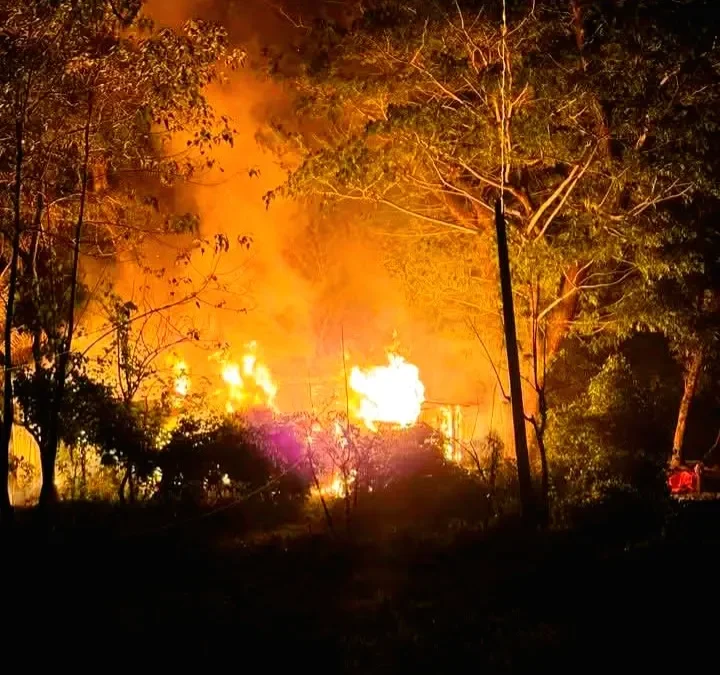
At least seven houses belonging to Hindu families were set ablaze over the past five days in Raozan, a sub-district of Chattogram, according to police and local residents.
In the latest attack, early on Tuesday, assailants locked families inside their homes before setting them on fire, forcing victims to tear through tin walls and bamboo fencing to escape. Eight people narrowly survived.
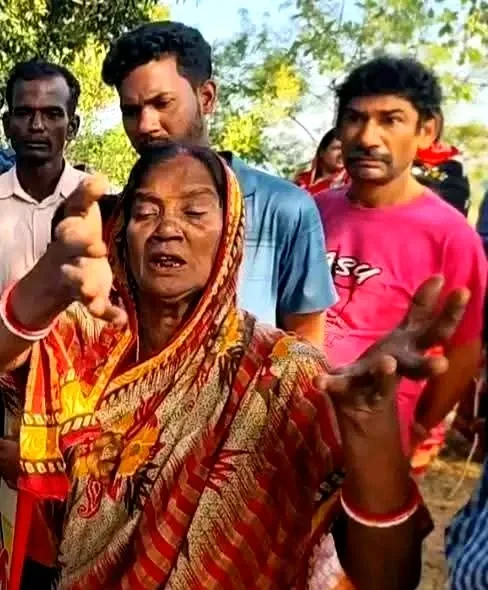
“They locked us in from outside and poured kerosene,” said one survivor from Sultanpur village, requesting anonymity for fear of reprisals. “This was not theft. This was an attempt to kill us.”
The attackers left behind a handwritten banner openly threatening the Hindu community, warning residents to halt all activities deemed “against Islam” or face the destruction of their homes, property and businesses.
The banner declared that Hindu residents were under constant surveillance and that “no one will be able to protect you” if the warning was ignored.
Community leaders described the message as a clear call to sectarian violence.
“This is organised Islamist terror, not random crime,” said a priest of the area.
“The intent is intimidation, displacement and collective punishment.”
The attacks follow a consistent pattern, residents said: strikes after midnight, doors locked from outside, accelerants used, and escape routes blocked.
In one earlier incident on Dec. 22, a Hindu family’s home was burned to the ground, killing household pets and destroying all belongings. Police confirmed the similarity.

“Two houses were burned early today and the pattern matched previous attacks,” Raozan Police Station Officer-in-Charge Sajedul Islam said addung, “We are investigating with utmost importance.”
Earlier attacks were reported on Friday in Keotia village and on Saturday in Dheuapara, where the homes of Bimal Talukdar and Rubel Dash were torched in the same manner, according to local officials.
The violence comes amid growing concern among the minority communities that Islamist groups have become increasingly emboldened since the collapse of the previous government and the formation of the interim administration headed by Yunus.
While Yunus has pledged to restore stability and protect minority rights, the civil society platforms say extremist networks have exploited the political vacuum.
“Since the interim government took power, there has been a visible surge in religious vigilantism,” said a senior lawyer of Bangladesh Supreme Court . “Local administrations appear hesitant, and that hesitation is being read by extremists as permission.”
Bangladesh’s Hindu population, which makes up around 8% of the country’s 170 million people, has long faced periodic violence, often triggered by rumours, elections or geopolitical tensions.
Upazila Nirbahi Officer SM Rahatul Islam visited the affected families said, “Once the investigation report is received, the motive behind this sabotage will become clear,” he said.
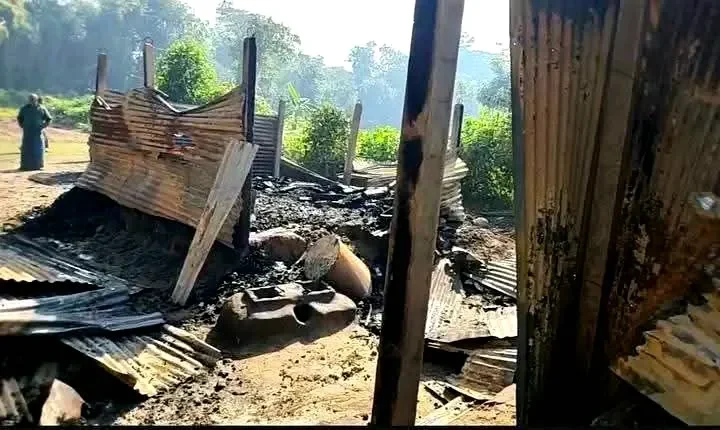
But residents dismissed the assurances. “We hear the same words every time,” said a Hindu shopkeeper in Raozan. “The houses burn. Banners appear. Then silence.”
Social media posts from the area condemned the attacks as “narokiyo tandob” — barbaric terror — questioning whether minorities are safe even within their own country.
“We survived this time,” one victim said. “But we don’t know about the next fire.”
The Raozan arson attacks come amid mounting concern over a surge in Islamist violence since the Yunus-led interim administration took power.
They follow the killing of Dipu Chandra Das, a Hindu man lynched in Bangladesh’s Mymensingh district recently after allegations of blasphemy.
Das, a young garment factory worker living in the Dubalia Para area of Bhaluka upazila, had sought police protection after being accused of making derogatory remarks about the Prophet Muhammad, according to local journalists.
Instead, on the night of Dec. 16, he was compelled to resign by factory supervisors, expelled from his workplace and subsequently delivered to an Islamist mob, which beat him to death.
His body was later publicly suspended and set on fire by Islamist radicals—an episode that the Supreme Court lawyer said epitomised a climate of impunity in which religious extremism has metastasised amid administrative inertia and the erosion of state authority.