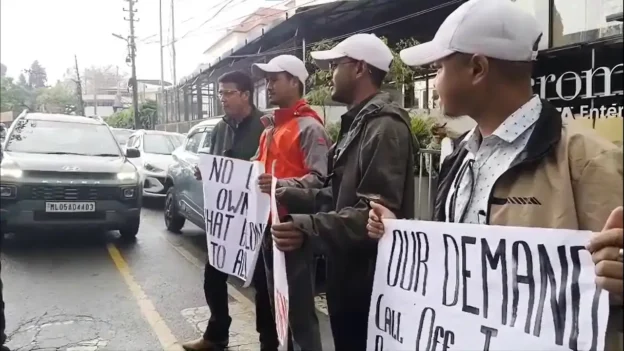
The Coordination Committee of Tribal Organisations of Assam (CCTOA) has rejected the recommendations of the Assam government’s Group of Ministers to grant Scheduled Tribe (ST) status to six communities—Tai Ahom, Chutia, Moran, Motok, Koch-Ranbongshi and Tea Tribes—describing the proposal as unconstitutional, legally unsustainable and harmful to the rights of existing Scheduled Tribes in the state.
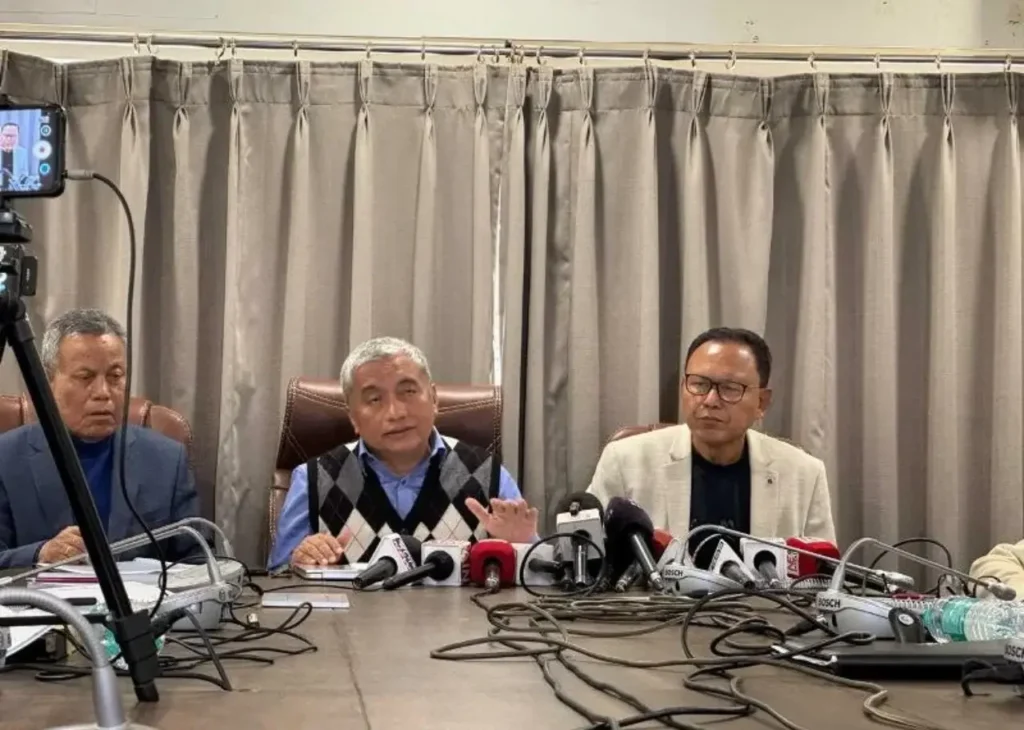
The decision was taken following a consultative meeting chaired by Suhas Chakma, founder of the Rights and Risks Analysis Group (RRAG). The CCTOA said the recommendations violate established constitutional principles governing the identification of Scheduled Castes (SCs) and Scheduled Tribes (STs).
The committee emphasised that under the Constitution of India, SCs and STs are two distinct and separate categories. While Scheduled Castes are identified on the basis of their position in the Hindu caste hierarchy, Scheduled Tribes are recognised on the basis of specific tribal characteristics such as distinctive culture, geographical isolation, limited contact with the wider society and socio-economic backwardness. These criteria were clearly laid down in the Lokur Committee Report of 1965, which continues to guide the identification of STs.
Referring to past classifications, the CCTOA pointed out that in 1993 the Assam government, following research by the Assam Institute of Research for Tribals and Scheduled Castes, had recommended all six communities as Other Backward Classes (OBCs). This classification was subsequently notified by the National Commission for Backward Classes. Once identified as OBCs or Scheduled Castes, the committee argued, these communities cannot be reclassified as Scheduled Tribes by the same government for political considerations.
On the Koch-Rajbongshi issue, the CCTOA underlined that Koch and Rajbongshi are not a single homogeneous community. It stated that Koch communities were identified as Scheduled Castes in West Bengal under the Constitution (Scheduled Castes) Order, 1950, while Rajbongshis are indigenous to Assam. This crucial distinction, it said, was ignored by the Group of Ministers, and a community recognised as a Scheduled Caste in one state cannot be classified as a Scheduled Tribe in another.
The committee also relied on historical constitutional records to support its position. It noted that none of the six communities were included in the Constitution (Scheduled Tribes) Order, 1950, which was based on the 1947 Joint Report of the Bordoloi–Thakkar Sub-Committee submitted to the Constituent Assembly. The Lokur Committee of 1965 similarly did not recognise Tai Ahoms, Chutiyas, Morans or Mataks as Scheduled Tribes, identifying them instead as part of the mainstream Assamese population.
On Tea and Ex-Tea Garden Tribes, the CCTOA recalled that every major committee since Independence has opposed the grant of ST status. The Bordoloi–Thakkar report had categorically stated that tea garden labourers brought from other parts of India could not be treated as tribes of Assam, a position reiterated by the Lokur Committee.
The CCTOA further questioned the credibility and independence of expert committees whose recommendations were cited by the Assam government. It said members of these committees were nominated by organisations representing the claimant communities themselves, making the findings non-independent. It also pointed out that while an Ethnographic Expert Committee had recommended Scheduled Caste status for 38 out of 74 Tea and Ex-Tea Garden communities, the state government proposed ST status for all 74, contrary to expert findings.
A major legal concern highlighted by the committee relates to the constitutional ceiling on reservations. Citing the Supreme Court’s landmark judgment in Indra Sawhney vs Union of India (1992), which capped reservation at 50 per cent, the CCTOA noted that Assam already provides 59 per cent reservation across categories. Inclusion of additional communities in the ST list could push the total reservation beyond 70 per cent, rendering it unconstitutional and directly reducing the proportionate share of reservations available to existing Scheduled Tribes.
The committee argued that the primary objective behind the demand for ST status is political reservation, particularly in Panchayats, Autonomous Councils, Autonomous District Councils and the State Legislative Assembly, where OBCs have no reserved seats. It maintained that the six communities already enjoy educational and employment benefits through OBC reservations and various autonomous and development councils.
Granting ST status, the CCTOA warned, would severely erode the political representation of existing Scheduled Tribes at the Panchayat, Autonomous Council, Autonomous District Council, State Assembly and Parliamentary levels. Proposals to compensate by reserving parliamentary seats such as Kokrajhar and Diphu, it said, do not address the wider destruction of ST political rights.
Terming the recommendations illegal and unconstitutional, the CCTOA said they violate assurances given by an all-party delegation of the Assam Legislative Assembly that any extension of ST status would not affect the rights of existing Scheduled Tribes. On these grounds, the committee announced its categorical rejection of the proposal.