Anyone scanning Bangladesh’s newspapers today — in Bengali or English, print or online — will encounter a common theme: mounting alarm over firearms, political violence and the state’s ability to maintain order ahead of the national elections scheduled for February 12.
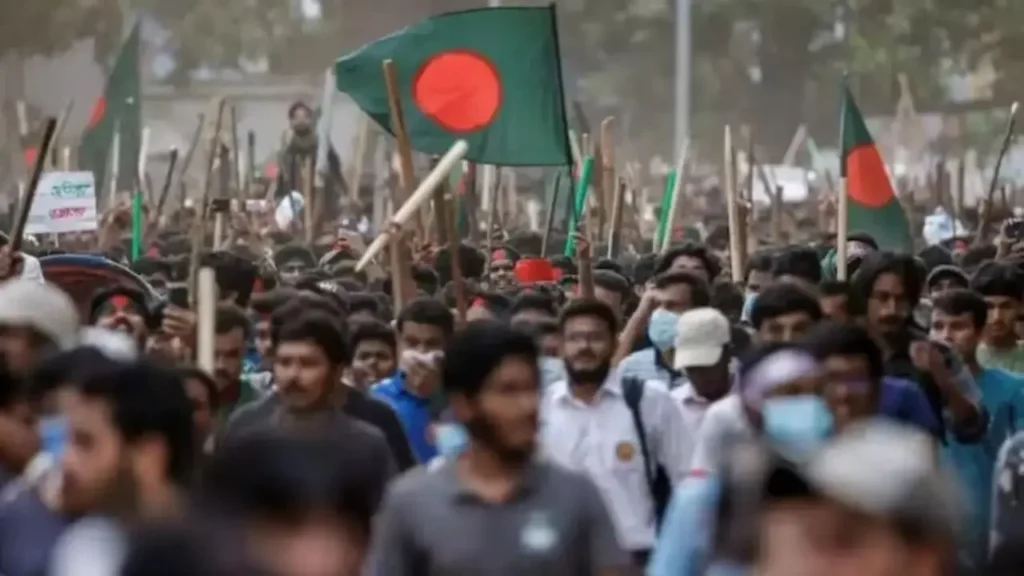
What should have been a routine democratic exercise has instead become one of the most serious governance challenges facing the interim administration led by Professor Muhammad Yunus. The government took office following the ouster of former Prime Minister Sheikh Hasina’s Awami League administration during the student-led uprising of August last year.
As Bangladesh moves toward its 13th parliamentary election, warnings from frontline administrators, police officials and human rights organisations suggest the country is entering one of its most volatile pre-election periods since parliamentary democracy was restored in the early 1990s, following the fall of military ruler Hussain Muhammad Ershad in December 1990.
At the centre of these concerns is a combustible mix: the widespread availability of illegal firearms, a sharp rise in mob violence, unchecked digital disinformation and visible strain across law enforcement and judicial institutions. Together, these factors raise fundamental questions about whether the state can guarantee basic security before, during and after the vote — and whether a credible election can be conducted under such conditions.
The most immediate threat is the proliferation of illegal arms, a problem that has intensified during the period of interim rule. The violence and political upheaval of July–August last year continue to cast a long shadow over Bangladesh’s security landscape.
During that period, more than 5,700 firearms and large quantities of ammunition were looted from police stations and security installations across the country — an unprecedented breach of the state’s monopoly on force. Authorities say roughly 70 to 80 percent of those weapons have since been recovered. Yet more than 1,300 police-issued firearms, along with significant stocks of ammunition, remain unaccounted for, according to official sources.
Security officials warn that these weapons are no longer dormant stockpiles. They are actively circulating through criminal networks, political muscle groups and local power brokers, and are increasingly being used to influence electoral outcomes.
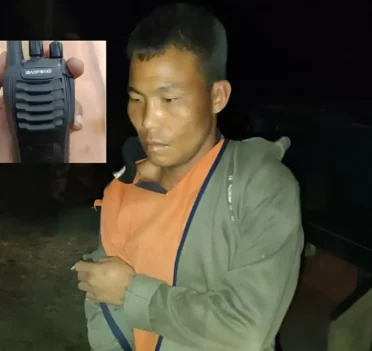
Field-level police officers have identified at least 25 active arms-smuggling routes, particularly along Bangladesh’s borders with India and Myanmar. In major urban centres — including Dhaka, Chattogram, Narayanganj and Khulna — shootings linked to political rivalry, extortion and turf wars have surged in recent weeks, just as the election campaign gathers pace.
Several candidates and political activists have been wounded or killed, reinforcing fears that violence is becoming an accepted instrument of electoral competition rather than an aberration.
Against this backdrop, the interim government’s decision to allow selected candidates and “important persons” to retain or obtain firearm licences during the election period has generated widespread unease. Traditionally, all licensed firearms were required to be deposited with authorities ahead of polling.
Officials argue that the policy is necessary to protect candidates facing credible threats. Critics, however, warn that it risks normalising armed politics in an already volatile environment — precisely when de-escalation is most urgently needed.
Election-related violence is only part of the picture. Over the past year, Bangladesh has witnessed a sharp rise in mob attacks and public lynchings — a trend that human rights organisations describe as both alarming and deadly.
According to the Human Rights Culture Foundation, deaths from mob violence rose from 126 in 2024 to 460 in 2025 — nearly a threefold increase. Ain o Salish Kendra documented 197 such deaths last year, while another rights group recorded 168. Despite differences in methodology, all reached the same conclusion: mob violence has become more frequent, more lethal and increasingly normalised.
Victims are often accused of petty crimes, political dissent or alleged moral transgressions. Others include members of religious minorities and cultural communities, such as shrine caretakers and Baul practitioners.
Several high-profile incidents — including attacks carried out in the presence of police — have raised serious questions about deterrence and political will. Rights groups accuse the interim administration of failing to act decisively, arguing that official rhetoric portraying mobs as “pressure groups” has weakened criminal accountability.
For many analysts, the rise in mob justice reflects a deeper erosion of public confidence in formal institutions. Where citizens perceive the justice system as ineffective or compromised, collective violence fills the void.
Beyond physical violence, state officials have repeatedly warned of what they describe as a looming “digital insurgency”.
Social media platforms are expected to play a decisive role in shaping — and potentially destabilising — the election. Police and civil administrators caution that rumours, fabricated videos, AI-generated content and coordinated disinformation campaigns could inflame communal tensions, delegitimise candidates or suppress voter turnout.
Bangladesh has experienced this dynamic before, particularly in instances where online religious rumours rapidly translated into offline violence.
Monitoring and countering such threats has become more difficult following reported constraints on the operational capacity of the National Telecommunication Monitoring Centre since last year’s political transition. In a highly polarised environment, digital narratives often move faster than institutional responses — sometimes with deadly consequences.
One of the most sensitive issues raised by field officials is the perceived role of the judiciary.
Administrators have publicly urged the Election Commission to engage with the courts over what they describe as routine or “blanket” bail granted to identified criminals and militants. The issue highlights a long-standing tension within Bangladesh’s governance framework, where executive and security agencies often express frustration when judicial decisions are seen as undermining law enforcement efforts.
Navigating this friction without eroding judicial independence will be one of the most delicate challenges facing the state during the election period.
Police officials have also spoken candidly about political interference, lobbying on behalf of accused criminals and a lack of institutional backing. One senior officer summarised the dilemma starkly: “Those who give speeches by day, lobby by night.”
Caught at the centre of these pressures is the Election Commission, which is struggling to assert its authority in an environment shaped by armed groups, digital manipulation and political manoeuvring beyond its direct control.
The commission has instructed field officials to adhere strictly to neutrality, professionalism and legal frameworks, while stepping up coordination with the military and law enforcement agencies. Joint operations to recover illegal weapons and stabilise high-risk areas have been ordered.
Yet commission officials have privately acknowledged concern about being held solely responsible if the election fails to meet public expectations — a tacit admission of the limits of institutional capacity in the current climate.
For international observers and partners, Bangladesh’s election presents a difficult test.
A credible, participatory vote in the world’s eighth-most populous country carries significant regional and global implications. Stability in Bangladesh affects supply chains, labour migration, counterterrorism cooperation and geopolitical dynamics across South and Southeast Asia.
But the conditions described by the state’s own officials — widespread illegal arms, rising mob violence, digital disinformation and institutional strain — fall well short of the environment typically associated with free and fair elections.
The coming weeks will be decisive. Whether the interim government, security forces and the Election Commission can reclaim physical and digital space from violent and malign actors will determine not only the credibility of the February vote, but also the future legitimacy of Bangladesh’s political transition.
Ultimately, Bangladesh’s 13th parliamentary election has become a stress test of the state’s most basic functions: maintaining a monopoly on force, enforcing the rule of law and administering a credible democratic process.
The unusually candid warnings from police and civil administrators amount to a public admission of systemic vulnerability. If the election proceeds under a cloud of fear, violence and manipulated information, the damage may extend far beyond a single polling day — deepening public mistrust and entrenching instability.
As Bangladesh approaches February 12, the central question is no longer only who will win the election, but whether the state can still guarantee the conditions under which an election can meaningfully take place.