Bangladesh’s Hindu minority faces a surge of extremist violence, with two men killed within 24 hours in attacks locals and minority leaders say were coordinated by radicals—exposing the deepening vulnerability of communities during a fragile political transition.
The consecutive deaths bring the number of Hindus killed in orchestrated attacks to at least six in the past 18 days, according to police statements, local media reports, and community organisations, amid a pattern of assaults that have included stabbings, shootings, mob lynchings, arson, and sexual violence.
Late on Monday night, Sarat Chakraborty alias Moni, 40, a grocery shop owner, was fatally attacked at Charsindur Bazaar in Palash upazila of Narsingdi district while running his shop.
A local resident who helped rescue him, speaking on condition of anonymity, said the radicals attacked suddenly with sharp weapons, leaving Moni critically injured.
Later he and other residents of the area rushed the victim to hospital, but Moni died on the way, police said.
No arrests have been announced.
Moni was the son of Modan Thakur, a resident of Sadharchar Union in Shibpur upazila.
He is survived by his wife, Antara Mukherjee, a homemaker, and their 12-year-old son, Abhik Chakraborty.
Family members said Moni had lived a quiet life and had no known disputes. He had previously worked in South Korea before returning to Bangladesh several years ago, later building a home in Brahmandi, in Narsingdi town, where he lived with his family.
A relative, speaking on condition of anonymity due to security concerns, said Moni had grown increasingly troubled by what he perceived as a deterioration in public safety.
Days before his death, Moni wrote in a Facebook post: “So much fire everywhere, so much violence. My birthplace has turned into a valley of death.”
Neighbours described him as calm and socially responsible. One neighbour said there was no apparent motive for the killing other than his religious identity, a claim police have not confirmed.
“We live in constant fear. Walking home after dark is no longer safe,” said a 62-year-old Hindu man from Narsingdi, requesting anonymity.
Moni’s killing came on the same day as the murder of Rana Pratap Bairagi, a Hindu journalist and factory owner, in Manirampur, in the southwestern district of Jashore.
Police said the 45-year-old acting editor of BD Khobor was shot multiple times in the head and had his throat slit in the Kopalia Bazar area on Monday evening.
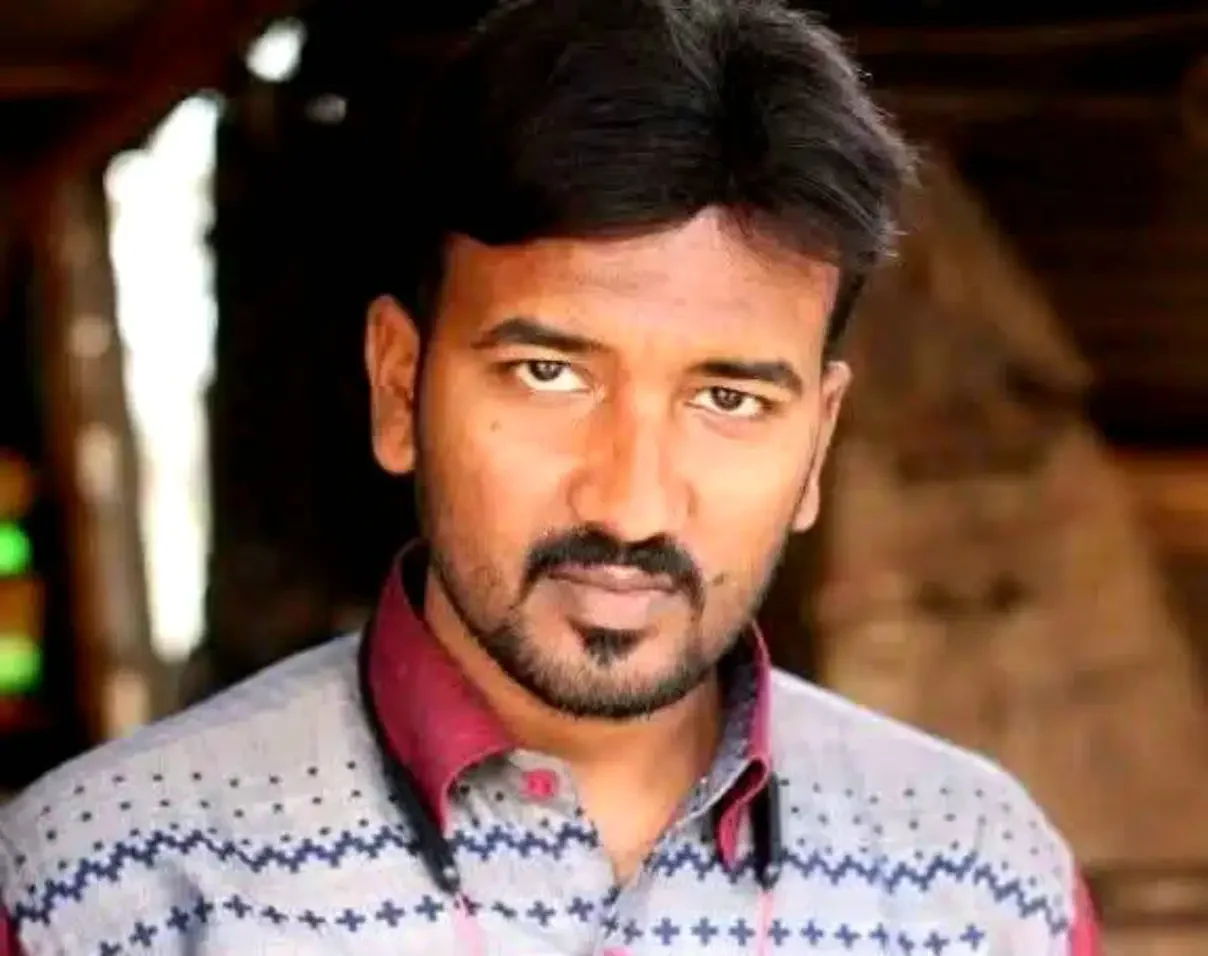
“Rana was shot three times in the head, and his throat was slit,” said Md Raziullah Khan, officer-in-charge of Manirampur police station.
“Seven bullet casings were recovered from the scene. The body has been sent for autopsy, and we are investigating the perpetrators.”
A witness, seeking anonymity, said the attackers arrived on a motorcycle, called Rana out of his ice factory, opened fire and fled within moments.
Rana was the son of a schoolteacher from Arua village in Keshabpur upazila and had been operating the factory for about two years, local residents said.
The two killings follow a series of violent attacks involving members of Bangladesh’s Hindu minority across multiple districts in recent weeks.
In December, Dipu Chandra Das, a 25-year-old garment factory worker in Mymensingh district, was lynched by a mob following allegations of blasphemy — accusations his family denies.
According to local journalists, his body was later hung from a tree and set on fire.
Last week, Khokon Chandra Das, 50, a Hindu medical shop owner and mobile banking agent, died after being attacked while returning home from his pharmacy in Keurbhanga Bazaar in Shariatpur district.
Police said he was assaulted by three to four attackers near the Tilai area and later succumbed to burn injuries and stab wounds.
In another incident, Bajendra Biswas, a Hindu garment factory worker, was shot dead while on duty at a factory in Mymensingh, according to police and local media.
Separately, a series of night-time arson attacks in Raozan sub-district of Chattogram saw at least seven Hindu-owned homes set on fire over several days.
Residents said assailants locked doors from the outside, poured kerosene and left handwritten banners warning Hindu families to halt activities deemed “against Islam” or face the destruction of their property. Police said investigations were under way.
Outrage has also followed a case of sexual violence in Jhenaidah district, where a 40-year-old Hindu widow was allegedly tortured, raped, tied to a tree and had her hair cut by two local men.
She was rescued unconscious and admitted to Jhenaidah Sadar Hospital. “Through medical examination, we later confirmed that she had been subjected to torture,” said Dr Mohammad Mustafizur Rahman, the hospital’s superintendent.
Jhenaidah additional superintendent of police Bilal Hossain said the victim’s complaint had been registered and that legal action would follow. The two accused have since been arrested, police said.
Bangladesh’s Hindu population makes up roughly 8% of the country’s 170 million people. While the nation has a long history of religious coexistence, minorities have periodically faced violence, particularly during moments of political instability.
The recent targeted attacks on Hindus have occurred under an interim government led by Nobel Peace Prize laureate Muhammad Yunus, which assumed office following the collapse of the previous administration.
Yunus has pledged to restore stability and protect the rights of all citizens.
Authorities have condemned individual acts of violence and said investigations are ongoing.
In several cases, police have said motives are still being examined and have cautioned against drawing premature conclusions.
Additional Superintendent of Police Tanvir Hossain, referring to the death of Khokon Chandra Das, said: “We have learned about the death from his relatives. We are still looking into the matter.”
Community leaders, however, say the recurrence of attacks has eroded confidence.
Amit Ghatak Chowdhury, president of the Bangladesh Puja Udjapan Parishad’s Shariatpur district unit, said: “We are deeply saddened by Khokon Das’s death. We tried everything to save him and stand by him. To prevent such heinous incidents in the future, we demand that the offenders be brought under the law quickly and given exemplary punishment.”
“When perpetrators believe consequences are unlikely, violence becomes self-reinforcing,” said a senior lawyer affiliated with the Bangladesh Supreme Court, who requested anonymity for security reasons. “What we are seeing is a climate of impunity, compounded by administrative inertia and the erosion of effective state authority.”