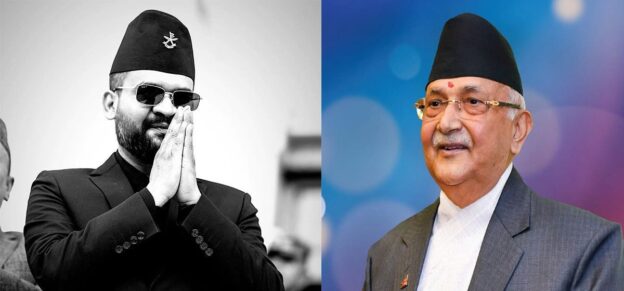

The popular uprising in Bangladesh in August 2024, which promised to set in motion a new order in the country’s politics and usher in meaningful reforms, appears to have taken a back seat. Cracks are now visible within the unity that initially characterised the movement, with mostly opposition-led groups increasingly divided over ideological differences and competing visions for the country’s future.
While the Bangladesh Nationalist Party (BNP) is trying its best to extract maximum political mileage from the prevailing situation—aiming to outpace Jamaat-e-Islami and emerge as the country’s single largest party in the parliamentary elections scheduled for February 2026—attention has also turned to newly emerging youth-driven forces such as the National Citizen Party (NCP).
The NCP, comprised largely of young leaders who spearheaded the 2024 protests against the Awami League government and the ousted prime minister Sheikh Hasina, was initially seen as a party with the potential to significantly reshape Bangladesh’s political landscape.
However, in recent weeks the party has been shaken by a series of high-profile resignations. Several senior leaders have stepped down, citing clear ideological disagreements and dissatisfaction with the party’s internal functioning—particularly its growing alignment with Jamaat-e-Islami. As many as 16 leaders have resigned over differences related to a proposed alliance with Jamaat, while others are reportedly preparing to quit, either to form new political outfits or to contest elections as independent candidates.
Even as the NCP leadership has been attempting to persuade the resigned leaders to return—following the party’s decision to contest the elections alongside Jamaat-e-Islami and 10 other parties—there are strong indications that most of those who have stepped down are unwilling to reconsider. Journalists in Bangladesh suggest that Jamaat may exert pressure on the NCP to reclaim some of these leaders, particularly those believed to have strong electoral prospects in their respective constituencies.
Jamaat-e-Islami, meanwhile, is preparing to formalise an alliance with as many as 12 parties, including Khelafat Majlish, Bangladesh Khelafat, Islami Andalan, AB Party, ADP, Labour Party, BDP, Jagpa (Jatiya Ganotantrik Party), Khelafat Andalan, Nezame Islam, and the NCP. Jamaat is reportedly eyeing around 190 parliamentary seats, with the remaining seats to be distributed among alliance partners, of which the NCP is expected to receive around 30.
Political commentators in Bangladesh argue that seat-sharing arrangements could be one of the key reasons behind the recent fissures within the NCP. Some note that the growing proximity between Jamaat and the NCP “is nothing new” and has been developing steadily since the uprising, while a section of journalists believe the current turmoil may ultimately prove to be a political hogwash.
Others, however, emphasise that Jamaat-e-Islami’s historical role—its opposition to Bangladesh’s liberation in 1971 and its support for Pakistan—remains a deeply sensitive issue. For many Bangladeshis, the independence movement is a source of pride that transcends contemporary political grievances. “There could be differences with the Awami League and how Sheikh Hasina ruled the country, but that does not mean Bangladeshis are against their own hard-earned freedom,” said a senior political party worker, speaking on condition of anonymity.
The NCP formally announced its decision to join the Jamaat-e-Islami–led electoral alliance on 28 December. The night before, 30 party leaders submitted a memorandum to NCP convener Nahid Islam, urging him not to enter into any alliance with Jamaat. That same evening, senior joint member secretary Tasnim Jara resigned from the party and declared her intention to contest the election as an independent candidate. She was also a member of the NCP’s policymaking political council.
On 25 December, at a time when talks with Jamaat were still underway, Mir Arshadul Haque stepped down from the NCP after openly declaring his support for BNP’s acting chairman, Tarique Rahman. Within party circles, he was known as a prominent figure opposed to any alignment with Jamaat. He had been serving as a joint member secretary of the NCP central committee and was also the chief coordinator of the party’s Chattogram city unit.
The list of resignations also includes joint conveners Khaled Saifullah (Tasnim Jara’s husband) and Tajnuva Jabeen; media cell secretary Mushfiq us Salehin; ICT cell chief Farhad Alam Bhuiyan; joint member secretary Arif Sohel; joint coordinator Khan Muhammad Mursalin; northern region organiser Azad Khan Bhasani (grandson of Maulana Bhasani); southern region organiser Wahiduzzaman; northern region organiser Dyuti Aranya Chowdhury; and party members Syeda Nilima Dola, Asif Mostafa Jamal, Mir Habib Al Manzur, Marzuk Ahmed, and Al Amin Tutul.
Among those who resigned, only Tasnim Jara has moved ahead with plans to contest the parliamentary election as an independent candidate. Her nomination for the Dhaka-9 constituency was later cancelled, leading her to file an appeal, with her husband Khaled Saifullah assisting her in the process. The NCP has also nominated joint convener Mohammad Jabed Mia to contest the same seat under the party symbol, Shapla Koli.
Beyond these resignations, at least five female NCP leaders have publicly opposed the party’s understanding with Jamaat. Two of them—Monira Sharmin and Monjila Jhuma—have withdrawn from the election despite having been nominated as party candidates.
Senior NCP leaders told Prothom Alo that the wave of resignations has embarrassed the party leadership and placed it under psychological pressure, as questions grow over the NCP’s centrist positioning. They added that the turmoil has weakened the spirit of the “Democratic Reform Alliance,” formed by the NCP, the AB Party, and the Rashtra Sanskar Andolon. While the leadership insists the decision to move forward with Jamaat followed internal deliberations, it acknowledges that the rationale was not adequately communicated to a section of the party, triggering what it describes as emotional resignations. None of the resignation letters has been accepted, and efforts are underway to reopen dialogue with the dissenters.
Confirming this, NCP senior joint convener and Dhaka-18 candidate Ariful Islam Adeeb told Prothom Alo that the party was reaching out to those who had resigned through multiple channels and remained hopeful of their return. Although a meeting with the resigning leaders had been planned last Friday, it did not take place. The same news report quoted a leader of the party who stepped down, who spoke anonymously as saying that details of the meeting were leaked in advance and misinformation circulated on Facebook, alleging that a section of the party was deliberately blocking their return and pushing out those opposed to Jamaat.