Rashed read the email again, slowly this time.
“Visa eligible.”
For a moment, the small room in northern Bangladesh felt larger. He would finally attend his sister’s wedding in the United States—a country that remains a dream for many Bangladeshis. Months of paperwork, interviews, and waiting had paid off.
Then his eyes dropped to the next line.
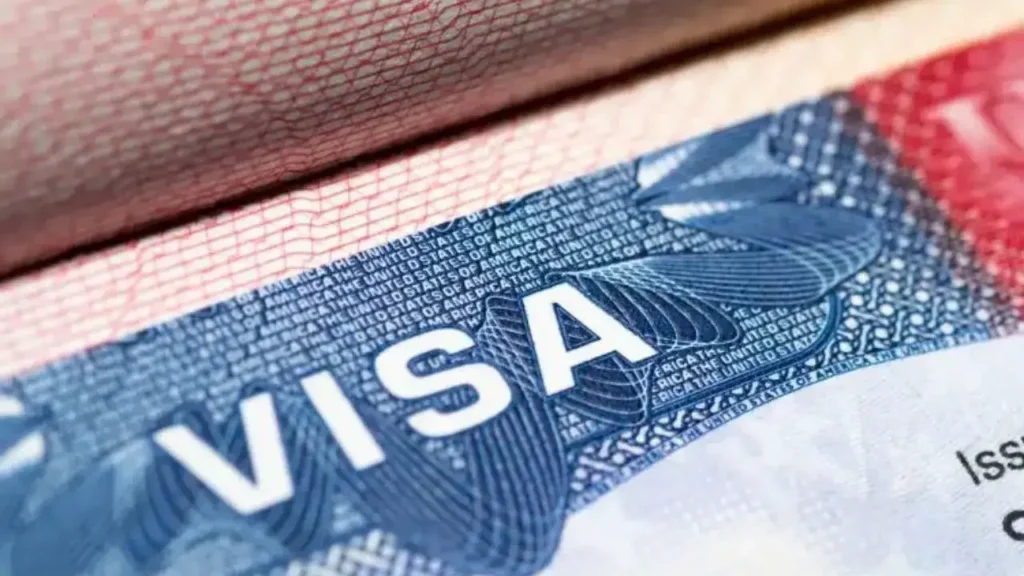
Visa Bond Required: USD 5,000–15,000.
Fifteen thousand dollars. Nearly two million taka. More than his family’s lifetime savings.
On television, the news was playing. The U.S. administration had expanded the list of countries whose citizens must now pay a “visa bond” to enter America. Bangladesh was among the newly added names. Even with a visa, entry now came with a price.
His mother called from the next room.
“So you can go now, right?”
Rashed did not answer.
The anchor explained that the bond was meant to ensure visitors did not overstay. The money would be returned—if all conditions were met. But for many, the condition itself was impossible.
A visa, Rashed realized, was no longer just permission. It was a test of wealth.
He called his sister. Her voice was full of excitement.
“I have the visa,” he told her quietly. “But the door is very expensive.”
When the call ended, he stared out the window. The sky was wide and open. But some borders, he thought, are guarded not by walls or soldiers—only by money.
And even with a visa in hand, many would never cross.
For millions of Bangladeshis like Rashed, the promise of global mobility has been steadily eroding since the political changeover following the July Movement and uprising of 2024. A student admitted to a European university, a skilled worker seeking employment in the Gulf, a family planning a modest holiday in Southeast Asia, or even a patient requiring urgent medical treatment in India increasingly face the same obstacles: endless delays, opaque rejections, and requirements so onerous that travel becomes virtually impossible.
This is no longer a matter of bureaucratic inconvenience. It is a systemic crisis—one that risks pushing Bangladesh toward a new and dangerous form of global isolation.
As the country navigates political transition under the Yunus-led interim government, the tightening of visa regimes worldwide has exposed deeper vulnerabilities in Bangladesh’s governance, global reputation, and migration management. The central question is no longer whether a visa crisis exists, but how severe its consequences will be—and whether Bangladesh can reverse course before long-term damage is done.
A world of closed doors
The scale of the problem is striking. Students, migrant workers, tourists, patients, and business travellers are all affected—often simultaneously.
For students, Europe—once viewed as a gateway to affordable, world-class education—has become a bureaucratic labyrinth. Germany, a top destination for Bangladeshi students, now faces such severe backlogs that visa interview waits stretch into years. For smaller European states such as Slovenia, Hungary, or Bulgaria, which lack embassies in Dhaka, applicants are forced to apply through third countries, most commonly India. Given current regional diplomatic strains, that route has become prohibitively difficult, expensive, and uncertain. Scholarships are lost not due to academic failure, but because the visa clock simply runs out.
Labour and tourist mobility has fared no better. The suspension of new visas for Bangladeshis by the United Arab Emirates sent shockwaves through the migration sector. Other Gulf states have followed with restrictive, often informal caps. In Southeast Asia, Thailand’s e-visa system now involves lengthy processing times and exhaustive financial scrutiny. Malaysia and Singapore, while technically issuing visas, are notorious for “offloading” Bangladeshi travellers at airports on suspicion of weak documentation or potential overstaying. Even destination countries that once offered visa-on-arrival have quietly tightened entry rules for Bangladeshi passport holders.
Diplomacy has further complicated matters. Access to third-country embassies in New Delhi from Bangladesh has grown increasingly difficult amid strained India–Bangladesh relations following the August 2024 student-led uprising that forced former prime minister Sheikh Hasina to flee the country and seek refuge in India. For Bangladeshi patients dependent on Indian medical facilities, this has created life-altering barriers due to visa restrictions for travel to India.
Meanwhile, Western policy shifts have raised additional hurdles. The United States has expanded the use of visa bonds and slowed or suspended immigrant visa processing for dozens of countries. The European Union has classified Bangladesh as a “safe country of origin,” enabling asylum claims to be fast-tracked for rejection after a surge in Bangladeshi applications—most of which are denied.
At the same time, Dhaka’s evolving foreign alignments have raised concerns among some partners. The interim government’s warmer engagement with Pakistan, Turkey, China, Afghanistan, and their security establishments, coupled with deteriorating ties with India, has unsettled regional observers. The cancellation of mandatory police verification for Bangladeshi passports under the present interim authorities has also triggered alarm among foreign immigration agencies, which view it as a weakening of identity and security safeguards.
The cumulative effect is unmistakable: Bangladeshis are not formally banned from the world—but they are being systematically screened out.
Why the world is saying “No”
Foreign governments insist this is not discrimination, but risk management. Several interconnected factors explain why Bangladesh has increasingly been treated as a high-risk passport.
The most damaging is the widespread abuse of visa systems. Immigration authorities across Asia, the Middle East, and Europe cite persistent patterns of overstaying, unauthorized employment, and misuse of tourist and student visas. High-profile deportations involving fake hotel bookings, forged documents, or bogus return tickets have reinforced the perception that Bangladeshi travellers frequently violate visa conditions. As a result, even legitimate applicants are subjected to blanket suspicion.
Political instability in Bangladesh—especially since July 2024—has further eroded international confidence. The upheaval of August 2024 unsettled partners and investors alike. While the interim government has pledged reform and stability, diplomatic perceptions often lag behind political realities. Incidents involving Bangladeshi nationals abroad—from labour unrest to political activism—have also attracted negative media coverage, reinforcing stereotypes of disorder and unpredictability.
The weakness of the Bangladeshi passport itself compounds the problem. Its low ranking on global mobility indices is both a symptom and a cause of restricted access. Limited visa-free travel signals low trust, which in turn justifies harsher scrutiny—a vicious cycle difficult to break without sustained governance and diplomatic gains.
Finally, global geopolitics plays a decisive role, further compounded by weak foreign diplomacy. Western states are tightening borders amid domestic migration pressures. Gulf countries are recalibrating labour markets in favour of higher-skilled migrants. India’s regional visa policies have ripple effects across South Asia. Countries already flagged for migration risk, such as Bangladesh, are disproportionately affected.
What lies ahead: A national risk
If current trends persist, the consequences will extend far beyond individual hardship.
First, Bangladesh risks losing a generation of talent—particularly in the aftermath of the 2024 student movement. Restricted student mobility limits access to advanced education, research, and global professional networks. Over time, this will undermine the country’s ambition to move up the global value chain, particularly in technology, engineering, and healthcare.
Second, the economic impact could be severe. Remittances remain a lifeline for millions of families and a stabilizing force for foreign exchange reserves. A sustained decline in labour migration would strain the economy at a time of global financial uncertainty.
Third, diplomatic marginalization looms. Countries whose citizens struggle to travel easily find it harder to attract investment, sustain business ties, or project soft power. In a globalized economy, mobility is not a luxury—it is essential infrastructure.
Finally, there are serious social risks. A young population facing blocked aspirations is vulnerable to frustration, unrest, and exploitation. History shows that when legal pathways close, illegal ones open—fuelling human trafficking and dangerous migration routes.
Breaking the cycle
Reversing the visa crisis will not be easy, but it is possible.
Diplomatically, visa facilitation must become a core foreign policy priority. Bangladesh needs sustained, high-level engagement with key partners, backed by credible data on migration management. Expanding visa processing facilities in Dhaka and negotiating structured labour and student mobility agreements could help rebuild confidence.
Domestically, the credibility of the Bangladeshi passport must be restored through strict, comprehensive data verification of all passport holders. A stable, elected political government—emerging from the February 12 general elections—will be pivotal in rebuilding trust. This requires decisive action against visa fraud and trafficking networks, modernization of passport and immigration systems, and visible enforcement against violations. Symbolic reforms will not suffice.
Governance is equally critical. Political stability, rule of law, and respect for rights directly influence visa decisions. International partners assess not only documents, but the overall direction of a country.
Citizens and diaspora communities also have a role to play. Individual conduct abroad shapes collective reputation. Positive narratives—of Bangladeshi students, professionals, and entrepreneurs contributing meaningfully to host societies—must be amplified to counter years of negative perception.
A narrow window
Bangladesh stands at a crossroads. The visa wall rising around its citizens is a warning, not a final verdict. Mobility can be restored—but only through honest self-assessment, sustained reform, and disciplined diplomacy.
The alternative is a slow drift into isolation, carrying costs measured not just in lost opportunities, but in stalled development and diminished global relevance.
The door is not yet locked.
But the combination to open it is becoming harder to find with each passing year.