Nepal is heading into an early national election shaped by political collapse, youth unrest, and growing public disillusionment. The polls, scheduled for 5 March, follow the dramatic fall of Prime Minister KP Sharma Oli’s government amid a Gen-Z-led uprising in September 2025. The election comes five years ahead of schedule, as Nepal last went to the polls in 2022, with the next due in 2027.
The early election was triggered by President Ram Chandra Poudel’s dissolution of the lower house of Parliament last year, a move that plunged the country into political uncertainty. To steer the process, an interim government was sworn in on 12 September under retired Supreme Court judge Sushila Karki, reflecting the judiciary’s expanding role in Nepal’s fragile political transitions.
With over 3,400 candidates— including 390 women— contesting from 68 political parties and as independents, the election underscores both political pluralism and fragmentation. Voters will elect 165 members to the 275-seat House of Representatives, in what many observers see as a referendum on Nepal’s post-monarchy political order.
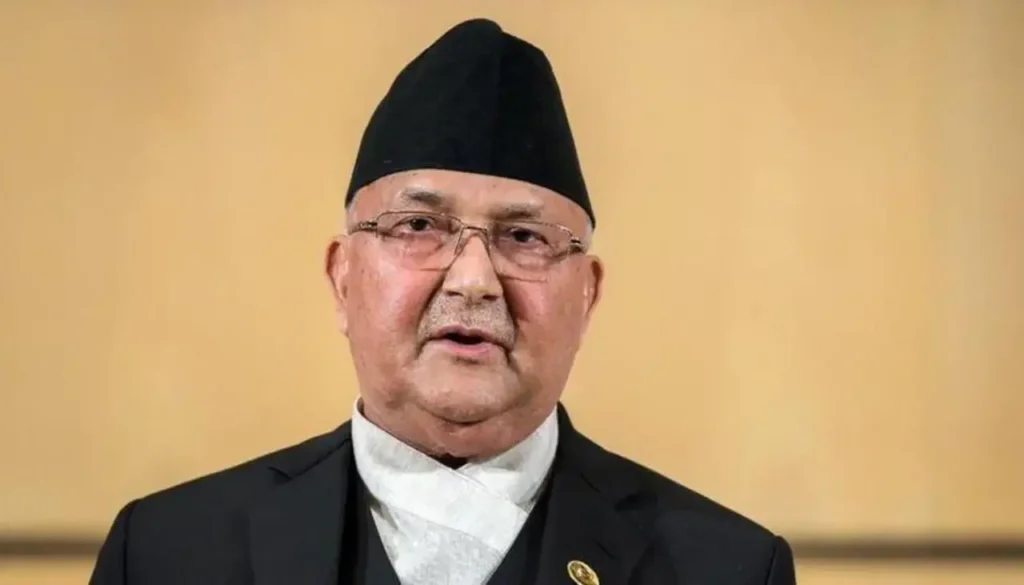
The field includes at least four former prime ministers, highlighting the continued dominance of established political elites despite popular demands for change. Among them is KP Sharma Oli, 74, leader of the Communist Party of Nepal (Unified Marxist–Leninist), who is attempting a political comeback after his resignation last September.
Oli’s challenge is most visible in Jhapa-5 constituency in eastern Nepal, where he faces Balendra Shah, a 35-year-old political disruptor. Shah, who recently resigned as Kathmandu Metropolitan City mayor to join the Rastriya Swatantra Party, rose to prominence during last year’s anti-government protests. An engineer by training and a rapper by background, Balendra represents a generational shift that threatens Nepal’s entrenched leadership. Political observers consider the contest symbolic of a broader struggle between the old guard and a restless youth electorate.
Since stepping down on 9 September, Oli has sought to reframe his ouster as the result of foreign interference rather than domestic dissent. He has repeatedly claimed that the protests were carefully orchestrated by external forces, describing the uprising as unusual in scale and coordination.
The unrest resulted in the deaths of 77 people and caused damage worth an estimated NPR 84 billion (around Rs 52 billion). Oli has argued that Nepal, following Sri Lanka and Bangladesh, became the next target of destabilisation efforts aimed at undermining democracy in South Asia—a narrative that resonates with sections of his political base but remains contested.
Oli has also sharpened his rhetoric against India, frequently criticising New Delhi’s policies toward Nepal. His comments have revived sensitivities in a country that balances relations between India to the south and China to the north, while sharing a strategically sensitive border with Tibet under Chinese control.
Alongside Oli, other veteran leaders are seeking electoral relevance. These include Pushpa Kamal Dahal, known as Prachanda, 71, of the Communist Party of Nepal (Maoist Centre); Baburam Bhattarai, 71, of the Pragatisheel Loktantrik Party; and Madhav Kumar Nepal, 72, of the Nepal Communist Party. Their continued presence reflects both political continuity and the limited generational churn within Nepal’s leadership.
Notably absent from the race are Sher Bahadur Deuba of the Nepali Congress and Jhala Nath Khanal of the NCP. Deuba’s decision follows a significant split within the Nepali Congress, now led by Gagan Thapa, signalling an internal recalibration rather than electoral retreat.
Mayoral politics has also spilled into the parliamentary arena. Besides Balendra Shah, Harka Sampang of Dharan Sub-Metropolitan City and Renu Dahal of Bharatpur Metropolitan City are contesting seats. Renu Dahal’s candidature draws attention due to her lineage—she is the daughter of Prachanda, whose leadership of the decade-long Maoist insurgency led to the abolition of Nepal’s Hindu monarchy in 2008.
That legacy has resurfaced in unexpected ways. Nepal’s last monarch, Gyanendra Shah, now a private citizen but with visible support bases across the country, recently intervened in public discourse. Addressing the nation on National Unity Day and the 304th birth anniversary of Prithvi Narayan Shah, he criticised Nepal’s political leadership for adopting what he described as an imbalanced foreign policy and for pushing the country into prolonged crisis over the past two decades.
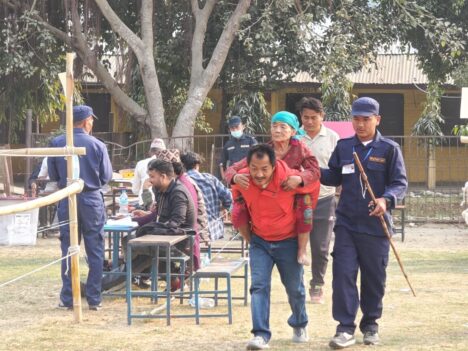
External actors are closely watching the unfolding political contest. India continues to provide logistical support for Nepal’s elections at the request of the government and political parties. Recently, New Delhi handed over more than 60 double-cab pickup vehicles and other supplies to assist election preparations.
The vehicles were formally received by Nepal’s Home Minister Om Prakash Aryal from Indian diplomat Rakesh Pandey. Aryal said the assistance reflected the depth of trust and friendship between the two neighbours, according to The Kathmandu Post. India has provided election-related support since 2008, and this year over 600 vehicles are expected to be delivered.
China has also signalled its engagement. Chinese Ambassador to Nepal Chen Song recently said Beijing was coordinating closely with the interim government, stressing that China places high priority on Nepal’s political stability, development, and prosperity.
Amid this electoral churn, supporters of the former monarchy have intensified demands for its restoration. They argue that successive political elites have failed the country, particularly its younger generation. For them, the figure of King Gyanendra has re-emerged not merely as nostalgia, but as a symbol of alternative authority in a deeply polarised political landscape.