With barely a fortnight left before Bangladesh goes to the polls, it is already evident that these elections will be among the most closely watched—and most deeply contested—in recent history. Coming in the aftermath of the August 2024 uprising that forced former Prime Minister Sheikh Hasina out of office and into exile in India, the vote has attracted intense global attention, particularly from countries that claim a stake in democracy promotion and regional stability.
On the surface, the political landscape appears to have shifted. Electioneering has begun, Bangladesh National Party (BNP) leader Tarique Anwar has returned, and there is a sense of political churn after years of stagnation. Yet beneath this veneer of change lies a far more troubling reality. This election will be anything but inclusive. The interim government under Muhammad Yunus has banned the Awami League, the country’s largest and most entrenched political party, effectively ensuring that the electoral contest is tightly controlled and far removed from the standards of a free and fair election.
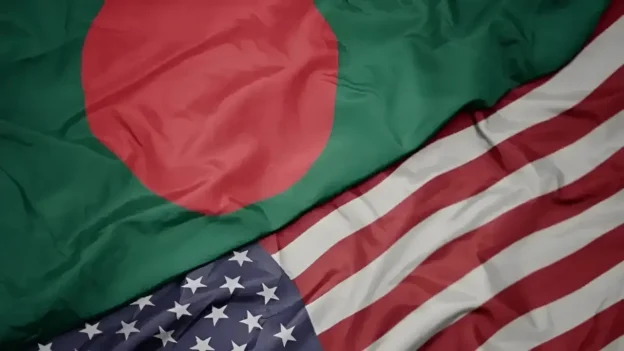
There is widespread speculation—both within Bangladesh and beyond—that Yunus is little more than a pawn in a larger geopolitical game, with the United States and its Western allies playing a decisive role from behind the scenes. What makes this moment particularly ironic is that it is the same Western bloc that, for years, accused Sheikh Hasina of staging and manipulating elections during her tenure. This time around, however, the silence is deafening. In fact, there is a visible effort to project the forthcoming polls as credible, inclusive, and democratic.
That narrative will not be difficult to manufacture. All it requires is funding a select set of election observation groups, deploying observers for a short period, and issuing carefully worded statements that describe the process as “largely free and credible.” This script is hardly new. It has been replayed across countries and continents wherever Western powers have had strategic interests at stake.
The author writes from experience, having served as an election observer and led election observation and monitoring missions in multiple countries. Many such missions are professional, sincere, and produce credible assessments. Not all election observation exercises are agenda-driven or pre-scripted. Yet it would be naïve to ignore the structural reality that funding—largely originating from US-based donors or close allies such as Britain and Australia—often determines whether an observation mission takes place at all. For a global powerhouse like the United States, influencing the tone, scope, or emphasis of such missions is neither difficult nor unprecedented.
Even if one were to assume that every international observation group heading to Bangladesh will act meticulously and without bias, a more fundamental question arises. Should these groups not begin by stating the obvious—that elections held without the participation of the largest political party in the country cannot, by definition, be inclusive? There can be no convenient excuse that the Awami League has been banned and therefore falls outside the observers’ remit. A political party like the Awami League cannot be banned without substantial legal reasoning, and certainly not through unilateral executive action by Muhammad Yunus or his interim administration. This reality must be acknowledged by all international actors.
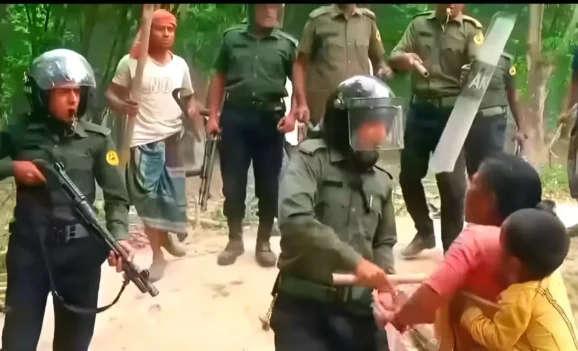
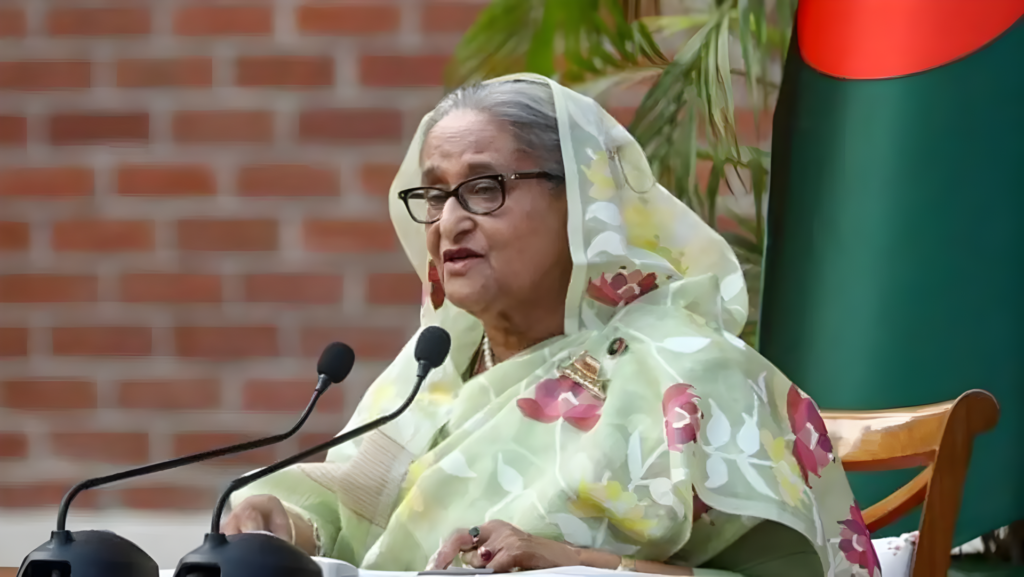
This was precisely the point Sheikh Hasina sought to underscore in her first public address since her ouster, delivered through an audio recording played at an event titled “Save Democracy in Bangladesh” at the Foreign Correspondents Club in New Delhi on January 23. The speech was an attempt to draw international attention to the deteriorating law and order situation in Bangladesh and to the wave of political violence that has followed her removal—violence in which Awami League workers and their families have been brutally targeted. These are not marginal concerns; they go to the heart of whether any meaningful electoral exercise is possible.
VIDEO | Delhi: In an audio message played by panellists during an interactive session organised by the Foreign Correspondents' Club of South Asia, former Bangladesh Prime Minister Sheikh Hasina says, “Bangladesh, once a peaceful and fertile nation, is now facing extreme violence,… pic.twitter.com/bqeTy5cW82
— Press Trust of India (@PTI_News) January 23, 2026
If international observers ignore this context, their presence will serve only one purpose: legitimising a deeply flawed process. One is then compelled to ask why similar elections should not be observed in Myanmar, where the conditions are not fundamentally different, except for the overt presence of a military regime.
The intent here is not to defend the Awami League or any other political party, but to call a spade a spade. A careful reading of Hasina’s speech makes one conclusion unavoidable: under the present regime and prevailing conditions, a genuinely free and fair election in Bangladesh is practically impossible. She spoke of daily acts of violence—many unreported—killings of minorities, assaults on women, and rape becoming disturbingly routine. It was in this context that she called for ironclad guarantees to ensure the safety of religious minorities, women and girls, and the most vulnerable sections of society.
Equally significant was her demand that all politically motivated acts of lawfare used to intimidate, silence, and jail journalists, Awami League members, and opposition figures be halted, and that confidence in the judiciary be restored. Without these basic safeguards, elections become an empty ritual rather than a democratic exercise.
Hasina also reiterated two demands she has raised repeatedly: that the United Nations conduct a new and truly impartial investigation into the events of the past year, and that scrutiny be applied to how Muhammad Yunus allegedly planned the 2024 uprising to dislodge her elected government and seize power. While she has not presented concrete evidence to substantiate these claims, subsequent developments have raised uncomfortable questions. Student leaders who once formed the backbone of the uprising are now openly playing their own political games. This is evident in the internal fractures within the National Citizen Party (NCP), particularly over whether to support the Islamist Jamaat-e-Islami—a party that opposed the creation of Bangladesh and collaborated in the murderous onslaught alongside the East Pakistani army in 1971.
In her address, Hasina did not mince words, describing Yunus as a “murderous fascist,” a usurer, money launderer, plunderer, and power-hungry traitor who has bled the nation dry and stained the soul of the motherland. While these words clearly reflect anger and frustration, they resonate with a sentiment that is increasingly audible on the streets of Bangladesh. Conversations with ordinary citizens reveal not just dissatisfaction with Yunus, but a growing belief that he is deeply harmful to the country and must be replaced.
This brings us to the central contradiction confronting the international community. The same actors who long accused Hasina of manipulating elections must now apply the same standards to the present situation. The circumstances are not materially different. Bangladesh’s International Crimes Tribunal has held Sheikh Hasina guilty, yet serious questions remain about the credibility of the investigation. Was it a one-sided process? Who granted the ICT its mandate, and on what legal and moral authority does it rest?
This is not to suggest that Hasina is beyond reproach. Allegations of human rights abuses and atrocities have been made against her by various stakeholders. But accountability demands a fair trial, and a fair trial is only possible within a democratic framework anchored in inclusive elections. If she is guilty, she must be punished under Bangladesh’s legal jurisprudence—but that outcome cannot be pre-decided through exclusion and political engineering.
The problem lies in the election roadmap itself, which appears to have been predetermined. This concern deepens with reports of international actors, including the United States, openly supporting fundamentalist groups like Jamaat-e-Islami. While the political momentum may currently favour the BNP following Tarique Anwar’s return, Jamaat is also gaining ground. Yet despite sustained onslaughts against its workers and leaders—some allegedly killed in inhuman acts by Jamaat and BNP supporters—the Awami League continues to retain significant grassroots support.
Hasina has thrown down a direct challenge to Yunus, daring him to contest elections against her and prove his popularity—something she believes he is unwilling to do. She has stated her readiness to stand trial for all allegations against her, provided the process is democratic and fair. At the same time, she has warned that Bangladesh has been “plunged into an age of terror,” where democracy is in exile, human rights trampled, press freedom extinguished, and violence, torture, and sexual assault against women and girls remain unchecked.
For an international community that routinely lectures the world on democracy and electoral integrity—whether in Afghanistan, Cambodia, or Myanmar, where the author has led election observation missions—this is a moment of reckoning. Democracy and justice cannot take root in an environment that is politically, socially, religiously, and morally compromised. To pretend otherwise is not just hypocrisy; it is complicity.