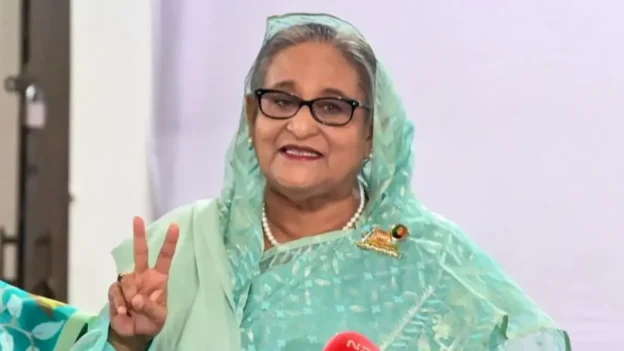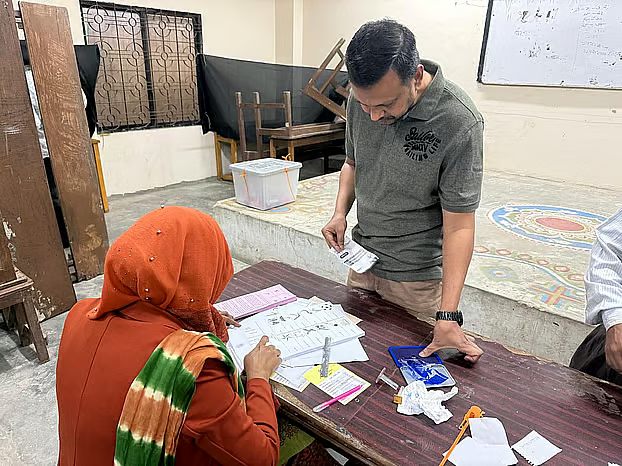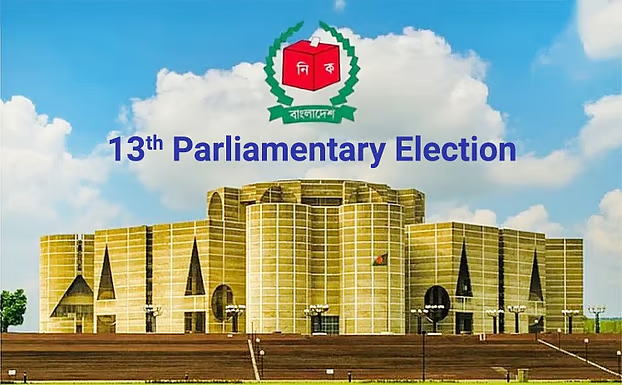
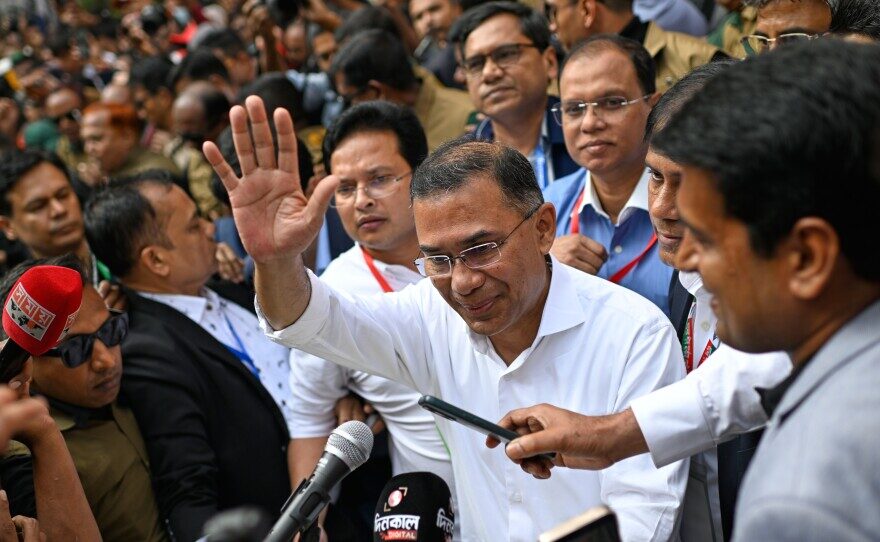
Bangladesh’s political landscape has been decisively reshaped following a landslide victory by the Bangladesh Nationalist Party (BNP) in the country’s 13th parliamentary election, paving the way for party chairman Tarique Rahman to assume office as prime minister after nearly two decades in opposition.
If confirmed, this will mark the fourth time the BNP has formed a government since the restoration of parliamentary democracy in 1991. The party first came to power after the 1991 general election that followed the mass uprising of 1990, which ousted military ruler Hussain Muhammad Ershad and ended nearly a decade of military-backed rule.
According to official results released by the Election Commission, the BNP and its allies secured 212 of the 297 seats declared, with the BNP alone winning 209. The Bangladesh Jamaat-e-Islami–led 11-party alliance emerged as the principal opposition force with 77 seats, while independents and smaller parties shared the remaining seats. Voting in Sherpur-3 was postponed following the death of a candidate, and results in Chattogram-2 and Chattogram-4 remain suspended due to legal complications.
The Election Commission reported an overall voter turnout of 59.44 percent—significantly higher than the last three national elections, which had drawn criticism over low participation and concerns about credibility.
A historic return to power
The vote marks the BNP’s return to power after nearly 20 years, following the fall of the Awami League government in August 2024 amid a student-led mass uprising. This was the first national election held since that upheaval and was conducted alongside a nationwide referendum on constitutional reforms.
BNP leaders described the result as a clear mandate for democratic restoration. Tarique Rahman, who returned to Bangladesh in December 2025 after 17 years in exile, won both the Dhaka-17 and Bogura-6 constituencies.
“This victory belongs to the people,” said Mahdi Amin, spokesperson for the BNP’s election steering committee. “They have entrusted our chairman with the responsibility of rebuilding institutions and restoring the rule of law.”
Referendum backs constitutional reforms
Alongside the parliamentary election, voters also took part in a referendum on the July National Charter—an 84-point reform framework developed through consultations with 30 political parties. Election officials said turnout in the referendum stood at 60.26 percent, with a decisive majority voting in favour.
The approved reforms aim to reduce the concentration of executive power in the prime minister’s office, introduce a bicameral legislature, limit any individual’s tenure as prime minister to a maximum of 10 years, and strengthen parliamentary independence. The next parliament will also serve as a Constitution Reform Council, tasked with implementing the approved changes within 180 working days of its first sitting.
Political analysts say that, if implemented on schedule, these reforms could significantly reshape Bangladesh’s governance structure and rebalance executive and legislative authority.
Jamaat’s rise and a new parliamentary dynamic
Despite the BNP’s clear majority, Jamaat-e-Islami’s strong performance signals a new parliamentary dynamic. Once banned under the previous government, the party has re-emerged as a significant political force.
BNP Secretary General Mirza Fakhrul Islam Alamgir earlier argued that prolonged political repression under the former Awami League administration had indirectly strengthened harder-line political actors. He said voters ultimately endorsed the BNP’s reform-oriented platform.
With Jamaat positioned as the largest opposition bloc, the next parliament is expected to be more active and competitive than in recent years.
Economic challenges ahead
The incoming administration inherits a fragile economy marked by persistent inflation, pressure on foreign exchange reserves, youth unemployment exceeding 13 percent, and declining dollar reserves that have constrained imports and energy supply. Rising commodity prices and currency volatility over the past two years have strained household incomes, particularly among lower- and middle-income groups.
Public finances also remain under stress. Slower revenue collection, subsidy burdens in the energy sector, and external debt servicing obligations have narrowed fiscal space for expansive spending. Businesses have flagged liquidity shortages in the banking system, while concerns over non-performing loans continue to weigh on investor confidence. Restoring macroeconomic stability is likely to be one of the government’s most immediate priorities.
The BNP’s manifesto has pledged cash assistance programmes for women and unemployed citizens through a proposed “Family Card” scheme, structural reforms in the banking sector, expanded job creation initiatives, and increased skills training to boost overseas employment. Economists caution that implementing these commitments will require careful fiscal management, improved revenue mobilisation, and renewed investor confidence. Balancing social protection with economic stabilisation will be a defining test for the new administration.
Foreign policy reset
The BNP’s victory is also expected to recalibrate Bangladesh’s foreign policy approach. The party has pledged to pursue balanced and interest-based relations with India, the United States, China and the European Union.
Indian Prime Minister Narendra Modi was among the first global leaders to congratulate Tarique Rahman, signalling New Delhi’s readiness to work with the new administration. China and Pakistan also welcomed the outcome, while the United States described the election as an important democratic milestone.
Analysts note that unresolved issues—including the status of former prime minister Sheikh Hasina, who remains in India—could create diplomatic sensitivities in the coming months.
A defining democratic moment
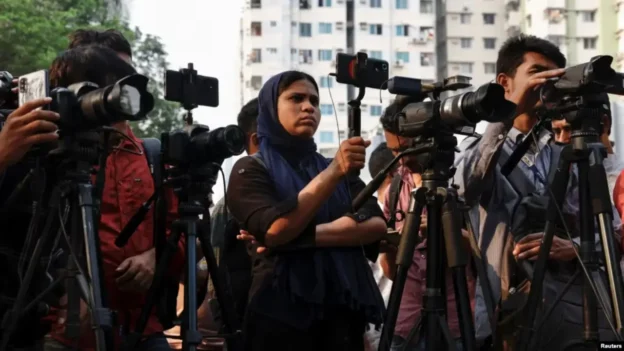
International observers reported that the election was largely orderly, with fewer large-scale incidents of violence compared to previous cycles. More than 390 foreign observers and nearly 200 international journalists monitored the process.
The election and referendum are widely seen as the culmination of the political transformation initiated by the 2024 uprising. Voter turnout suggests renewed public engagement after years of political tension and institutional strain.
As Bangladesh prepares for the formation of a new cabinet, attention now shifts from electoral victory to governance. Whether the BNP can translate its mandate into lasting reform—while managing economic recovery, parliamentary competition and complex regional geopolitics—will shape the country’s democratic trajectory in the years ahead.