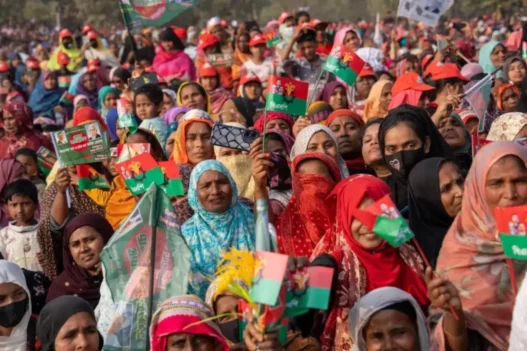
Across Bangladesh, from the congested streets of Dhaka to the bustling port of Chittagong, from the tea-covered hills of Sylhet to remote rural districts, citizens are intensifying demands for accountability from the interim government, calling for the arrest of Chief Adviser Muhammad Yunus and his advisory council, and insisting that no official be allowed to leave the country until full, impartial, and comprehensive investigations into last year’s political unrest are fully executed.
Public outrage has surged across the nation, exposing deep-seated indignation over the violence, mass fatalities, and controversial decisions that marked the transitional period, as citizens from all walks of life demand transparency, justice, and safeguards to prevent impunity.
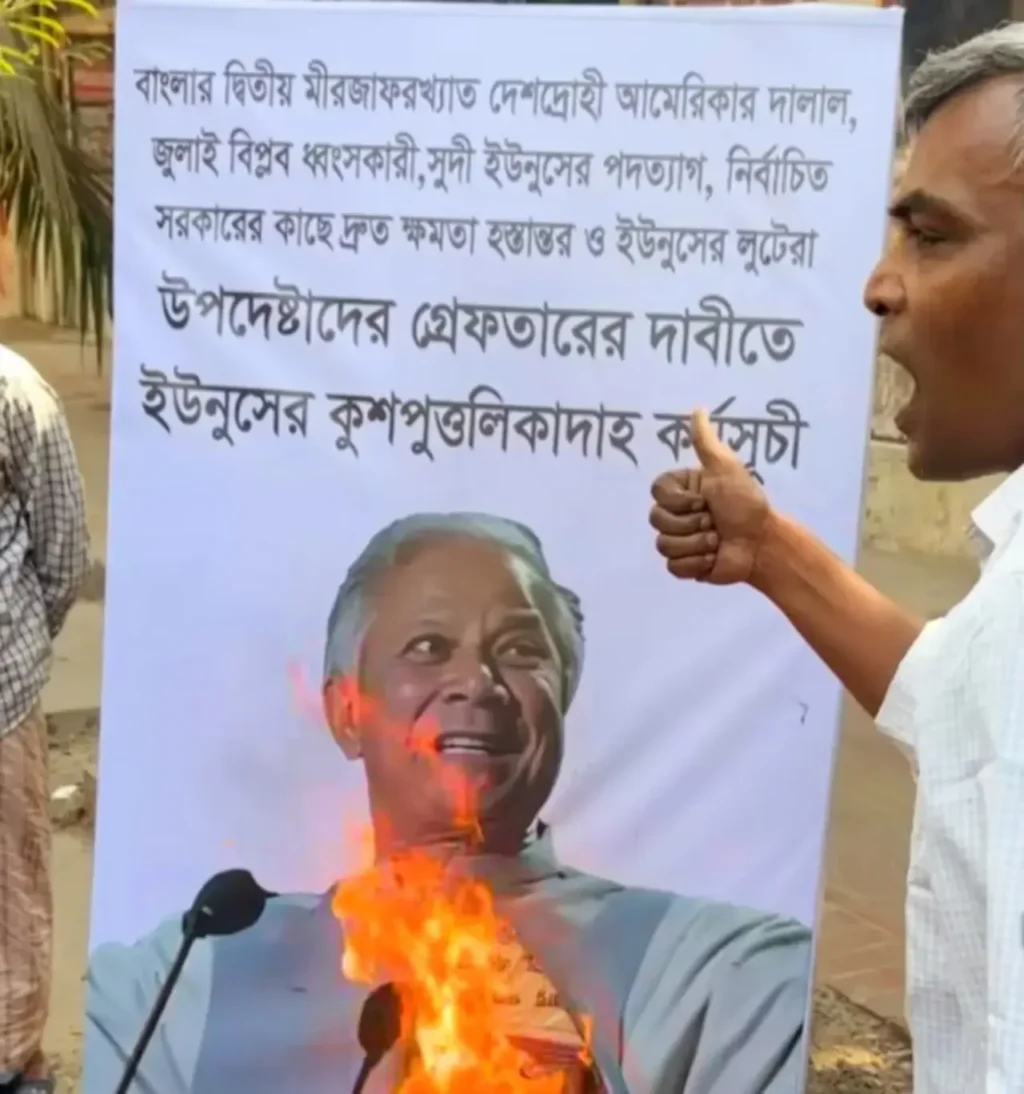
On Sunday, a symbolic protest at University of Dhaka intensified the call for legal action against Yunus and his advisers.
Abu Tayeb Habilder, a former student from the 2001–2002 session and the oldest candidate in this year’s Dhaka University Central Students’ Union (DUCSU) vice-presidential election, led the demonstration.
Participants set fire to a poster depicting Yunus, describing the act as part of a “puppet-burning” protest.
Habilder directly accused Yunus of betraying national trust, calling him a “traitorous agent of foreign interests, destroyer of the July uprising, and collaborator with the United States.”
He demanded that Yunus and his advisers be immediately detained and that authority be transferred without delay to the newly elected government.
“Bangabandhu Sheikh Mujibur Rahman faced criticism. Begum Khaleda Zia faced criticism. Sheikh Hasina has faced criticism. But no leader before has been accused of personally appropriating state resources as Dr. Yunus has,” Habilder said.
“A person who rises to power with the people’s trust but then undermines national sovereignty through unfair agreements and preferential treatment of foreign entities has forfeited any claim to respect.”
Habilder cited specific controversies, including the waiver of 6 billion taka in back taxes for Grameenphone, and questioned Yunus’s approval of commercial licenses and university-related decisions that critics argue compromised public assets.
“The state appears to have been treated as personal property,” he said.
Public outrage extends well beyond Dhaka University.
Teachers, doctors, factory workers, lawyers, small business owners, and students across Bangladesh have voiced similar demands: that the interim government be held accountable for all deaths during the unrest, including 44 police officers killed in July attacks on police stations, roughly 1,400 protester deaths, and custodial fatalities in detention facilities.
“They must not leave the country until all actions are fully investigated,” said Rahima Begum, a government school teacher in Dhaka.
“If there is nothing to hide, then remaining in Bangladesh should not be an issue.”
Abdul Karim, a Chittagong trader whose shop was damaged during post-transition unrest, emphasized: “No flight, no disappearance. Let the truth come first. Only then will people believe justice applies equally.”
Social media has amplified these demands. One widely shared post by a nurse in southern Bangladesh read: “No immunity, no escape. If they lead the country, they must face the law like any citizen.”
Another user from a rural district wrote: “Freeze passports until investigations are complete. Justice cannot chase officials across borders.”
Legal experts note that arresting high-ranking officials typically requires credible evidence and judicial authorization.
As of now, no court has issued orders against Yunus or other interim advisers. Authorities maintain that the interim government acted within its mandate to stabilise the country and prepare for elections.
Yet many citizens argue that accountability is inseparable from the legitimacy of the forthcoming administration.
“Leadership is responsibility,” said Dr. Farzana Ahmed, a physician in northern Bangladesh. “If current leaders escape scrutiny, history will repeat itself.This moment must be different.”
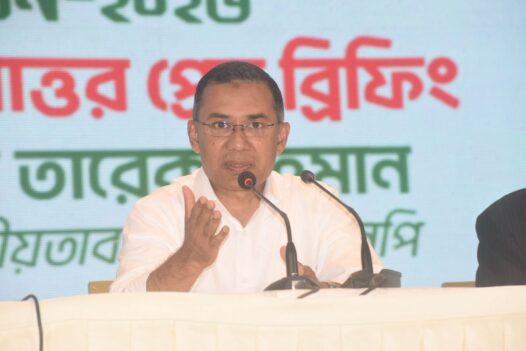
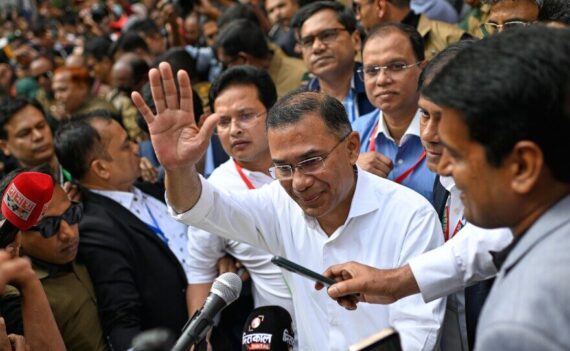
The interim administration has pledged elections within a defined timeframe, under pressure from the Tarique Rahman and other political actors.
Citizens, however, say the credibility of that pledge hinges on visible accountability measures, including the arrest and judicial review of Yunus and his advisers for alleged mismanagement, abuse of authority, and decisions affecting state assets.
From the urban centers of Dhaka and Chittagong to rural communities across Sylhet and beyond, citizens are demanding that investigations cover all fatalities, all incidents of violence, and all actions or decisions that may have undermined public trust or compromised state assets.
“No individual entrusted with interim national authority should escape scrutiny. Answer for your actions. Submit to inquiry. Let the courts decide,” said Abdul Karim.
As Bangladesh prepares for the imminent transfer of authority, the countrywide clamor for the arrest of Muhammad Yunus and his advisory council reflects the high stakes of the nation’s fragile democratic transition, where rigorous accountability, full transparency, and strict adherence to the rule of law are essential to restoring public trust and ensuring responsible governance.
Source : The Chittagong Hill Tracts