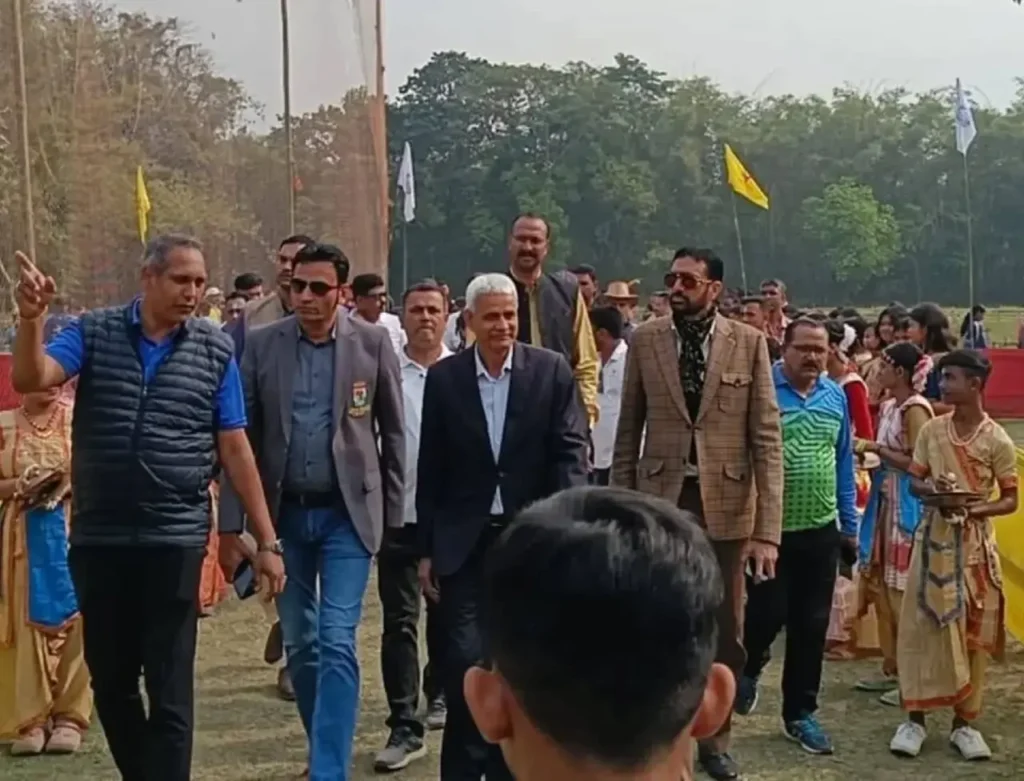
If someone had asked me 30 years ago whether I would one day be part of a festive Republic Day atmosphere—witnessing a volleyball match in Barbari, a small hamlet in Nalbari district of Assam—my answer would have been a simple and disappointing no. But times have changed, and I sometimes marvel at how completely I have been proven wrong.
From January 24 to 27 this year, Barbari—located under Kardoitola revenue village in Nalbari district—did not sleep.
Floodlights cut through the winter fog, and whistles pierced the cold night air. But these were not the whistles we once feared. They were not signals for villagers to retreat indoors while the army conducted search operations for ultras who had taken shelter in and around the village.
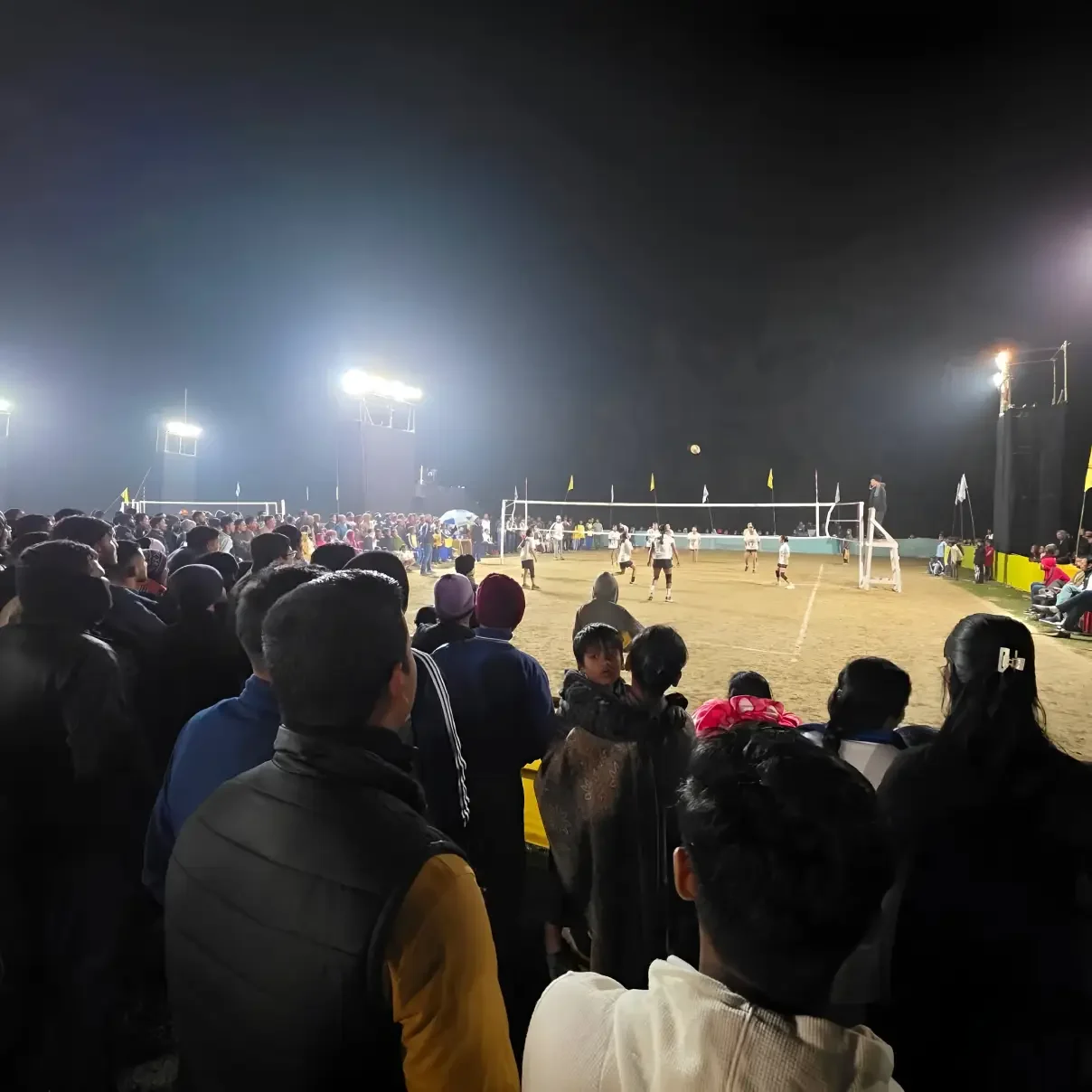
This time, the whistles were followed by cheers rising from thousands of throats.
On the dusty field of Barbari High School, more than 700 young players—girls and boys under 13, 14, and 16—competed fiercely yet joyfully in the Season Six finals of the Brahmaputra Volleyball League.
For the people of Barbari and its surrounding areas, those four days and nights were not merely about sport. The tournament represented memory, healing, and history rewriting itself.
A playground that once knew fear
Barbari High School is not just a venue. For many of us, it is synonymous with childhood. We studied here. We dreamed here. And in the early 1990s, we also learned the meaning of fear here—fear that was not one-dimensional but layered and constant.
Nalbari district was once an epicentre of insurgency during the armed movement led by the United Liberation Front of Asom (ULFA), founded in 1979 with the demand for a sovereign Assam. What began as an assertion of identity gradually spiralled into decades of violence—group versus group, and group versus State.
The Indian Army and paramilitary forces launched counter-insurgency operations. Villages became surveillance zones. Youth became suspects. Trust evaporated.
We were school students then.
Independence Day and Republic Day were not occasions for celebration. They were tense reminders of boycott calls. Hoisting the national flag on August 15 or January 26 in many rural schools was effectively prohibited by insurgent diktats. Republic Day meant a holiday—not patriotism, not parade. Silence, not ceremony.
The conflict lasted 44 years. According to official accounts, nearly 11,000 people—including insurgents, security personnel, and, most tragically, civilians—lost their lives. ULFA leaders themselves acknowledged that 2,235 of their cadres died in the armed struggle. Among the darkest chapters were the infamous “secret killings,” later investigated by the Justice K.N. Saikia Commission—wounds that continue to ache in Assam’s collective memory.
On January 23, 2024, at an open meeting in Chamuapara village in Darrang district, ULFA formally announced its disbandment. It marked the symbolic end of one of Northeast India’s longest insurgencies. Yet the real end of conflict is not declared at public meetings—it is felt in playgrounds, markets, and classrooms.
Republic Day, reclaimed
That is why January 26, 2026, mattered.
This Republic Day was not boycotted. It was celebrated—with volleyball.
The qualifiers were in full swing. Young players from across Assam dove, spiked, blocked, and rose again. The stands were packed with villagers—farmers, teachers, elderly men who once debated politics in whispers, mothers who once feared late-night knocks on their doors. They clapped, shouted advice, and served tea to visiting teams.
The tournament itself has evolved into a movement. Conceived in 2020 by former Indian volleyball player Avijit Bhattacharjya, the Brahmaputra Volleyball League began modestly with 50 teams and 400 players from remote corners of Assam.
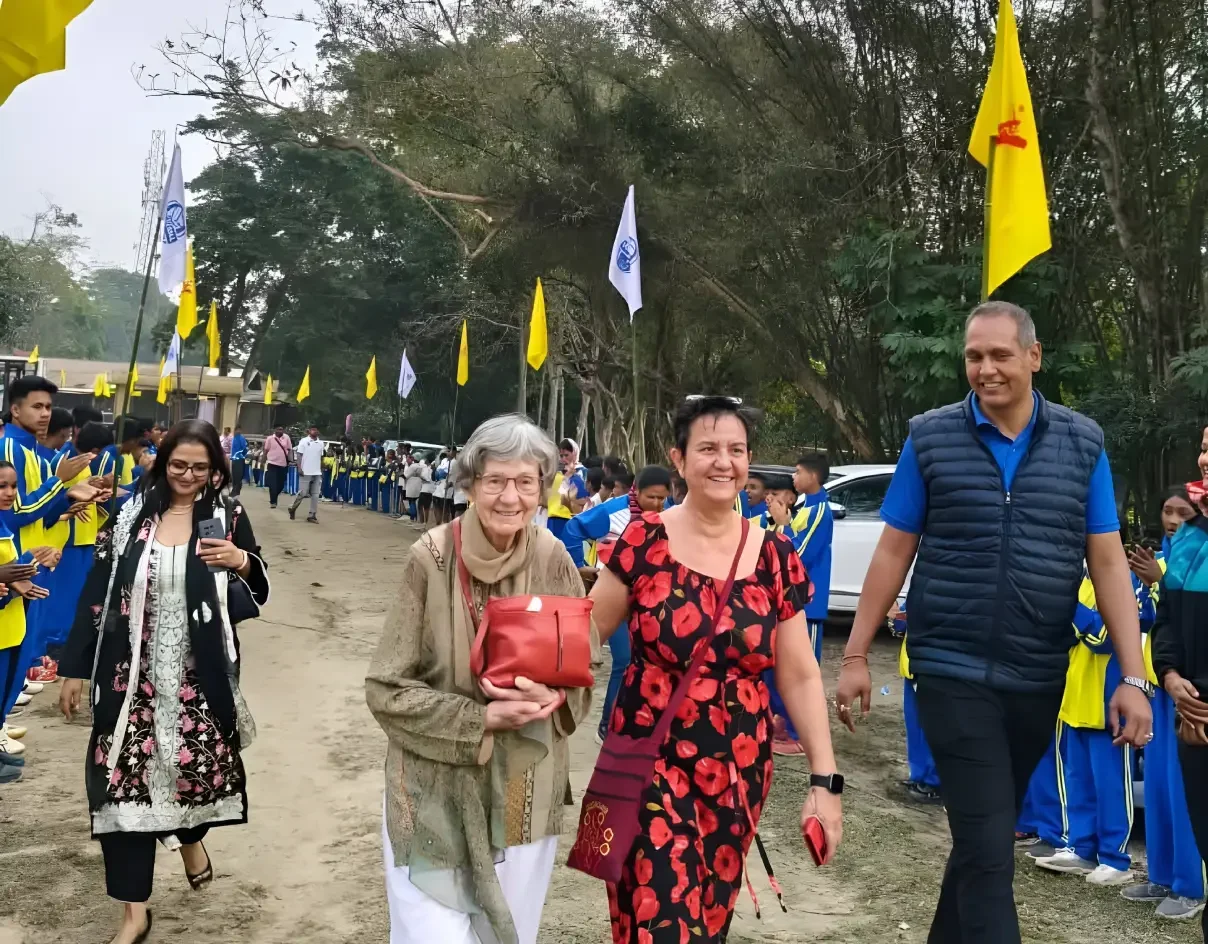
Supported by individuals and well-wishers who believed in the transformative power of youth, it has expanded dramatically. Today, around 400 teams comprising nearly 5,000 young talents participate across the state. Only 32 elite teams qualified for the Season Six finals hosted by the people of Barbari and the Barbari Volleyball Coaching Centre.
This was not a corporate spectacle. It was a community assertion—of hope.
Families opened their homes to accommodate players from distant villages. Elderly residents supervised cooking. Youth volunteers managed logistics. The entire locality functioned like a festival committee, but with a deeper purpose: to demonstrate that this land—once synonymous with conflict headlines—now nurtures talent.
The personal and the political
On the final night, as matches stretched close to midnight on January 27, I stood on the same field where I once stood as a frightened schoolboy. This time, I stood there as a sports enthusiast—and as a donor of one of the courts, dedicated in memory of my parents.
I watched children who know insurgency only through stories leap into the air without fear. I watched girls command the court with an authority that would have been unthinkable in our conservative rural setting three decades ago. I watched the tricolour fly openly, unquestioned.
And I felt overwhelmed.
The history of these 44 years is not merely the history of ULFA or the State. It is the history of ordinary people withdrawing into silence, surviving between gunfire and suspicion. It is a history of mistakes, miscalculations, lost youth, and stolen normalcy. But it is also a history that now offers the possibility of renewal.
What changed? Peace agreements, political negotiations, fatigue from violence, and generational shifts all played their part. Yet perhaps equally powerful is something less frequently discussed: aspiration. The youth of Assam today seek careers, mobility, and recognition. They want sports quotas, scholarships, and social media highlights—not underground bunkers.
From boycott to festival
For four days, Barbari’s tournament field became a symbol of transformation.
Where once Republic Day meant enforced shutdown, it now meant scheduled matches.
Where whispers once travelled at dusk, cheers now echoed past midnight.
Where suspicion once prevailed, hospitality took its place.
Volleyball did not erase the past. It did something more profound—it layered new memories over old scars.
In what was once a battleground, youth is now celebrating itself.
And perhaps that is the most decisive victory of all.