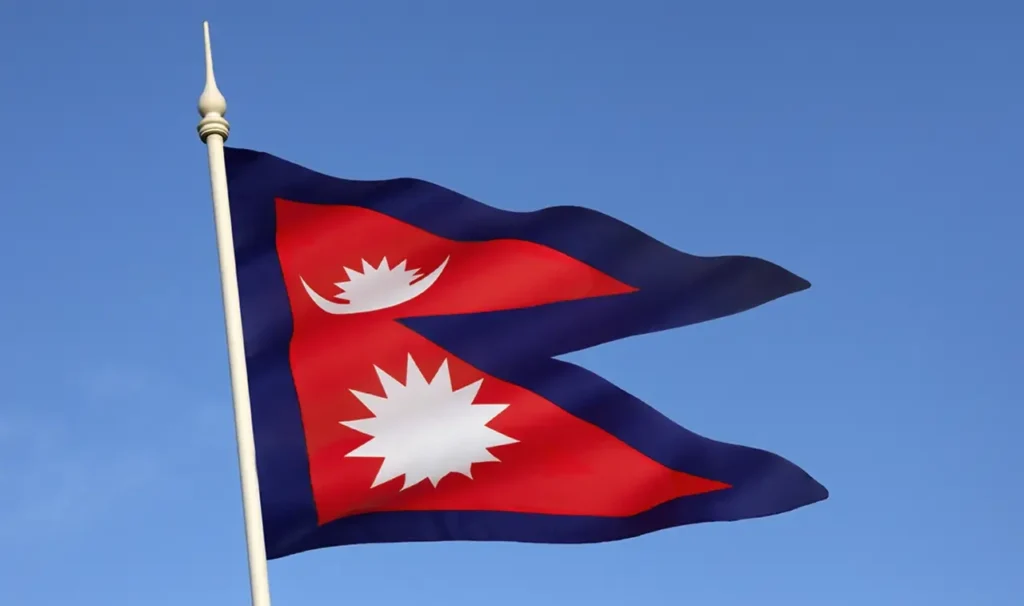
Nepal is set to hold general elections on March 5, nearly two years ahead of schedule. Originally slated for November 2027, the polls were advanced following the dramatic Gen Z revolt of September 8 and 9 last year, which shook the foundations of Nepali politics and led to the collapse of the KP Oli-led government. The March 5 vote will be Nepal’s third general election since the promulgation of the Constitution of Nepal.
The Election Commission of Nepal has registered 18,903,689 eligible voters: 9,663,358 men, 9,240,131 women, and 200 under the “other” category. A total of 10,967 polling stations and 23,112 polling booths have been designated nationwide for the House of Representatives (HoR) elections. Nepal’s HoR comprises 275 members elected through a mixed system—165 through first-past-the-post (FPTP) and 110 through proportional representation (PR).
A total of 3,484 candidates are contesting the FPTP seats, representing 68 political parties and independent contenders. Of these, 2,297 are party-affiliated and 1,187 are independents. Sixty-three parties have submitted closed PR lists. Despite the youth-led uprising that precipitated these elections, only around 15 percent of candidates are under 35.
Among major parties, the Nepali Congress and the Communist Party of Nepal (Unified Marxist–Leninist) are contesting all 165 FPTP constituencies. The Nepali Communist Party is contesting 164 seats, while the Rastriya Swatantra Party(RSP) and the Rastriya Prajatantra Party (RPP) are each leaving two seats uncontested.
While a section of society argues that elections alone cannot resolve the country’s deeper crises, the March 5 vote now appears certain. In Nepal, elections are never merely procedural; they reflect a national mood—of hope, suspicion, expectation, and uncertainty. This time, however, the atmosphere is distinct. Since the restoration of multiparty democracy in 1990, traditional parties have dominated electoral politics. Yet many now describe the March 5 contest as a clash between the “old” and the “new.”
On one side stand established forces such as the Nepali Congress and the CPN-UML; on the other is the relatively new but assertive RSP. The latter, which secured 20 seats in the 2022 elections within six months of its formation, has emerged as a formidable challenger. Expectations of its improved performance have grown, particularly after former Kathmandu mayor Balendra Shah (Balen) joined the party and was declared its prime ministerial candidate.
Old parties on the defensive
In recent years, youth discontent has intensified around issues of employment, education, governance, and opportunity. Social media campaigns have further amplified this dissatisfaction. Youth participation could prove decisive: high turnout may benefit new forces, while apathy could reinforce existing power equations.
Although development, employment, agriculture, and infrastructure feature prominently in manifestos, voters appear to prioritize credibility over promises. Public distrust has deepened due to unfulfilled commitments. Both the Nepali Congress and the UML emphasize experience, organizational strength, and “stability,” yet their rhetoric often appears defensive. They have struggled to fully counter public criticism regarding corruption, governance deficits, unemployment, and service delays. Their campaigns frequently highlight past achievements and caution against entrusting the country to “inexperienced forces.”
Despite internal debates over generational change—especially after the Nepali Congress elected Gagan Kumar Thapa as party president—critics argue that established figures still dominate leadership and ticket distribution. The UML, while projecting organizational discipline under Chairman and former Prime Minister K. P. Sharma Oli, faces challenges in generating broader public enthusiasm.
Oli, contesting in Jhapa Constituency No. 5 against Balen, has shifted from addressing only mass rallies to conducting door-to-door outreach, signaling a more competitive race. Meanwhile, Nepali Congress President Gagan Thapa has moved from Kathmandu to contest from Sarlahi-4 in Madhesh.
An assertive new force
The RSP has positioned itself as an alternative to what it calls politics unchanged despite systemic transformation. With Balen as its prime ministerial face, the party has emphasized targeted messaging, youth volunteer networks, and strong social media outreach rather than large rallies. By projecting Balen as decisive and unencumbered by traditional political culture, the RSP has resonated with first-time voters and sections of the urban middle class seeking change.
The desire for change is visible in pre-election discourse—from tea shops to online forums—though whether this sentiment will translate into votes remains uncertain. Nepal’s electoral history shows that outcomes can shift unexpectedly. What is evident, however, is that established parties appear more defensive, while new forces campaign with confidence.
Risks and structural questions
Public frustration over instability, factionalism, corruption, nepotism, and favoritism culminated in the Gen Z revolt. For many, the elections represent a democratic “reset.” Yet security concerns persist: approximately 4,500 of over 14,000 prisoners who escaped during the unrest remain at large, and hundreds of looted firearms have not been recovered. These pose potential risks to the electoral process and raise concerns about legitimacy if peace cannot be ensured.
Even beyond security, questions of stability loom large. If no party secures a clear majority, coalition politics may return—often marked by fragility. Frequent government changes have contributed to public disillusionment. Some analysts caution that while elections may proceed smoothly, lasting stability is less certain.
The Gen Z movement’s core demands focused not merely on early elections but on representation, transparency, accountability, and governance reform. Critics argue that advancing polls may address immediate political crises without resolving structural concerns. Debates continue over republicanism, federalism, and secularism—core features of the constitutional order. While some advocate strengthening these principles, others call for review. Elections can determine seat counts but cannot alone forge ideological consensus.
For many citizens, therefore, the vote is a procedural necessity rather than a comprehensive solution. The deeper question remains whether the political system will undertake meaningful self-assessment.
Beyond polling day
The significance of March 5 will extend beyond the ballot. If results are widely accepted, parliamentary processes function effectively, and governance stabilizes, the election could mark a turning point. If disputes, protests, and instability persist, it may become another unfinished chapter.
Nepal stands at a critical juncture. The ballot boxes are ready, parties are campaigning, and citizens carry both expectations and doubts. Ultimately, the March 5 election is not only a test of electoral procedure—it is a test of trust.