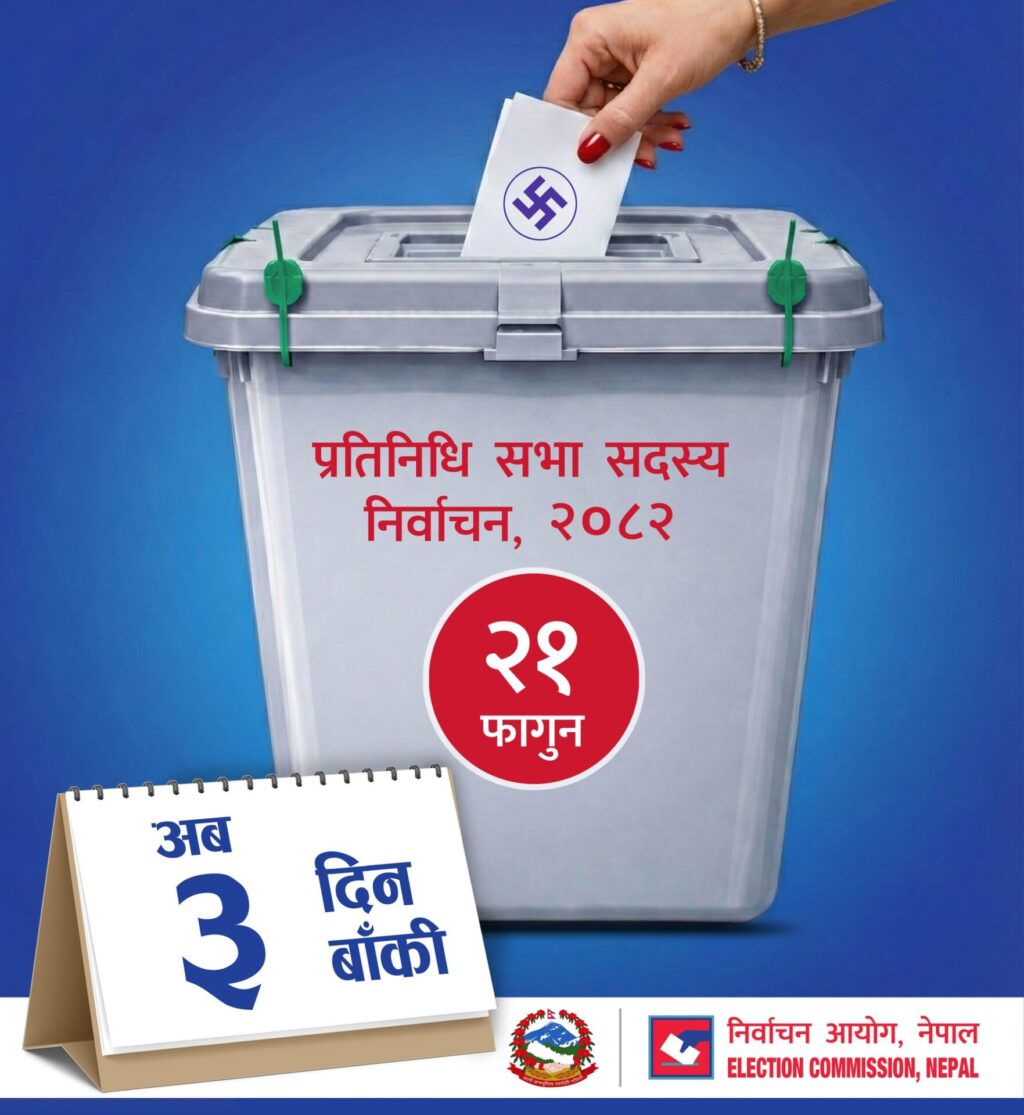
As Nepal heads to an early national election on Thursday (5 March 2026), people in north-east India are watching developments closely. The polls were necessitated by the collapse of Khadga Prasad Sharma Oli’s coalition government during a deadly anti-government Generation-Z rebellion in September 2025.
The uprising, led prominently by students and young people, triggered widespread unrest. It resulted in political instability in Kathmandu and raised expectations across the border for peaceful polling and the emergence of a stable, progressive regime.
Nepal, a Hindu-majority nation of over 30 million people, was originally scheduled to hold general elections in 2027. The last parliamentary polls were conducted in 2022.
However, President Ram Chandra Paudel dissolved the 275-member House of Representatives on 12 September 2025. The decision followed escalating unrest and political paralysis.
An interim government led by retired apex court judge Sushila Karki has since overseen the electoral process.
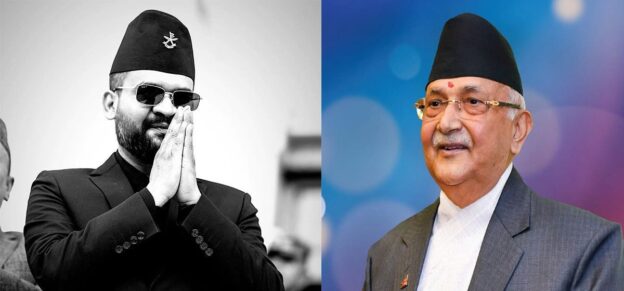
No fewer than four former prime ministers are contesting the election. Among them is the deposed premier Oli, who leads the Communist Party of Nepal (Unified Marxist–Leninist).
Oli faces a strong challenge from Balendra Shah, who recently resigned as Mayor of Kathmandu Metropolitan City. Shah has joined the Rastriya Swatantra Party and is contesting from the Jhapa-5 parliamentary constituency in eastern Nepal.
An engineer-turned-rapper-turned-politician, Shah emerged as one of the leading faces of the September 2025 anti-corruption Gen-Z protests. Local political observers view him as a frontrunner for the premiership.
Oli resigned on 9 September 2025. He alleged that foreign forces instigated the uprising that toppled his government.
The protests left 77 people dead and caused extensive damage to government and private property. Oli claimed the unrest was meticulously orchestrated by external elements. He also made repeated anti-India remarks and criticised New Delhi’s foreign policy toward Nepal, which shares a northern border with Tibet under Chinese control.
The other former prime ministers contesting the polls are Pushpa Kamal Dahal (Prachanda) and Madhav Kumar Nepal of the Nepali Communist Party, and Baburam Bhattarai of the Pragatisheel Loktantrik Party.
Two former premiers—Sher Bahadur Deuba of the Nepali Congress and Jhala Nath Khanal of the NCP—have opted not to contest.
Prachanda, who led the decade-long Maoist insurgency, played a central role in abolishing Nepal’s Hindu monarchy in 2008.
Nepal’s last king, Gyanendra Shah, now lives as a common citizen but continues to make public interventions. On National Unity Day, he criticised political leaders for adopting what he described as an “increasingly imbalanced foreign policy” detrimental to national interests.
He also expressed dissatisfaction and uncertainty regarding the electoral process and its possible outcome.
Nepal shares an open 1,751-kilometre border with India, touching Uttarakhand, Uttar Pradesh, Bihar, West Bengal and Sikkim. As a result, political developments in Kathmandu have direct implications for eastern India and the country at large.
Millions of Nepali nationals live and work in India. Assam, in particular, houses a sizeable population of Nepali-speaking residents.
New Delhi’s relations with Oli’s government, as well as other communist-led regimes in Kathmandu, have often been strained. A key concern has been their perceived proximity to Beijing.
China has significantly expanded its influence in Nepal in recent years, heightening India’s strategic anxieties.
Responding to requests from Kathmandu and various political parties, India handed over nearly 100 pickup vehicles and other logistical supplies to support election preparations. This assistance underscores New Delhi’s intent to maintain engagement with its northern neighbour.
India’s interests in Nepal range from hydropower imports and trade to cross-border connectivity and security cooperation. There are concerns that anti-India elements, allegedly sponsored by Pakistan, have used Nepal as a transit route.
Another major concern is Chinese investment in the Damak industrial park under the Belt and Road Initiative. The project is located near the strategically sensitive Siliguri Corridor—popularly known as the “Chicken’s Neck”—which connects mainland India to the north-eastern states.
Over the past two decades, Nepal has witnessed repeated government collapses, many involving regimes perceived as pro-Beijing.
As the country once again approaches a decisive electoral moment, people in north-east India hope the new mandate will produce a stable and progressive government in Kathmandu—one capable of securing the Indo-Nepal border and preventing its misuse by anti-Indian criminal networks.