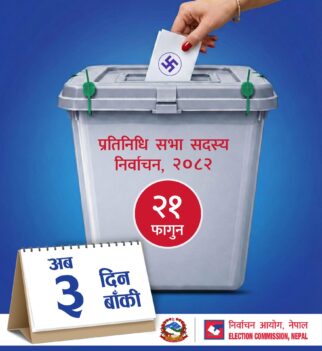
In what many are calling a historic election, Nepal went to the polls on March 5, barely six months after the Gen Z uprising that shook the country and demanded an end to corruption and a generational shift in politics. With that backdrop, all eyes are now on the outcome.
This election has been unlike any other. It has directly challenged the political order that former Prime Minister K. P. Sharma Oli and the old guard maintained for decades. The uprising had pushed the country into uncertainty, and elections were widely seen as the only constitutional way forward. For many, this vote was not just routine—it was about restoring stability, ensuring good governance, and breaking the cycle of political instability.
As the sun broke through the clouds on the morning of March 5, voters dressed in colourful attire made their way to polling stations across the country. Many believed they were participating in what could usher in “a new chapter in Nepal’s political history.”
The overall voter turnout stood at around 60 percent, according to preliminary assessment by the Election Commission of Nepal. Expectations had been higher, given how strongly the Gen Z movement had mobilised calls for “parivartan” or change. Yet even voters above the age of 60 echoed that sentiment. One phrase heard repeatedly was “jasko daari tesko phulbari” (the one with the beard leads the garden).
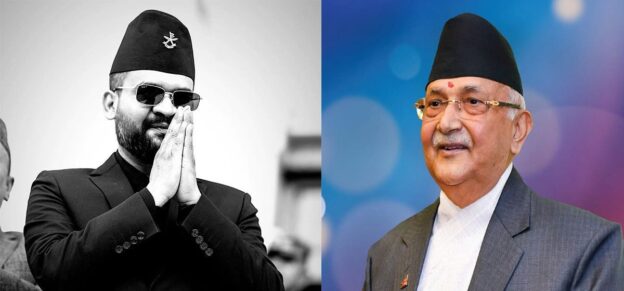
The saying was widely seen as a subtle reference to Kathmandu’s former mayor and RSP’s lead figure Balendra Shah, popularly known as Balen, whose bearded look has become closely associated with his public image. The mood was particularly intense in Jhapa-5, considered the epicentre of the contest, where the rapper-turned-politician was taking on the seasoned UML patriarch, K. P. Sharma Oli.
The elections were largely peaceful compared to past polls in Nepal, which were often marred by violence and intimidation. Damak, under Jhapa-5, where fears of unrest had been high, turned out to be calm and orderly. Nearly 70 percent of voters cast their ballots there, significantly higher than the national average.
Nationwide, 3,406 candidates contested seats in the House of Representatives—2,263 party-affiliated and 1,143 independents. Nepal has 18,903,689 registered voters, and notably, 52 percent fall between the ages of 18 and 40. This demographic, which spearheaded the protests, was widely expected to shape the result.
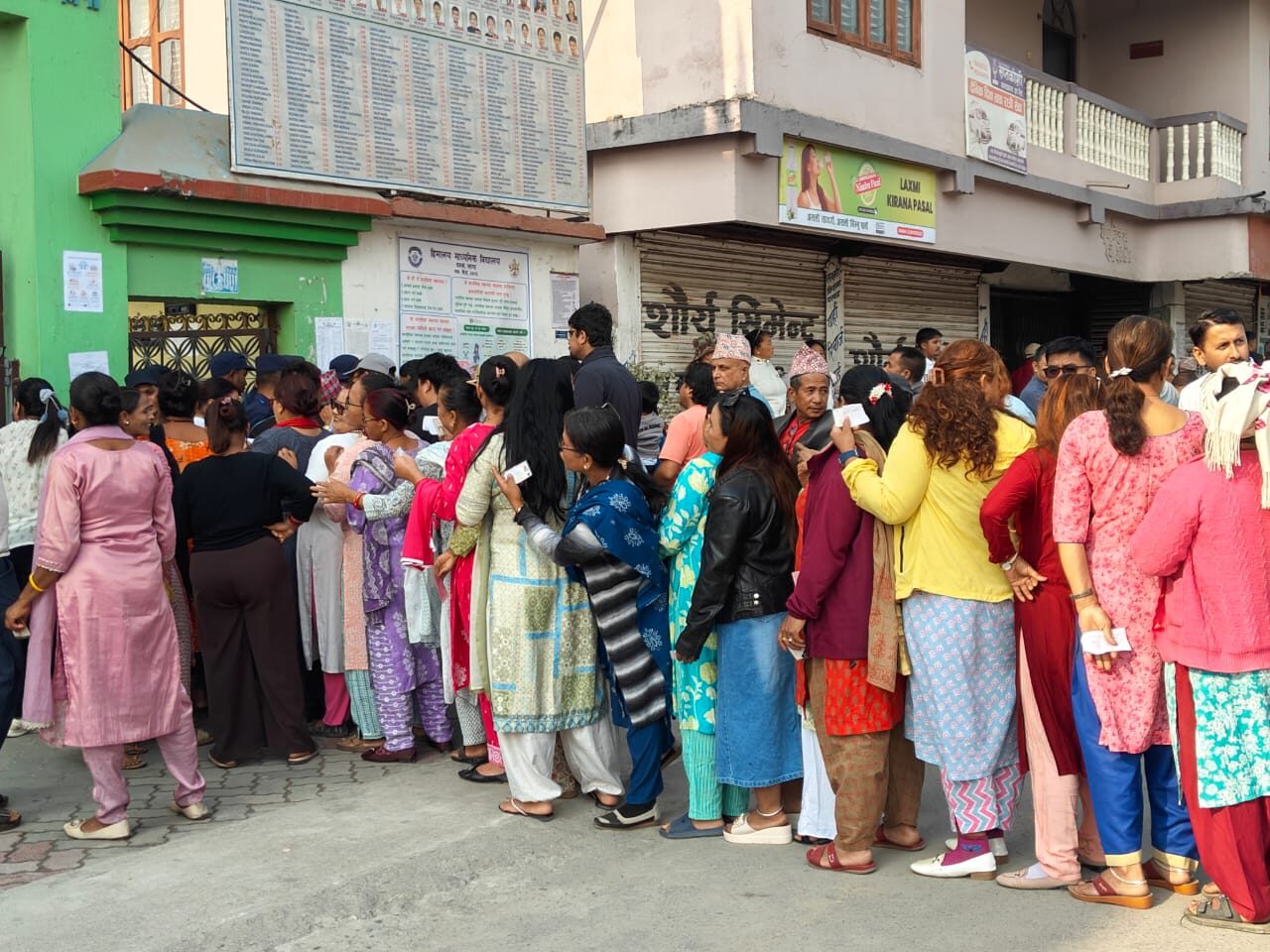
From early morning, when polling began at 7 am, the atmosphere was sober and purposeful. People seemed to approach the ballot box with clear intent. “It is about change. We need it now, or we will perish,” said one voter. A 78-year-old former army official remarked, “This election is special. I have voted for years, but today I know what I want—for myself and for the generations ahead.”
Throughout the day, the sense of momentum was visible. Many felt that the call for change was closely tied to Balen’s campaign. Even the fact that he could not land in Jhapa by helicopter after casting his vote did little to dampen public enthusiasm. On the streets, conversations revolved around why he represented something different and why it might be time to back a new face.
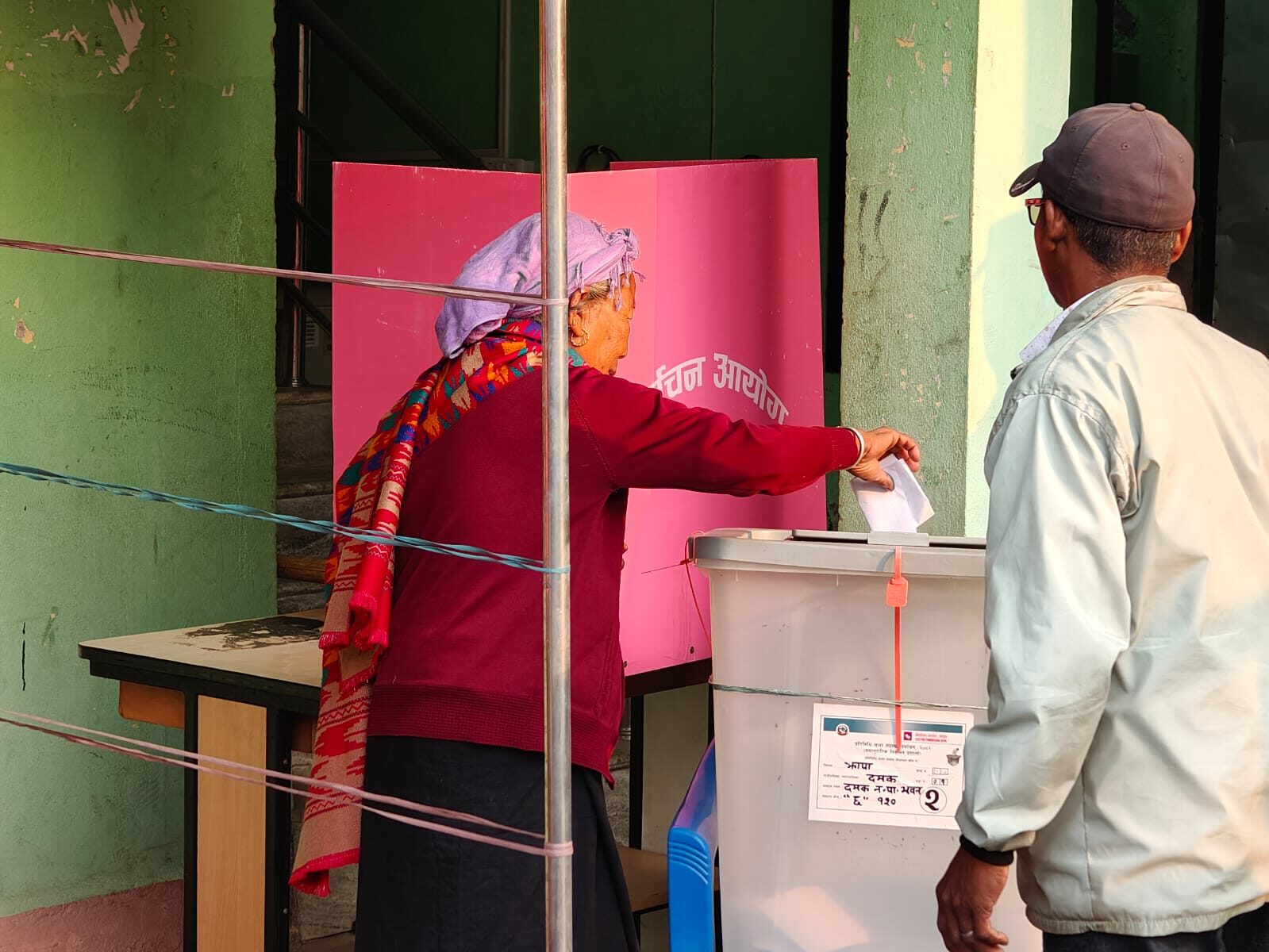
Senior journalist Chiranjivi observed that the turnout in Jhapa-5, touching 70 percent, suggested that the desire for change was genuine. In his view, Balen held a clear advantage, having positioned himself as the voice of the youth and the Gen Z generation, with promises of a corruption-free and developed Nepal. That message, he said, had resonated deeply.
While polling stations saw long queues in the morning, there was a slowdown in the afternoon. Even so, a 60 percent turnout was seen by many as respectable, especially considering that over 4.5 million Nepalis are working abroad and were unable to vote. In March 2026 alone, around 4.5 million Nepalis were employed overseas, many unable to return due to various constraints, including the ongoing global crisis.
For voters like Babu Ram, a taxi driver in Jhapa, numbers were secondary. “When the people decide it is time for change, it happens,” he said, recalling the 2008 Constituent Assembly elections that brought the Maoists to power after years of conflict. That too was a moment of deep public yearning for transformation, even if subsequent governments fell short of expectations.
Since the abolition of the monarchy and the adoption of a new Constitution, Nepalis have hoped for lasting social and political reform. Yet many believe successive governments, particularly under Oli’s leadership, failed to deliver on those promises.
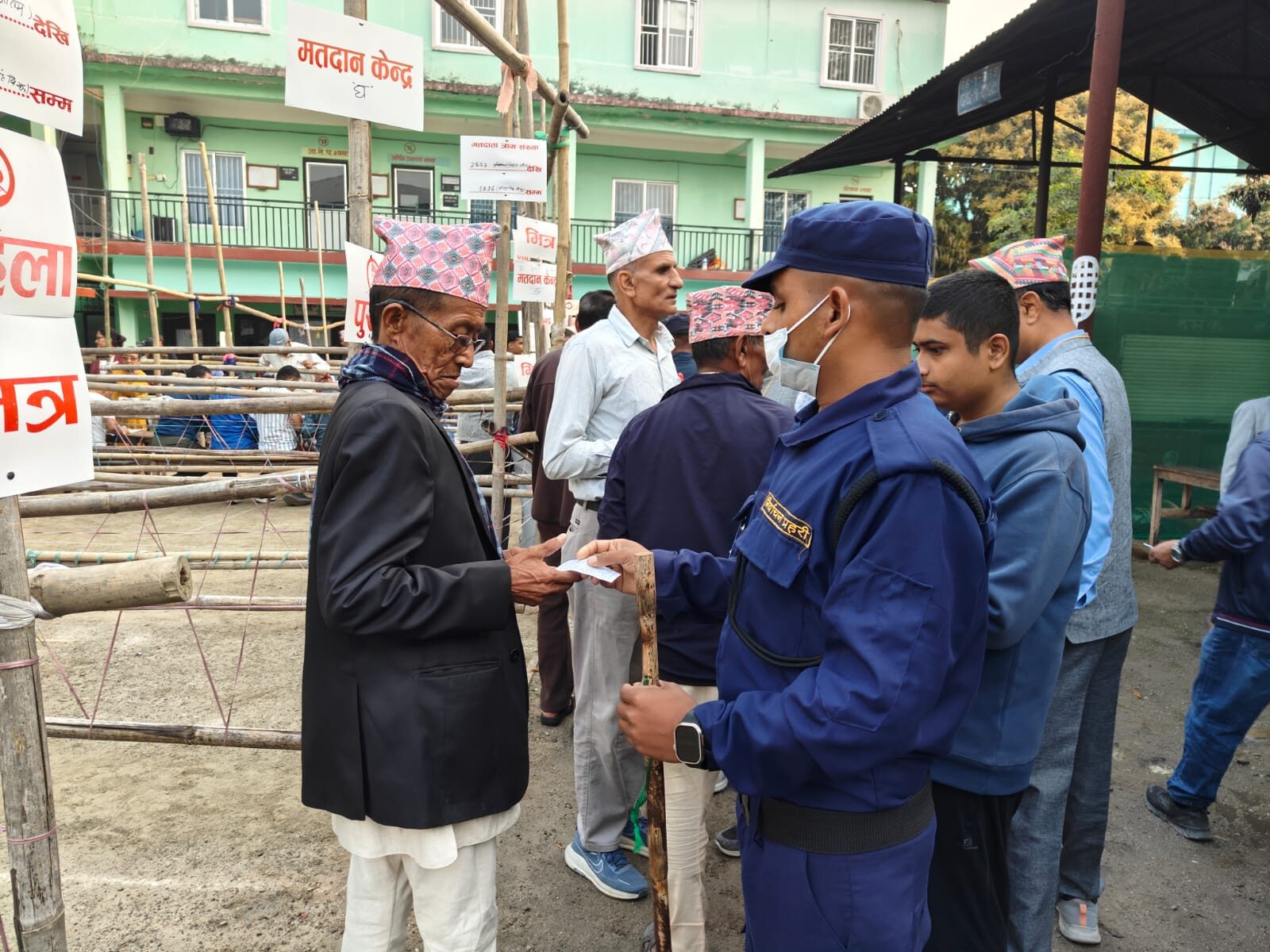
One factor that stood out on election day was the strong security arrangement. The Nepal Army and other agencies formed layered security rings around polling stations. Voters appeared relaxed and unafraid. The Election Commission managed the process smoothly, with polling staff carrying out their duties efficiently. Apart from minor confusion over ballots and isolated incidents, the overall conduct was orderly and commendable.
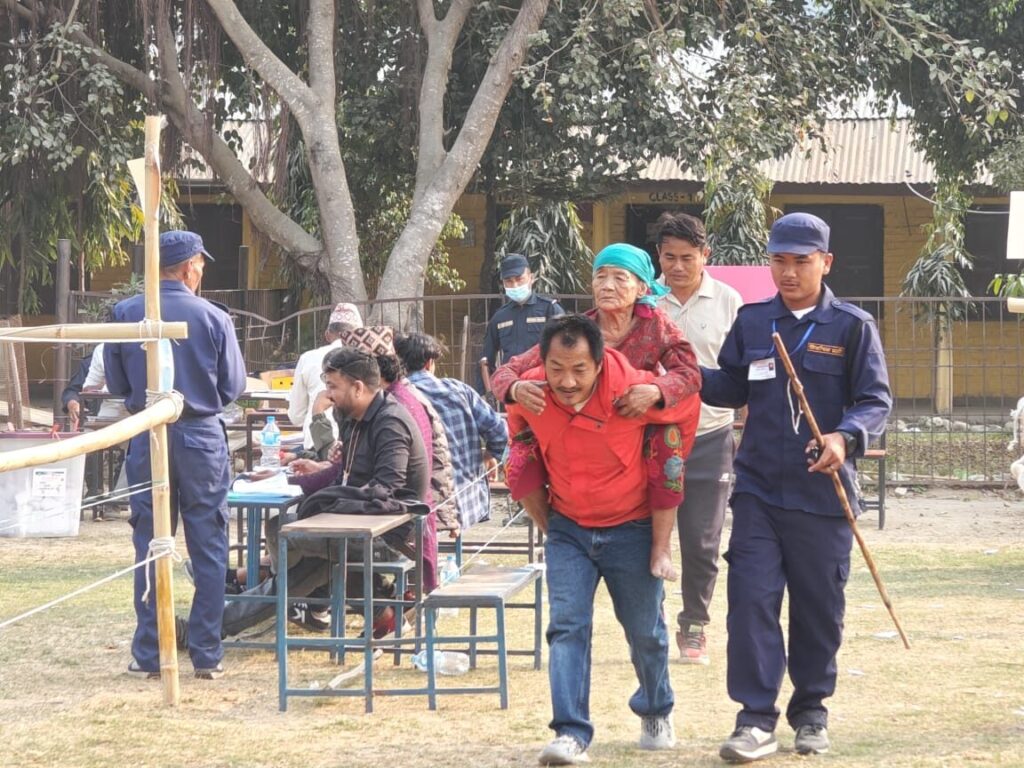
What was especially moving was the determination of voters. Young and old, the specially abled and the physically frail, many walked long distances to cast their ballots. Octogenarians and nonagenarians, some carried on the backs of relatives, arrived at polling stations in scenes that reflected both emotion and resolve. It was a powerful reminder of how deeply Nepalis value their vote.
Even after polling closed at 5 pm, a small stream of voters continued to arrive. There were no major complaints. Ballot boxes for both direct and proportional representation votes were sealed in the presence of party and election observers and prepared for transfer to counting centres. As the day ended, loud applause from presiding officers and the remaining voters marked the close of what many believe could be a defining moment in Nepal’s democratic journey.
With inputs from Bidhayak Das