In a significant push for inclusive development in the Northeast, Union Minister for Social Justice and Empowerment Virendra Kumar conducted an extensive field tour and district review in East Khasi Hills on Sunday, highlighting the role of coordinated governance in accelerating Meghalaya’s development.
Throughout his visit, the Minister underscored the importance of the “double-engine government” model—the alignment between the Union government and the state leadership headed by Chief Minister Conrad K. Sangma—describing it as a key driver behind the state’s recent socio-economic gains.
The day-long engagement combined policy review with ground-level interactions across sectors ranging from primary education and maternal health to housing and digital infrastructure.
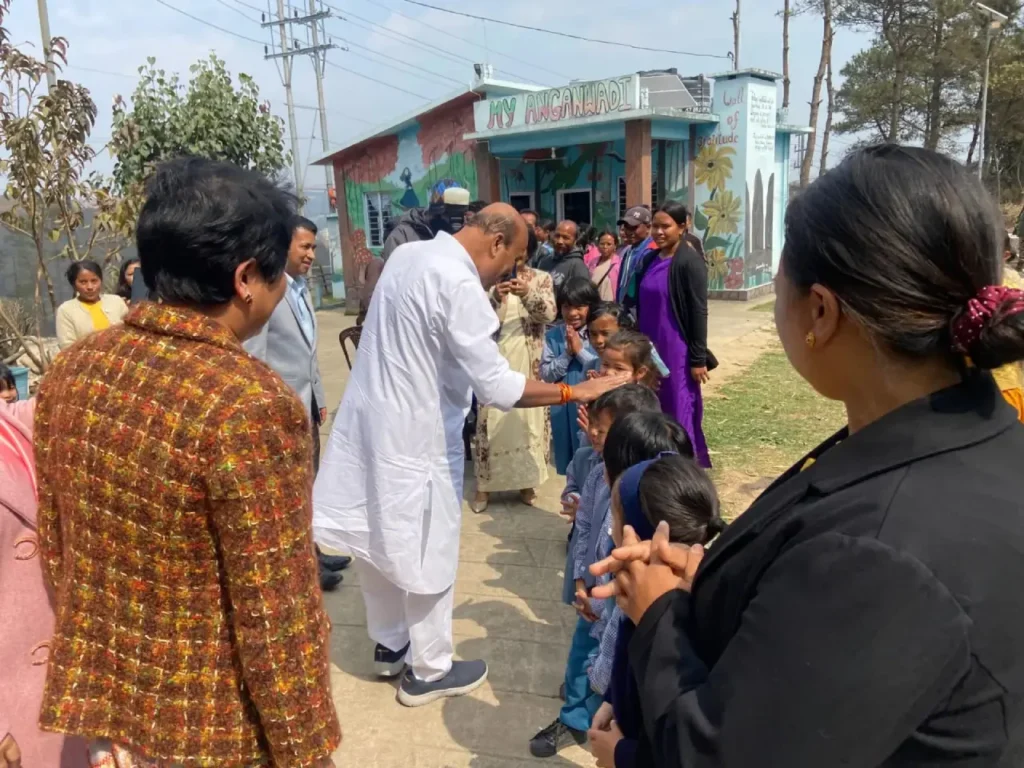
A notable moment during the visit came at the Mawdiangdiang Anganwadi Centre, where the Minister addressed the persistent challenge of anemia among mothers in the state. With data indicating that nearly 50 percent of mothers in Meghalaya are anemic, Dr. Kumar proposed a grassroots nutritional intervention centered on promoting the cultivation of drumsticks, or moringa.
“Nutrition is the foundation of a ‘Viksit Bharat’. Drumsticks (Moringa) are a powerhouse of iron, calcium, and Vitamin C. We must encourage every Anganwadi center to cultivate this vegetable so that ‘Poshan Aahar’ reaches every expecting mother,” the Minister said.
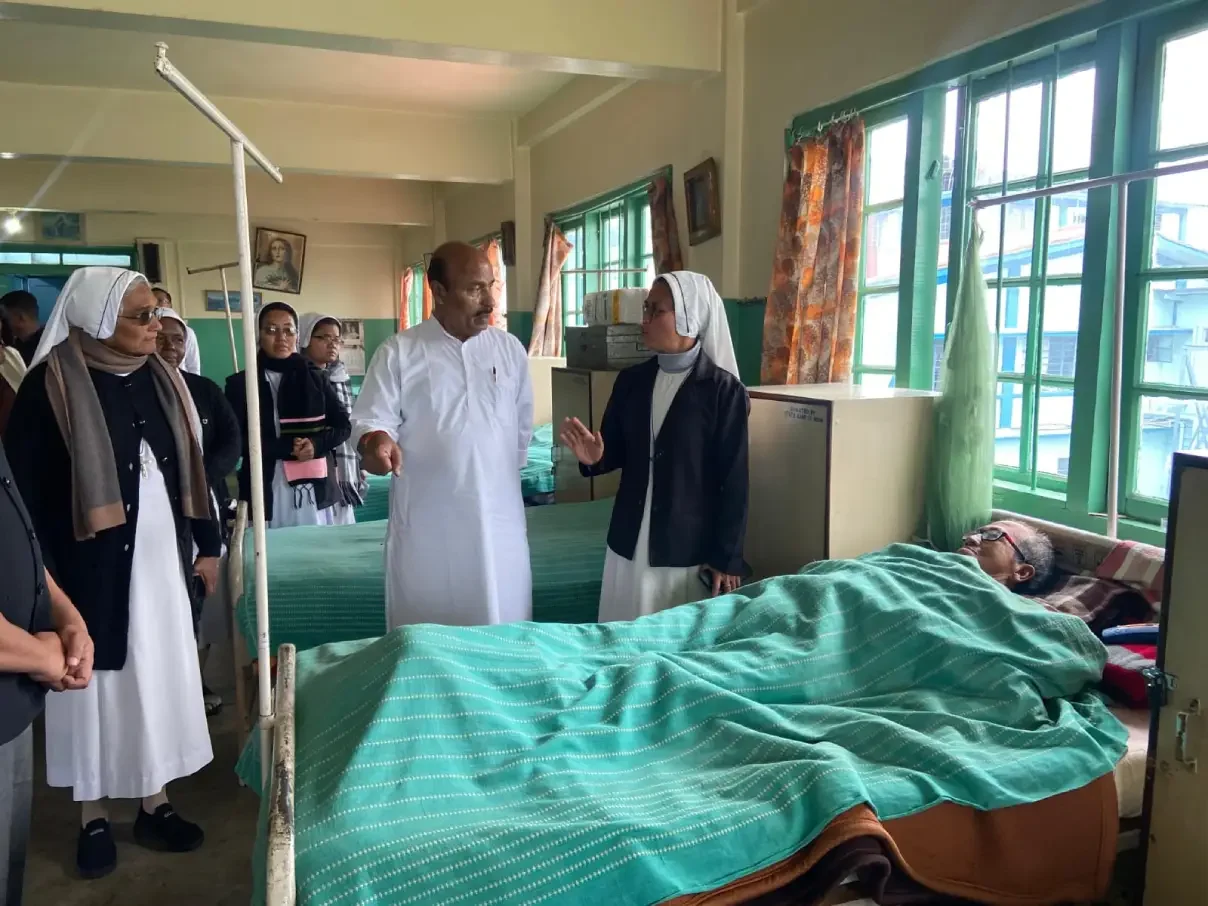
Even as he highlighted the challenge, Dr. Kumar praised the district’s progress in maternal health, noting that East Khasi Hills had recorded a 76 percent reduction in maternal deaths between 2021 and 2025. He urged officials to push institutional deliveries beyond the current 84 percent in order to close the remaining gaps in maternal care.
Later in the day, during a comprehensive review meeting at the State Guest House, the Minister outlined the latest progress under the Pradhan Mantri Awas Yojana in Meghalaya. According to official figures, 23,624 houses have already been completed under the scheme, marking a major step toward the government’s “Housing for All” objective. More than 25,000 houses have also been sanctioned, with beneficiaries receiving integrated support that includes electricity, water connections, and individual household latrines.
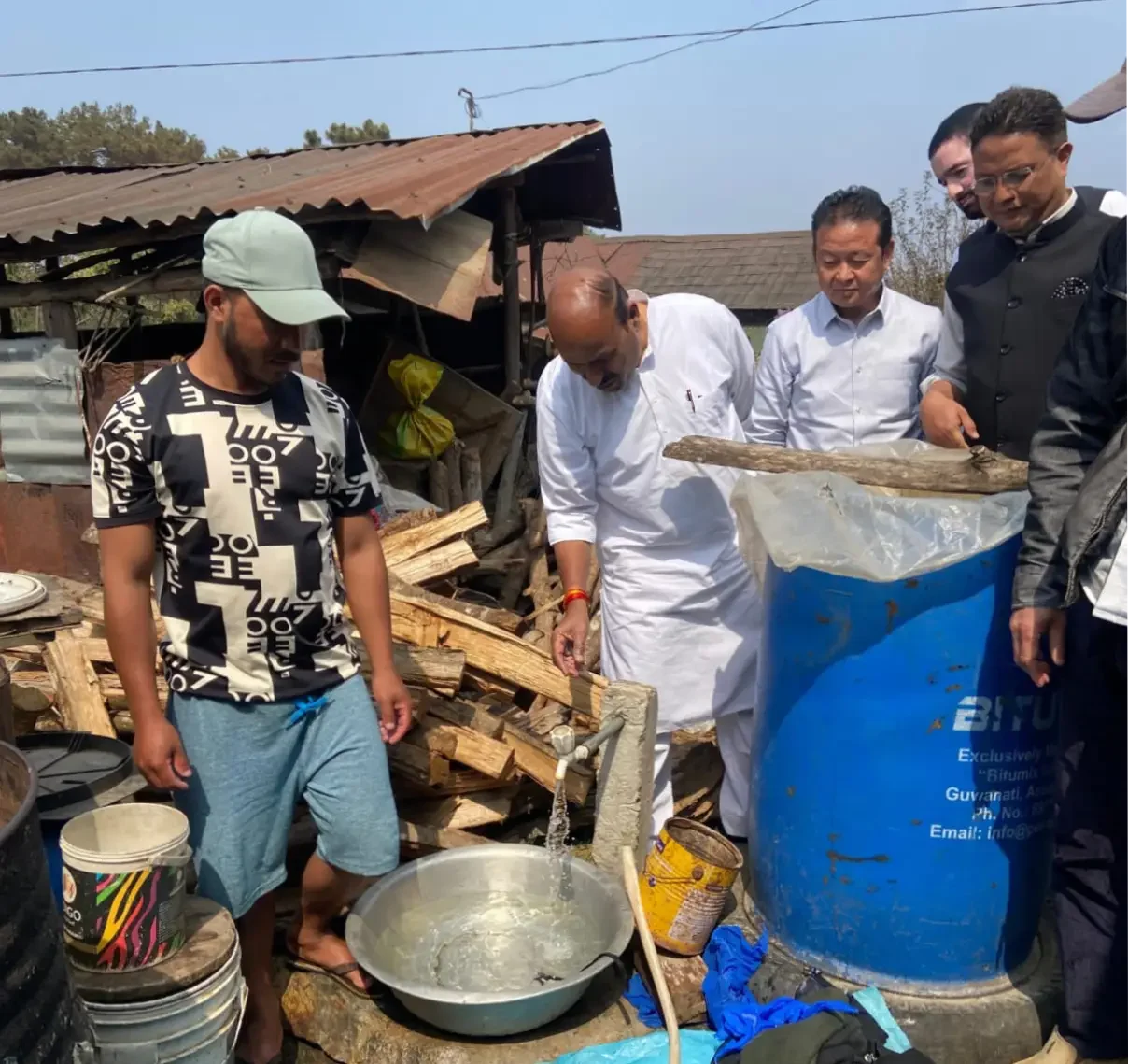
The Minister also reviewed the progress of the Jal Jeevan Mission during his visit to Mawkasiang village. There, he observed how the expansion of household tap water connectivity has significantly reduced the burden on rural women who earlier spent hours fetching water from distant sources.
While acknowledging these gains, Dr. Kumar flagged LPG coverage as an area requiring further attention. He stressed that the Pradhan Mantri Ujjwala Yojana must achieve full saturation in Meghalaya so that smoke-free kitchens become a reality even in the state’s remote and difficult terrains.
During an afternoon interaction with the media, the Minister also addressed the challenge of Aadhaar linkage, which continues to affect the delivery of welfare schemes in certain parts of the state. Meghalaya’s mountainous geography and historical hurdles in enrollment have contributed to lower digital coverage compared to the national average.
Among the issues highlighted were difficulties with OTP verification—often because beneficiaries no longer possess the SIM cards used during their initial enrollment—as well as lingering hesitation among some communities to register for Aadhaar.
Dr. Kumar assured that the Centre was not adopting a rigid approach to these challenges. “If a hill state faces specific inconveniences, we will resolve them through coordinated efforts between the Community Department and the district administration,” he said, adding that awareness campaigns are already underway to address the problem.
Another key stop during the visit was the New Hope De-addiction-cum-Counselling Centre, where the Minister reviewed rehabilitation programs designed to address substance abuse. He praised the centre’s emphasis on vocational training—particularly carpentry and other skill-based activities—arguing that livelihood opportunities are crucial to preventing relapse and ensuring long-term recovery.
Speaking about the broader fight against drugs, Dr. Kumar emphasized that government action alone would not be sufficient. Referring to the national campaign Nasha Mukt Bharat Abhiyan, he said the initiative had triggered a wider national awareness movement but stressed that community participation remains essential.
“The government alone cannot win this battle. It requires the collective participation of social, religious, and community organizations. Under the Nasha Mukt Bharat Abhiyan, we are seeing a national awakening, but Meghalaya’s community leaders must lead the charge locally,” he said.
As the visit concluded, the Minister also called for greater value addition in products produced by rural Self-Help Groups (SHGs). Strengthening market linkages and expanding irrigation coverage under the Pradhan Mantri Krishi Sinchayee Yojana, he said, would help transform rural Meghalaya into a hub of agricultural productivity.
The tour ultimately underscored both the progress achieved and the challenges that remain. While issues related to terrain, connectivity, and digital inclusion persist, Dr. Kumar said coordinated governance between the Centre and the Meghalaya government is steadily narrowing the developmental gap between the Northeast and mainland India.