While the immediate crisis in the Garo Hills appears to have eased, the core issue remains unresolved: the participation of non-tribals in the Garo Hills Autonomous District Council (GHADC). The council’s provisions allowing non-tribals to contest from specific constituencies continue to lie at the heart of the unrest, particularly in the plain belt regions such as Phulbari, Rajabala, and Mahendraganj, where demographic realities have shaped representation.
Unlike the Khasi and Jaintia Hills District Councils, the GHADC has, since its inception in 1952, allowed non-tribals to vote and contest in three of its 29 seats. This arrangement is largely rooted in the population structure of the region, where non-tribal communities form a significant presence in these areas.
However, this has long remained a point of tension. Autonomous District Councils under the Sixth Schedule of the Constitution—read with Articles 244(2) and 275(1)—were created to safeguard the land, identity, and cultural rights of indigenous tribal communities across Assam, Meghalaya, Tripura, and Mizoram. These councils enjoy legislative, administrative, and judicial powers aimed at protecting tribal interests.
They can make laws on land, forests, water, inheritance, and social customs, while also constituting village and district courts, excluding serious criminal cases. They are empowered to collect land revenue, impose taxes, and manage local resources. In the GHADC context, the inclusion of constituencies with significant Bengali-speaking Muslim populations and other groups has often been seen as a practical accommodation within this framework.
Despite this, resentment has been building over time. Organisations such as the Garoland State Movement Committee (GSMC) and the All Achik Youth Federation (ACYF) have intensified demands for a complete ban on non-tribals contesting elections. These groups have also blamed political parties, particularly the Congress, for enabling such provisions.
The GSMC has gone further, calling for restrictions on business activities by non-tribals in Garo Hills, including Tura. In January, its Central Executive Committee adopted resolutions aimed at regulating their presence and activities across the region.
The situation escalated after a February 17, 2026 notification by the GHADC Executive Committee mandating that all candidates must possess a Scheduled Tribe certificate. This effectively barred non-tribals from contesting. While some defended the move as necessary to protect tribal interests, it was quickly challenged.
On March 10, 2026, the Meghalaya High Court quashed the order. Justice Hamarsan Thangkhiew ruled that the Executive Committee had bypassed mandatory procedures, including approval from the full Council and the assent of the Governor.
Even before the court’s ruling, tensions had spilled onto the streets. On March 9, Esmatur Mominin, a Bengali Muslim Trinamool Congress leader and former MLA from Phulbari, faced strong opposition while filing his nomination in Tura.
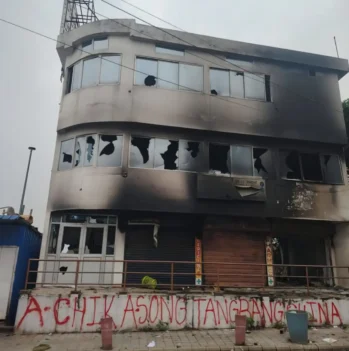
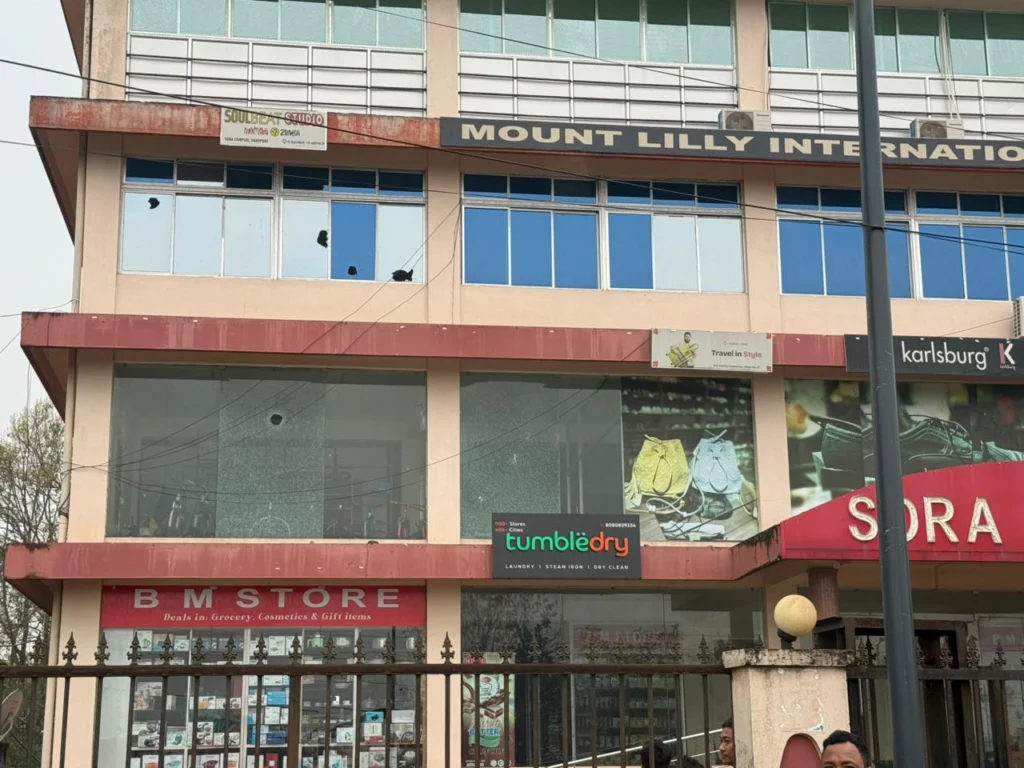
That same night, violence escalated in Chibinang, where his residence is located, as clashes broke out between tribal and non-tribal groups. The unrest led to fatalities and triggered a curfew in West Garo Hills.
The curfew continues from 6:00 AM to 6:00 AM, with relaxations provided on March 19 from 6:00 AM to 6:00 PM to allow essential movement and activities.
Amid efforts to stabilise the situation, the Meghalaya State Cabinet has extended the GHADC’s tenure by six months, from April 18, 2026, to October 18, 2026. Deputy Chief Minister Prestone Tynsong described the move as a “mechanical necessity” to restore communal harmony and allow time for reforms.
This decision came alongside major political developments. In Tura, Chief Executive Member (CEM) Albinush R. Marak resigned after losing the confidence of 21 MDCs. He has been replaced by Dormonarth Ch. Sangma as the new CEM.
Tynsong dismissed speculation of internal rifts, stating that the previous Executive Committee collapsed due to procedural violations. Marak, he said, had issued the ST certificate notification independently, calling it a “one-man show” that bypassed constitutional norms.
Meanwhile, security forces have intensified action against those linked to the violence. So far, 28 individuals have been arrested, including former MDC Sofiur Rehman from Balachanda, who was picked up from New Bhaitbari.
Others arrested include Balkarin Marak of the GSMC and Johnny A. Marak of , both suspected of involvement in the disturbances that led to two deaths.
Looking ahead, the government plans to use the next six months to consult political parties and civil society on the issue of non-tribal participation. Legislative amendments are expected to be drafted in line with public sentiment and constitutional provisions.
A high-level security review is also underway to decide on lifting the curfew and internet restrictions in West Garo Hills.
For now, calm appears to have returned. But whether this marks a resolution or merely a pause depends on how the state navigates the deeper questions of identity, representation, and constitutional balance in the months ahead.