
Assam is set to vote on April 9 in a high-stakes Assembly election that is shaping up to be deeply competitive, with the politics of polarisation once again taking centre stage. The ruling Bharatiya Janata Party (BJP), led by Chief Minister Himanta Biswa Sarma, has anchored its campaign around the issue of “illegal infiltration,” promising decisive action to rid the state of alleged infiltrators.
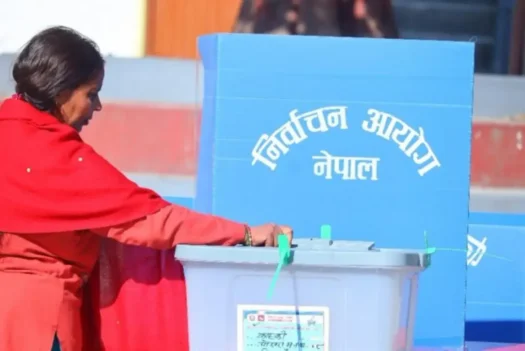
The state will go to the polls in a single phase to elect a 126-member Assembly, with counting set for May 4. As part of its seat-sharing arrangement within the National Democratic Alliance (NDA), the BJP is contesting in 89 constituencies, while its allies—the Asom Gana Parishad (AGP) and the Bodoland People’s Front (BPF)—will field candidates in 26 and 11 seats respectively.
On the other side, the Opposition has come together in a broad alliance aimed at preventing the BJP from securing another term. The Congress is contesting in partnership with the Assam Jatiya Parishad (AJP), CPI(M), All Party Hill Leaders’ Conference (APHLC), and CPI (Marxist-Leninist) Liberation. The Congress moved early, announcing candidates in multiple phases—even before the Election Commission declared the poll dates on March 15—signalling an attempt to consolidate its position quickly.
The tone of the BJP’s campaign was set in Guwahati, where Union Home Minister Amit Shah and Chief Minister Sarma reiterated their commitment to removing “illegal infiltrators” not only from Assam but across India. The issue has remained central to the BJP’s electoral strategy in the state over successive elections.
In the months leading up to the polls, Sarma has made a series of controversial remarks targeting Miya Muslims, drawing legal challenges and criticism from civil society. A group of prominent Assamese intellectuals, including Sahitya Akademi awardee Hiren Gohain, filed petitions accusing the Chief Minister of making divisive and inflammatory statements. On February 16, 2026, the Supreme Court declined to hear the matter directly, directing the petitioners to approach the Gauhati High Court.
Earlier, in a letter dated February 5, several public figures—including Hiren Gohain, Harekrishna Deka, and Dr. Indrani Dutta—had urged the Gauhati High Court to take suo motu cognisance of what they described as repeated inciteful statements by the Chief Minister. The petition alleged a “climate of impunity,” claiming that the absence of police action had enabled continued targeting of a specific group.
Sarma, however, has defended his remarks, arguing that the term “Miya” is used by the community itself and that his statements do not violate constitutional principles. He has maintained that his government’s focus is on protecting Assam’s identity, security, and future, rather than targeting any religion or lawful citizen.
Bengali-speaking Muslims—often referred to as ‘Miyas’—have increasingly found themselves at the centre of the political narrative, frequently being portrayed as “illegal infiltrators.” Sarma has gone as far as publicly urging pressure tactics against the community, remarks that have sparked intense political debate and concern.
He has also directed party workers to file bulk objections under ‘Form 7’ during the Special Revision of electoral rolls. This form is used to challenge the inclusion of names in the voter list, raising concerns among Opposition parties about possible misuse.
In a recent interview on national television, Sarma reiterated his stance, suggesting that creating an atmosphere of discomfort could push certain groups to leave the state. At the same time, he claimed that such rhetoric is not part of his formal election campaign, which he described as focused on development and positive messaging.

Critics argue that such distinctions make little difference, as the messaging prior to the announcement of elections has already shaped public perception. Many believe that the groundwork for polarisation has been firmly laid well before the campaign officially began.
Among sections of voters, particularly in BJP strongholds like Jalukbari, there is visible support for aggressive measures, often framed as “bulldozer action” against alleged encroachers. On the day the election schedule was announced, Sarma reiterated that bulldozers would be used to clear even small plots of land occupied by “Ghuspatias” (a colloquial term locally used to refer to alleged infiltrators) ” if the BJP returned to power.
These positions are often backed by references to the Supreme Court’s 2005 judgment in Sarbananda Sonowal v. Union of India, which described illegal migration as a form of “demographic invasion.” While the judgment has been criticised for relying on contested data, Sarma has cited it to justify his government’s stance.
He has argued that acknowledging such concerns is not communal but a recognition of a long-standing issue. According to him, the government’s actions are aimed at safeguarding the state’s future rather than targeting any particular group.
At the same time, the BJP has highlighted its record of clearing over 50,000 acres of land from alleged encroachers, with plans to free even more land in the coming months. Despite this, Sarma has insisted that the party’s campaign is not driven by emotion or communal appeals but remains “positive” in tone.
The Opposition, however, has strongly contested this narrative. Congress leaders have accused the BJP government of violating constitutional norms, particularly through eviction drives in areas such as Sonapur, which they claim disproportionately affect vulnerable communities without adequate rehabilitation.
There are also allegations that land cleared during these drives is being prepared for allocation to large corporate entities, including major industrial groups, under the guise of removing illegal settlers.
Concerns have further been raised over the electoral process itself. The Opposition alliance has alleged that genuine voters—especially those displaced by eviction—are being excluded from electoral rolls and denied the opportunity to update their details through Form 8.
Earlier this year, Leader of the Opposition Debabrata Saikia wrote to the Chief Justice of India, calling for intervention. He described the situation as a “constitutional crisis,” alleging systematic interference in the electoral process through communal targeting and administrative actions.
Saikia pointed to statements by the Chief Minister that suggested a deliberate effort to reduce the electoral influence of “Miya” voters, calling it an unprecedented admission of intent to alter the electorate on communal lines.
The Gauhati High Court has since taken note of these concerns and listed a Public Interest Litigation (PIL) seeking judicial scrutiny of the alleged large-scale misuse of objections during Assam’s Special Revision of electoral rolls.
Meanwhile, regional parties such as the Assam Jatiya Parishad have questioned the Election Commission’s decision to hold the polls in a single phase with a short campaign window. Party leaders argue that the limited time frame disproportionately benefits the ruling party, making it difficult for smaller parties to campaign effectively across the state’s challenging terrain.
Adding another layer to the contest is the fact that this will be the first Assembly election after the 2023 delimitation exercise. The redrawing of constituencies reduced the number of Muslim-majority seats from 29 to 22, effectively removing several constituencies where voters of East Bengal origin could have played a decisive role—an issue that continues to draw political attention.
As campaigning gathers pace, both sides are sharpening their strategies. While the BJP projects governance and identity as its core themes, the Opposition is attempting to build a counter-narrative around constitutional rights, inclusivity, and due process.
With positions hardening and rhetoric intensifying, the election is not just a contest for power but a reflection of deeper social and political fault lines. As Assam heads to the polls, many observers believe that the emotional pitch of the campaign has already been set—well before a single vote is cast.