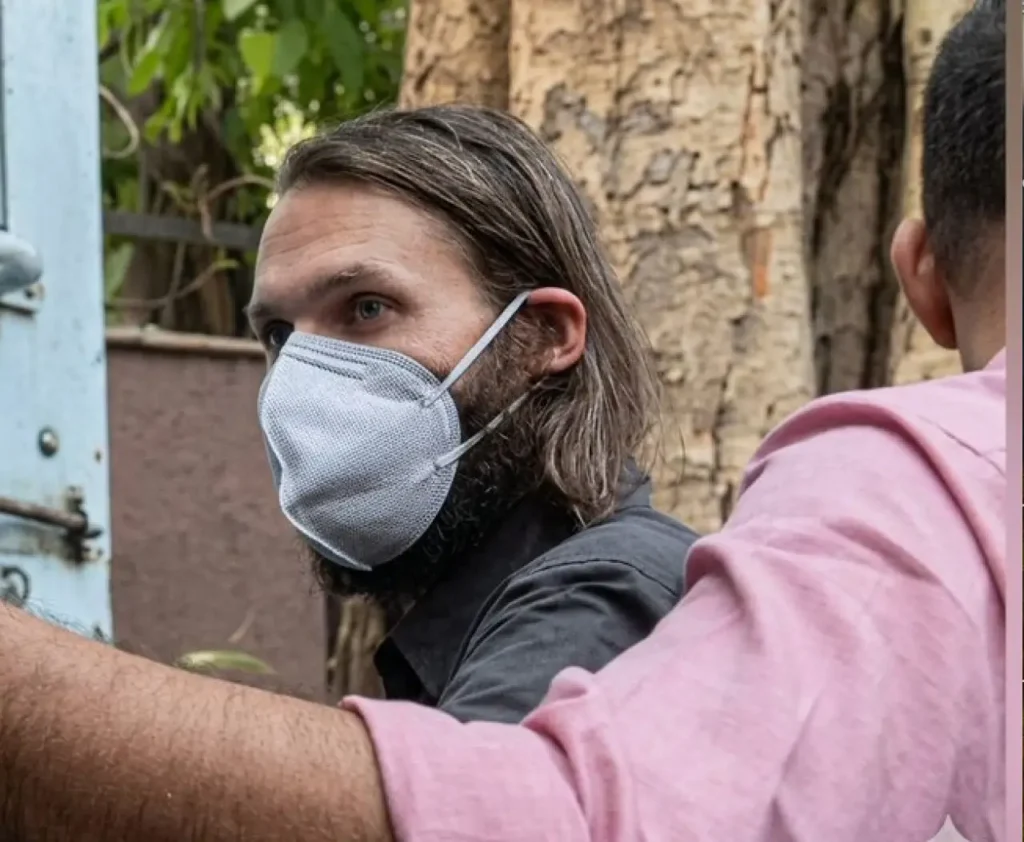
Their journeys rarely draw attention. Moving through India’s northeast—across porous borders, small towns and difficult terrain—they slip into Myanmar’s conflict zones, often undetected. It is a route fraught with risk and layered with security concerns, yet one that has been used repeatedly. The recent arrest of American national Matthew Aaron VanDyke—a veteran of multiple covert conflicts—and six Ukrainian nationals has brought this shadowy movement into view. But their capture is only a glimpse into a much larger, largely unseen network.
What these arrests underline is not an isolated breach, but a pattern—one that reflects a steady and organised flow of foreign operatives into Myanmar, where they have come to be seen as an “important” component of an expanding proxy war since the 2021 military coup.
Over time, their presence has become an “accepted reality” for many on the ground. In rebel camps across Myanmar, especially among groups like the People’s Defence Force (PDF), foreign trainers offering combat skills are often seen as necessary allies in a fight they believe is for democracy.
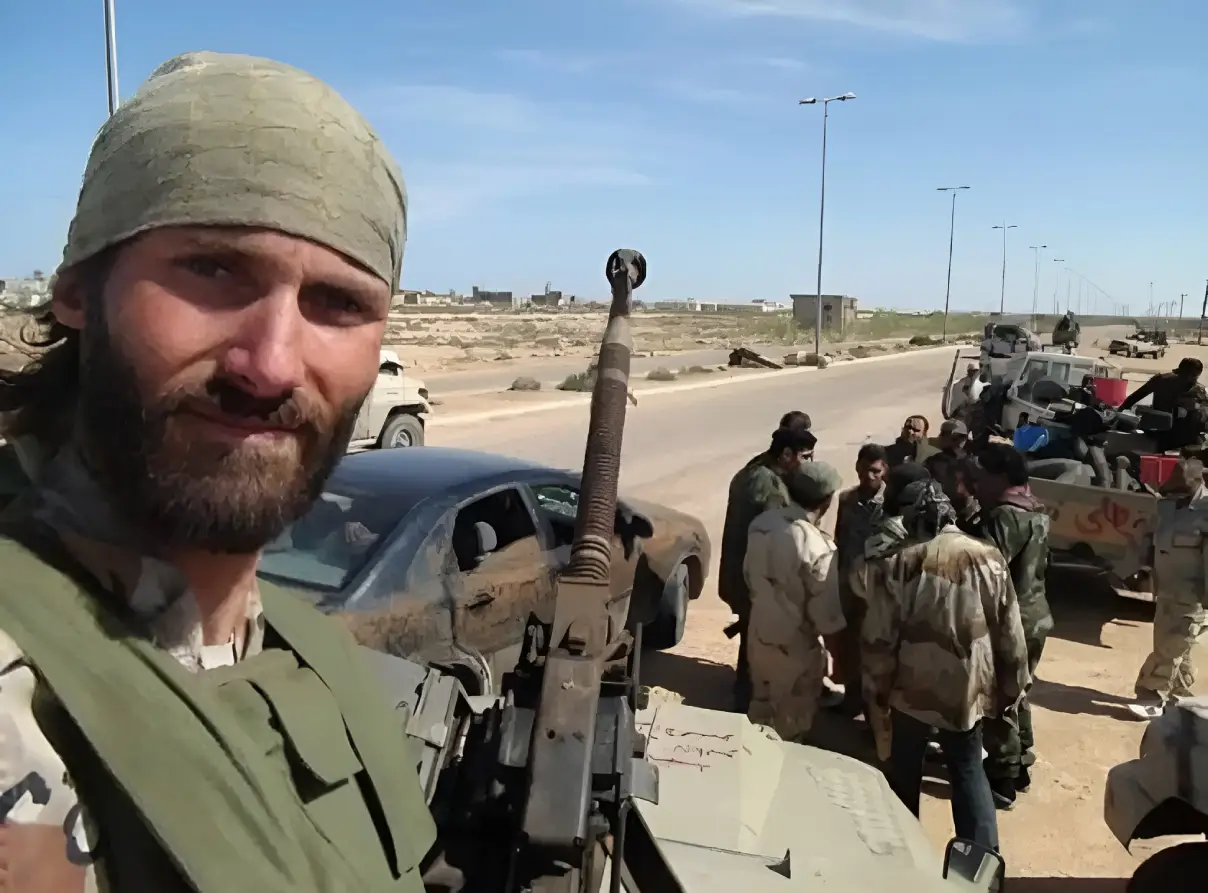
It is in this context that India’s National Investigation Agency (NIA) arrested VanDyke and six Ukrainian nationals on March 16 from cities including Delhi, Kolkata and Lucknow. They were remanded to custody under the Unlawful Activities (Prevention) Act (UAPA), accused of conspiracy to commit terrorist acts. According to the agency, the group entered India via Mizoram and was training Myanmar-based armed groups—some with links to insurgent outfits in India’s northeast.
In court, the agency described them as part of a wider covert network that may have used Indian territory as a staging ground—for training, logistics, and possibly even moving weapons. The charges include terrorist conspiracy and arms smuggling.
And yet, despite its seriousness, the story has drawn little global attention.
Stories from the borderlands
For those who have spent time along the India-Myanmar-Thailand border, this silence is not surprising. I remember first hearing the name VanDyke in Mae Sot, a Thai border town, sometime in late 2021. A young doctor-turned-fighter, Dr. Pyae Phyo, spoke about foreign trainers with a kind of certainty that stayed with me.
He hadn’t trained under VanDyke himself, but he didn’t seem surprised by such figures. “They will continue to come,” he said. For him, that was simply the reality of the war.
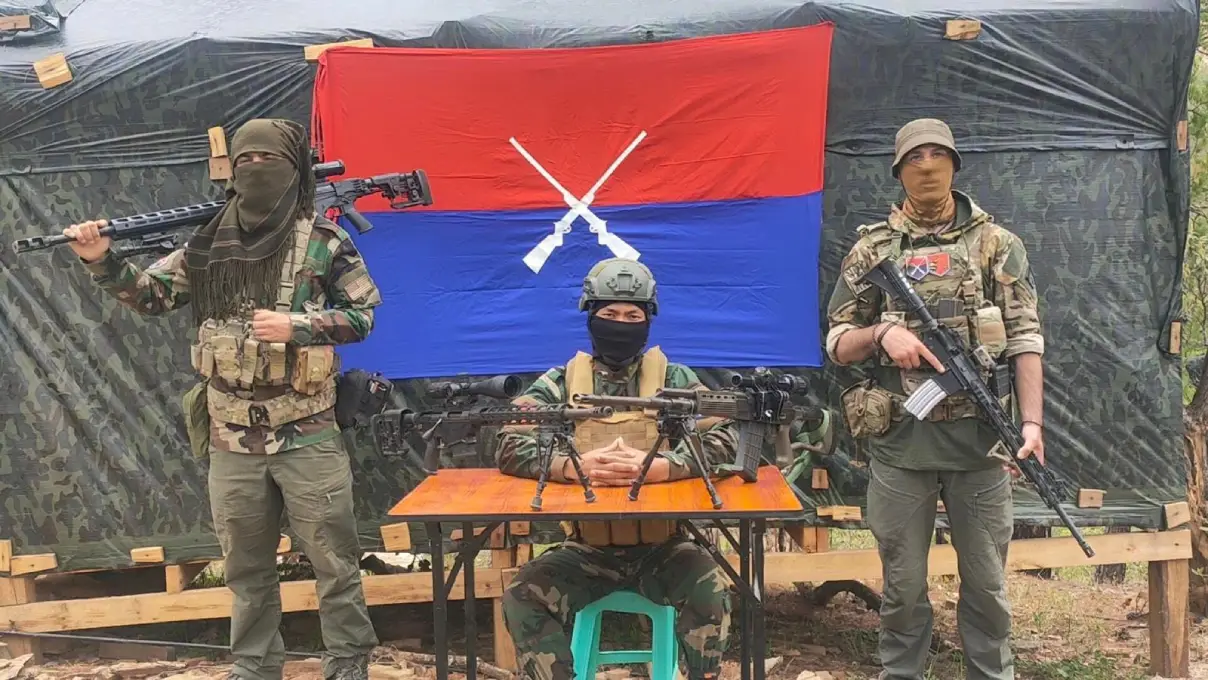
Phyo had instead trained with another group—the Free Burma Rangers (FBR)—in Loikaw in Kayah (Karenni) State. His training covered firearms, combat tactics and battlefield medical care. He later took part in ambushes against the military junta before being injured and relocating to Mae Sot, where he continued helping fighters as a medic.
What stayed with me was the footage he showed—clips described as “humanitarian missions” by the FBR. But what they revealed was more layered: armed patrols, weapons training, and close coordination with local militias.
Even Phyo seemed conflicted. He recalled how FBR leader David Eubank, a former US Special Forces operative, would often speak about faith, peace, and love. “He would talk about loving the Lord Christ,” Phyo said, “but at the same time, they were training us to fight.”
That contradiction captures much of what is unfolding in Myanmar.
Routes, networks and what India is seeing
The recent arrests raise serious concerns, but the routes used are not new. The stretch from Mizoram’s Zokhawthar into Myanmar’s Chin State—towards places like Tonzang—has long been used by various actors, including foreign visitors, former insurgents, and even ex-members of the Chin National Front (CNF).
What is worrying this time is how VanDyke and his associates reportedly travelled—likely sometime in 2025—without obtaining the mandatory Restricted Area Permit (RAP). That points to gaps in monitoring.
There are also allegations that they had contact with banned insurgent groups operating in India’s northeast, including United Liberation Front of Assam (Independent)/ ULFA(I) and National Socialist Council of Nagaland-Khaplang (NSCN-K) factions. If true, that moves the issue from being just about Myanmar to something that directly affects India’s internal security.
At the same time, there’s been a rush—especially on social media—to frame this as part of a larger CIA plot or to link it to drone use in Manipur. That may be stretching the evidence too far.
Yes, the United States has historically supported anti-regime forces in different parts of the world, and Myanmar is no exception. But suggesting a direct covert operation aimed at destabilising India does not quite fit, especially given the broader strategic relationship between New Delhi and Washington.
Still, one detail stands out. The NIA has said that VanDyke was training fighters in drone warfare—how to assemble them and even jam signals. That’s a significant development. Drones change the nature of conflict, and their movement across borders is not something any security agency can ignore.
From sources inside Myanmar, it appears VanDyke and the Ukrainians were working in Chin State under a mission they described as “together with Myanmar revolution.”
A rebel fighter, James Muang Thu from the Chin National Democratic Front (CNDF), put it bluntly. He said he would not be surprised if these foreign fighters had interacted with Indian insurgent groups. “This is normal,” he said. “Even in the past, foreigners who came to support us met Indian armed groups. It’s about weapons… getting more arms.”
That one line perhaps explains more than any official statement.
A larger, older pattern
There is also the internal complexity within Myanmar itself. The foreigners were reportedly working with factions linked to the Chin Brotherhood Alliance—a coalition that includes the CNDF, Chin People’s Army, Maraland Defence Force (MDF), and Zoland Defence Force (ZDF).
Interestingly, the Chinland Council (CC), which includes the Chin National Army (CNA), was not part of these trainings. The two blocs have had their own tensions, often clashing over territory and control—especially around trade routes like those passing through Tonzang.
Some sources even suggest that these internal rivalries may have played a role in exposing the foreign group.
There are also unconfirmed reports that Russian intelligence may have tipped off Indian authorities. Whether that is true or not remains unclear. But it does reflect the increasingly global nature of what is happening in Myanmar.
And then there is what Mizoram Chief Minister Lalduhoma said in 2025. Speaking in the State Assembly, he revealed that nearly 2,000 foreigners had entered Mizoram between June and December 2024. Many, he said, were not tourists—and some crossed into Myanmar’s Chin Hills to provide military training before leaving unnoticed.
That statement, in hindsight, feels like a warning.
Between humanitarian work and combat training
Groups like VanDyke’s Sons of Liberty International (SOLI) openly talk about supporting “oppressed populations.” On paper, they describe themselves as non-profit organisations. In practice, they provide military training, advisory support, and sometimes even supplies to armed groups.
VanDyke himself has been involved in conflicts across Libya, Syria, Iraq, and Ukraine—often embedding with rebel fighters.
The Free Burma Rangers present a similar image—humanitarian, faith-driven, non-profit. Yet, as seen on the ground, their work often overlaps with military training and operational support.
There are also persistent claims—difficult to independently verify—that such groups receive funding linked to US channels and maintain some level of reporting through diplomatic networks, including the US Consulate in Chiang Mai. Local sources in Myanmar say that every training exercise, every deployment of resources, is closely tracked.
At the same time, Thai authorities are widely believed to be aware of cross-border movements but largely choose to look the other way.
None of this is entirely new. These patterns have existed for years.
What really matters now
The arrest of VanDyke and the Ukrainians has certainly raised alarms in India. Not just because of who they are, but because of what their presence represents.
There are other groups too. The Anti-Fascist Internationalist Front (AIF), formed in October 2024, has been working with PDF Zoland in Chin State. It openly calls for foreign volunteers and claims to have trained local fighters and taken part in battles.
All of this points to one thing—the Myanmar conflict is no longer contained within Myanmar.
There is also a larger geopolitical layer. Many believe that the United States is quietly supporting Myanmar’s pro-democracy forces, partly to counter China’s growing influence in the region. The National Unity Government (NUG), which operates largely in exile, is often seen as part of that wider alignment.
But again, jumping to conclusions—like calling VanDyke a CIA asset or claiming a direct US plot against India—would be premature. Those claims remain unproven.
What is more immediate, and more real, is this: India’s borders are being used.
The Indo-Myanmar frontier, especially through Mizoram and Manipur, is not just difficult terrain—it is strategically critical. Routes like Zorinpui connect to major projects like the Kaladan Multi-Modal Transit Transport Project. Areas like Paletwa, now under the control of the Arakan Army, are key to regional trade.
This is not even the first such incident. In 2023, four foreign nationals—including Americans and Canadians of Burmese origin—were intercepted while trying to cross into Myanmar near the same border.
And yet, there has been a noticeable silence—from the government, from the opposition, and even from much of the media.
Strategic analyst Brahma Chellaney perhaps put it most sharply on his X handle: India’s northeast is no longer just next to the Myanmar conflict—it risks becoming an operational corridor within it.
That is the real story here. Not just who was arrested, but what their journey reveals.
Because whether we acknowledge it or not, the war next door is no longer just next door.