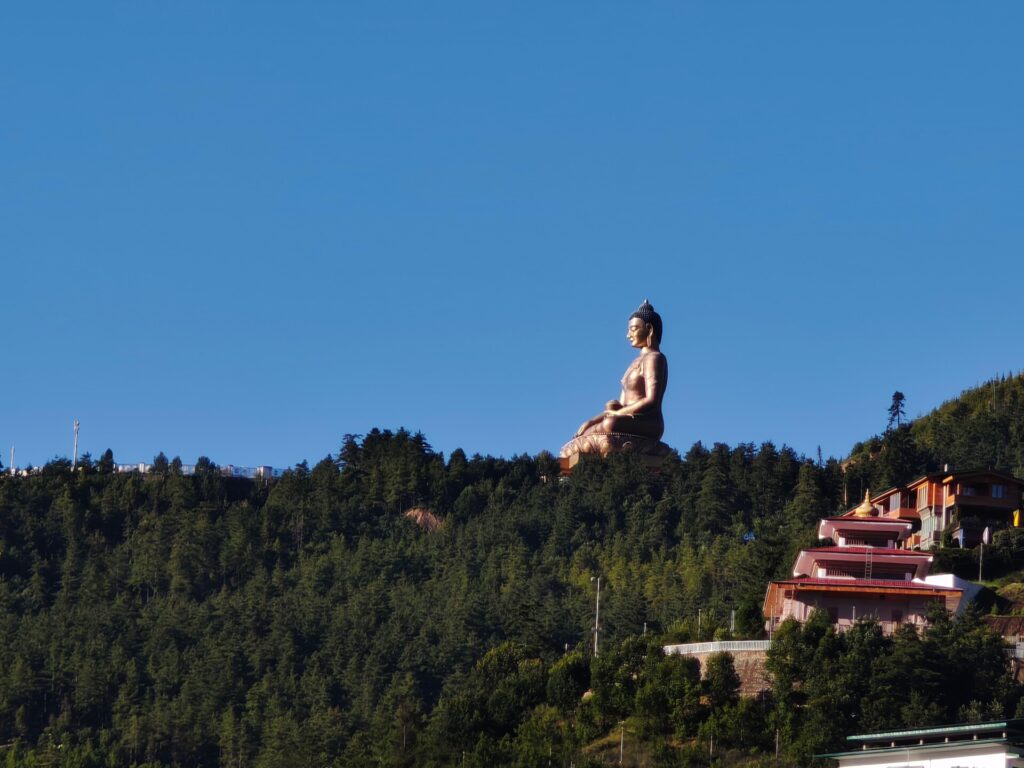
Bhutan, a Buddhist-majority nation of around 800,000 people, is set to receive a modern railway connection in the coming years with support from India. Two separate electrified railway lines are being planned to connect Kokrajhar in Assam and Banarhat in West Bengal with Gelephu and Samtse in the Himalayan kingdom.
This will mark India’s first cross-border rail link to Bhutan, in line with New Delhi’s neighbourhood-first policy. Prime Minister Narendra Modi recently laid the foundation for multiple development projects, including the Kokrajhar–Gelephu rail network.
The Kokrajhar–Gelephu line, with a proposed budget of Rs 3,456 crore, aims to boost trade, tourism and connectivity. The 69.04-kilometre fully electrified track will connect the administrative headquarters of the Bodoland Territorial Region with Gelephu, integrating Bhutan more closely with India’s vast infrastructure network.
Several stations—Balajan, Garubhasa, Runikhata, Shantipur and Dadgiri—along with Gelephu, will be part of the corridor. The route will also feature an advanced signalling system to ensure efficient operations.
The second railway line will connect Banarhat in Jalpaiguri with Samtse, Bhutan’s industrial town. The 20-kilometre route, proposed at an investment of Rs 577 crore, is expected to facilitate Bhutanese citizens’ access to the Indian railway network for travel and commerce.
Both projects are fully funded by New Delhi, and construction is expected to begin in the coming months.

Meanwhile, Bhutan’s Royal Government has envisioned a “mindfulness city” in Gelephu, a project that could redefine the region’s future. With the new rail connectivity, Gelephu is expected to be directly linked to major Indian cities such as Guwahati, Kolkata, Delhi, Chennai and Mumbai.
The vision for the Gelephu Mindfulness City (GMC) was articulated by King Jigme Khesar Namgyel Wangchuck in December 2023. He described it as a space where material progress aligns with environmental sustainability and cultural heritage.
The project proposes a special administrative region under a royal charter, granting executive, legislative and judicial autonomy. The idea is to create a world-class urban centre rooted in nature and social harmony.
Envisioned as a bridge between Bhutan’s spiritual past and a digital future, GMC will include an international airport, global-standard educational institutions and specialised healthcare facilities. Construction for the airport has already begun, and it is expected to be operational by 2029, becoming Bhutan’s second international airport after Paro.
The city will be developed as a carbon-negative region, powered entirely by renewable energy sources such as hydropower, solar, wind and geothermal energy. Spanning over 2,600 square kilometres, the project is expected to initially cater to a population of 100,000.
Bhutan transitioned into a democratic constitutional monarchy in 2008, with the King remaining a symbol of national unity while retaining certain political powers. The current monarch hopes that the new hub of knowledge, technology and finance will generate employment opportunities and reduce the outflow of Bhutanese youth seeking jobs abroad.
In recent years, Australia has emerged as a major destination, with over 25,000 Bhutanese youths reportedly migrating there in 2024.
Known as the Land of the Thunder Dragon, Bhutan shares a 699-kilometre border with Indian states such as Sikkim, West Bengal, Arunachal Pradesh and Assam. The regions of Assam and southern Bhutan have long shared economic and social ties dating back to the days of Kamrup.
Two years ago, Assam Chief Minister Himanta Biswa Sarma visited Thimphu on a royal invitation to attend Bhutan’s 117th National Day celebrations. The occasion, which honours Bhutan’s monarchs and reaffirms national unity and sovereignty, also strengthened diplomatic, historical and cultural ties between the two sides.
The visit further enhanced cooperation in areas such as power generation, irrigation and trade.
With the Gelephu project taking shape next door, many believe it is now time for the people of western Assam to begin reaping the benefits of this emerging Bhutanese urban hub.