
The United States’ policy on Myanmar is facing growing scrutiny, not for what it declares, but for what it appears to do. On the surface, Washington has sought to weaken and isolate the military junta through sanctions and diplomatic pressure. Yet, developments on the ground suggest a more complex reality—one that has triggered an increasingly sharp debate: is the US truly backing Myanmar’s pro-democracy movement, or is it primarily pursuing strategic interests, including countering China and securing stakes in the Bay of Bengal?
This question is no longer confined to analysts. Burmese activists and members of the political opposition resisting the military takeover since the February 2021 coup are now openly raising concerns. Many argue that US policy is marked by contradictions, with a growing perception that Washington’s engagement is driven as much by resource interests—particularly oil and gas—as by democratic commitments.
A recent episode involving the US Embassy in Yangon has intensified these concerns. According to a report in The Mizzima News, the US Chargé d’Affaires, Douglas Sonnek, attended the Yangon International Mobility Show held from March 20 to 22. His participation, including photographs with business figures linked to the junta, drew widespread criticism. For many activists, these images symbolised what they describe as a widening gap between US rhetoric and its actions on the ground.
The US Embassy responded on March 24, stating that the visit was part of routine diplomatic engagement aimed at supporting American commercial interests, particularly the Ford Motor Company, and ensuring a “level playing field” for international businesses.
However, this defence has done little to quell criticism. Civil society groups argue that such interactions risk lending legitimacy to a regime widely accused of human rights abuses. Calls have even emerged for a boycott of Ford Motors.
The controversy is not isolated. Recently retired US chargé d’affaires Susan Stevenson had earlier argued, in an op-ed, for American companies to continue operating in Myanmar, drawing comparisons with China’s model of engagement. For critics, this signals a continuity in approach where economic pragmatism may be outweighing political principle.
Activists have also questioned the embassy’s assertion that its engagement was limited to ensuring fair competition for US brands. Some view this as indicative of a broader approach in which commercial considerations continue alongside political messaging. This perception—whether fully accurate or not—has added to the unease among pro-democracy groups.
Beyond diplomatic optics, the deeper story lies in Myanmar’s energy sector. Investigations based on leaked tax records have revealed that US, UK, and Irish oil and gas service companies continued to operate in Myanmar after the coup, generating substantial profits.
According to a report in The Guardian, citing documents obtained by Distributed Denial of Secrets and analysed by Justice For Myanmar and Finance Uncovered, several firms maintained operations despite US State Department warnings about the risks of doing business with entities linked to the junta, particularly the Myanma Oil and Gas Enterprise (MOGE).
The documents indicate that Halliburton’s Singapore-based subsidiary, Myanmar Energy Services, reported pre-tax profits of $6.3 million in the year to September 2021, including eight months under junta rule. Around the same period, Baker Hughes’ Yangon branch reported $2.64 million in pre-tax profits in the six months to March 2022.
Similarly, the report notes that Diamond Offshore Drilling paid $37 million in fees to Myanmar’s tax authorities in the year to September 2021 and another $24.2 million until March 2022. Schlumberger Logelco (Yangon Branch), a Panama-based subsidiary of a US-listed company, earned revenues of $51.7 million in the year to September 2021 and was still owed $200,000 by the junta’s energy ministry as late as September 2022.
These companies provide essential services to Myanmar’s gas field operators, indirectly sustaining MOGE—a state-owned enterprise that remains a major financial lifeline for the junta. MOGE collects taxes and royalties and holds significant stakes in key energy projects, ensuring continued foreign currency inflows to the regime.
According to the junta’s own figures, the oil and gas sector generated $1.72 billion in the six months up to March 2022 alone, making it the single largest source of foreign revenue. This underscores the centrality of energy to both Myanmar’s economy and the military’s financial resilience.
The implications are significant. While sanctions aim to isolate the regime, continued economic engagement—direct or indirect—creates channels through which financial flows persist. This duality lies at the heart of the criticism directed at US policy.
The inconsistency is further highlighted by shifts in Washington’s approach. In July 2025, UN Special Rapporteur Tom Andrews criticised the rollback of certain US sanctions, calling it a “shocking turn” that risked emboldening the junta and its enablers.
The UN Special Rapporteur warned that easing restrictions on entities linked to arms and military supplies could undermine international efforts to limit the regime’s access to resources.
At the same time, US policy has sent mixed signals on Myanmar’s political trajectory. While sanctions tied to the 2021 coup were extended—describing the situation as an “unusual and extraordinary threat” to US national security—the Trump administration later withdrew protections for refugees, arguing that conditions in Myanmar had improved.
Homeland Security Secretary Kristi Noem stated that Myanmar had made “notable progress in governance and stability,” citing the end of the state of emergency, plans for elections, and improvements in governance. These claims, however, remain widely contested.
Elections held between December 28, 2025, and January 25, 2026, were widely criticised as controlled and exclusionary. The military-backed Union Solidarity and Development Party (USDP) secured victory, while major opposition groups, including the National League for Democracy (NLD), were barred from contesting. Senior General Min Aung Hlaing is now poised to assume the presidency, consolidating military influence within a civilian framework.
Meanwhile, the human cost of the conflict continues to mount. Estimates suggest that over 7,000 people have been killed since the coup, while more than 22,000 political prisoners remain in detention. Over 83,000 civilian properties have been destroyed, and millions have been displaced.
According to a report by the Assistance Association for Political Prisoners (Burma), at least 6,364 people have been killed and 28,712 arrested since the coup. Of those arrested, 21,956 remain in detention, including 10,472 who are serving sentences. The organisation emphasises that these are verified figures and that the actual numbers are likely much higher.
Despite this humanitarian crisis, Myanmar’s energy sector remains deeply integrated into regional and global markets. China and Thailand continue to be the largest importers of Myanmar’s oil and gas, while key projects involving MOGE are operated in partnership with South Korea’s Posco International, Thailand’s PTTEP, and Gulf Petroleum Myanmar.
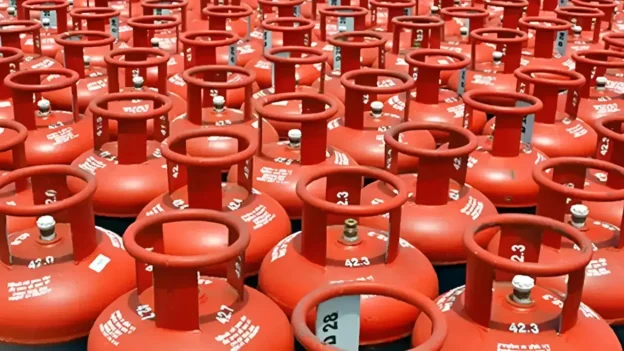
At the same time, Myanmar is grappling with a worsening economic crisis. Fuel shortages, rising prices, and long queues at petrol stations have become common. The junta’s National Defence and Security Council (NDSC) has imposed restrictions on fuel purchases, limiting vehicle owners to refuelling once or twice a week.
These developments have intensified public hardship and exposed the fragility of the country’s economic system. In such a situation, engagements between MOGE and international partners—including the US, China, Thailand, and South Korea—become even more critical, not just for energy supply but for the regime’s financial survival.
The broader global crisis—marked by energy insecurity, geopolitical competition, and shifting economic priorities—adds another layer of complexity. For countries dependent on Myanmar’s gas exports, maintaining supply chains remains crucial. For companies operating in or linked to Myanmar, the stakes are equally high, as they navigate reputational risks, regulatory scrutiny, and an increasingly volatile political environment.
For Myanmar, this convergence of crisis and competition could prove decisive. The junta may seek to leverage energy partnerships to stabilise its finances, while external powers balance strategic interests with political positioning. In such a scenario, economic engagement and political endorsement risk becoming increasingly intertwined.
Ultimately, the scrutiny of US policy reflects a deeper and unresolved tension—between principle and pragmatism, between democratic commitments and strategic imperatives. In Myanmar’s evolving crisis, that balance remains uncertain, and its consequences far-reaching.