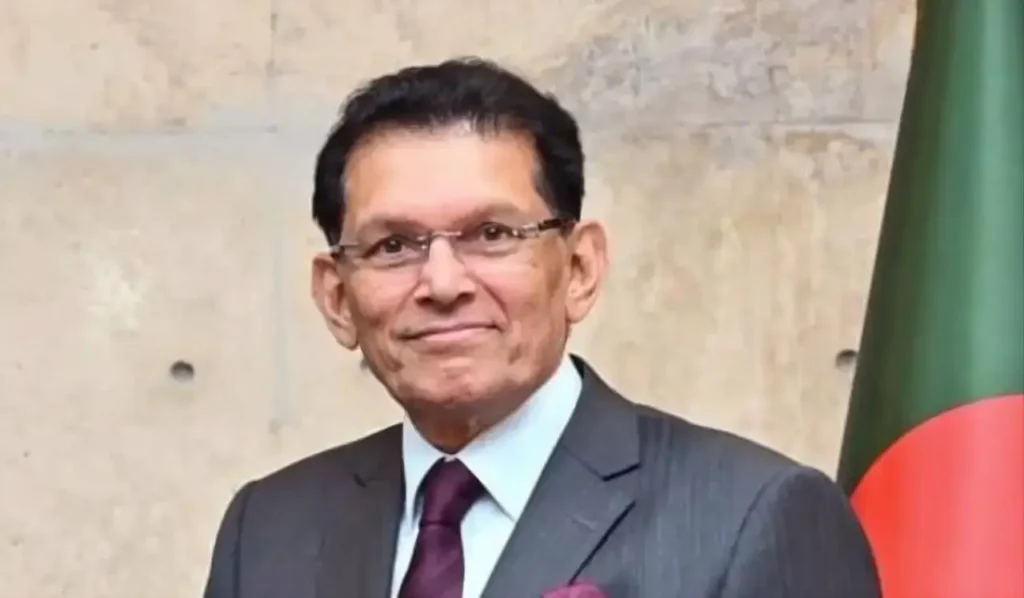
In early April 2026, a quiet yet consequential journey is set to unfold. Bangladesh’s newly appointed Foreign Minister, Khalilur Rahman, arrived on Indian soil. His visit, modestly framed as a “working stopover,” carries the weight of a nation navigating the uneasy aftermath of the July–August terrorist attacks in 2024 and diplomatic estrangement. Beneath the formalities lies a stark reality: relations between Dhaka and New Delhi have drifted into a prolonged chill since the seismic shifts of August 2024 and, finally, the electoral ascendancy of the Bangladesh Nationalist Party in February 2026.
This is no ceremonial exchange of pleasantries. It is a calculated attempt to thaw frozen ties and recalibrate a relationship that geography has rendered inescapable and history has made complex.
For Dhaka’s new leadership, the challenge is as delicate as it is urgent. Foxily manufactured public sentiment, inflamed by so-called nationalist rhetoric and lingering grievances, has hardened against India. Yet, the imperatives of governance demand pragmatism. A nation grappling with economic strain and energy insecurity cannot afford the luxury of prolonged diplomatic frost. Thus, this visit emerges as a bridge—tentative, cautious, yet indispensable—between political posturing and economic necessity.
The choreography of the visit itself reveals its intent. By embedding the talks within a transit en route to the Indian Ocean Conference in Mauritius, both sides have deftly lowered expectations while preserving room for substantive dialogue. It is diplomacy stripped of spectacle, designed to prioritise outcomes over optics.
At the heart of these discussions lies an urgent and unforgiving crisis: energy. Bangladesh’s mounting fuel shortages, exacerbated by global disruptions, have placed immense pressure on its economy. The appeal to India for continued, perhaps expanded, diesel supplies is not merely transactional—it is existential. Should New Delhi respond with generosity, it would not only stabilise Bangladesh’s faltering energy grid but also send a powerful signal that cooperation yields tangible dividends. In return, Dhaka’s leadership would be compelled to demonstrate a pragmatic gratitude, recalibrating its rhetoric to reflect the realities of interdependence.
Equally pressing is the question of human connectivity. Since mid-2024, visa restrictions have severed vital links between the peoples of the two nations. For countless Bangladeshis, India remains a lifeline for medical treatment and education. The restoration of visa services, even in limited form, could serve as the quickest balm for public good. It is here, perhaps more than in any grand policy pronouncement, that the success of the visit will be most keenly felt.
Yet, New Delhi’s concerns are neither trivial nor abstract. Security remains paramount. Assurances regarding the protection of minorities and the prevention of anti-India activities emanating from Bangladeshi soil will form a critical component of the dialogue. Trust, once eroded, demands careful and consistent rebuilding.
Beyond the immediacy of crisis management looms a more enduring and sensitive issue: water. The impending expiration of the Ganges Water Treaty in 2026 casts a long shadow over bilateral relations. For Bangladesh, a fair and sustainable agreement is not merely a diplomatic objective but a national imperative. The negotiations initiated during this visit will shape the contours of cooperation—or contention—for years to come.
In the short term, expectations must remain measured. This visit is unlikely to herald a dramatic restoration of past warmth. Rather, it will mark the beginning of a cautious stabilisation—a mutual recognition that silent cooperation often achieves more than public confrontation. Incremental progress on energy supplies and visa facilitation may well define its immediate outcomes.
Over the medium term, the visit underscores an inescapable truth: Bangladesh and India are bound by a matrix of geographical proximity and economic interdependence that no political transformation or manifesto can undo. Infrastructure, trade, and shared resources demand collaboration, irrespective of ideological divergences.
Yet, the long-term trajectory remains fraught with uncertainty. Domestic pressures within Bangladesh could constrain the government’s ability to sustain a balanced approach. Failure to yield tangible benefits from engagement with India may well hinder the normalisation of relations between the two nations.
Ultimately, this visit signifies a profound shift in the tenor of bilateral relations. The emotive bonds forged in history are giving way to a friendlier, more cordial, and more transactional calculus. Pragmatism, not sentiment, will define the future in a positive direction.
The measure of success will not lie in a solemn charter or grand declarations. It will be found in the quiet restoration of fuel flows, the reopening of visa channels, and the creation of a stable framework for cooperation. In an era marked by uncertainty and shifting alliances, such achievements may well prove to be the most enduring victories.