The eastern border of India is about to witness volatility unlike anything seen in decades. A military-security lens often frames whispers of Bangladesh’s alleged map claims, Dhaka’s deeper defence ties with Türkiye, the presence of a Lashkar-e-Taiba operative, and intelligence exchanges between Bangladesh and Pakistan – but that perspective only covers the surface. The eastern theatre is now moulded by statecraft, cognitive influence, and proxy-enabled strategic action rather than just border incidents, China at the core of this algorithmic contest of narratives and identities.
Bangladesh’s internal politics are conducive to exterior statecraft, especially during an election cycle. Whether exaggerated, carefully chosen, or used for political purposes, anti-India discourse benefits Islamist networks, nationalist youths, and elites looking for power. This is often misinterpreted by traditional Indian analysts as impulsive “anti-India sentiment”. However, it stems from generational identity transitions, perceived asymmetry, and historical memory. This perspective becomes a tool of statecraft for Dhaka’s political elite, valuable for both geographical negotiations and internal consolidation.
Here, the trilateral dynamic involving China, Pakistan, and Bangladesh emerge as strategically consequential. Beijing employs an advanced algorithm of influence to redefine identity narratives, amplify critiques, strengthen elite groups that lean away from India, and generate perception asymmetry.
In Dhaka’s more unstable political environments, Pakistan’s ISI provides operational and ideological muscle memory – Islamist channels, historical connections, and narrative models. Bangladesh, meanwhile, approaches these currents as a calculated and interest-oriented actor seeking to expand its strategic room for manoeuvre, while China extends political support, economic incentives, and major-infrastructure commitments that correspond with Dhaka’s long term development objectives.
Simultaneously, Dhaka has been reiterating that “sovereignty and national interest” guide its foreign policy, indicating that its external affiliations are a deliberate exercise of strategic autonomy rather than ideological affinity. Its recent message that relations with India must be “interest-based rather than regime-specific” indicates an ongoing shift towards transactional and power-symmetric interaction. Dhaka is now portraying its foreign policy decisions as a conscious, autonomous change. It explains its expanding distance with India not as antagonism, but as part of its effort to operate more freely on the world arena while leveraging ties with major countries to generate more leeway to manoeuvre.
In the meantime, India has begun to intensify its own attempts to influence perceptions, and coordinate narratives in the eastern area, demonstrating its growing awareness of the significance of perception and messaging in regional politics.
At this point, New Delhi has also started to telegraph a shift in the strategy. The recent invitation from India’s National Security Advisor to Bangladesh’s counterpart for the Colombo Security Conclave indicates an effort to reintegrate India into Dhaka’s strategic and cognitive space at a time when the China-Pakistan axis is influencing power dynamics. Rather than symbolic diplomacy, it is India’s attempt to compete directly in the areas of perception, proximity, and elite signalling.
However, in order for India to resist the cognitive realignment taking place along its eastern flank, such outreach must evolve from episodic diplomatic messaging to a persistent ecosystem of influence.
The issue India faces is not solely military, but cognitive as well. This is an algorithm of statecraft aimed at cognition, not just border crisis – it is an algorithm of targeting cognition. Dhaka’s defence choices or sporadic extremist activity matter less tactical impact than for how they embed themselves in Bangladesh’s public consciousness. A generation that lacks historical knowledge is preoccupied with carefully constructed ideologies, selective history, and simulated echo rooms that inundate them with narratives that are hostile for India.
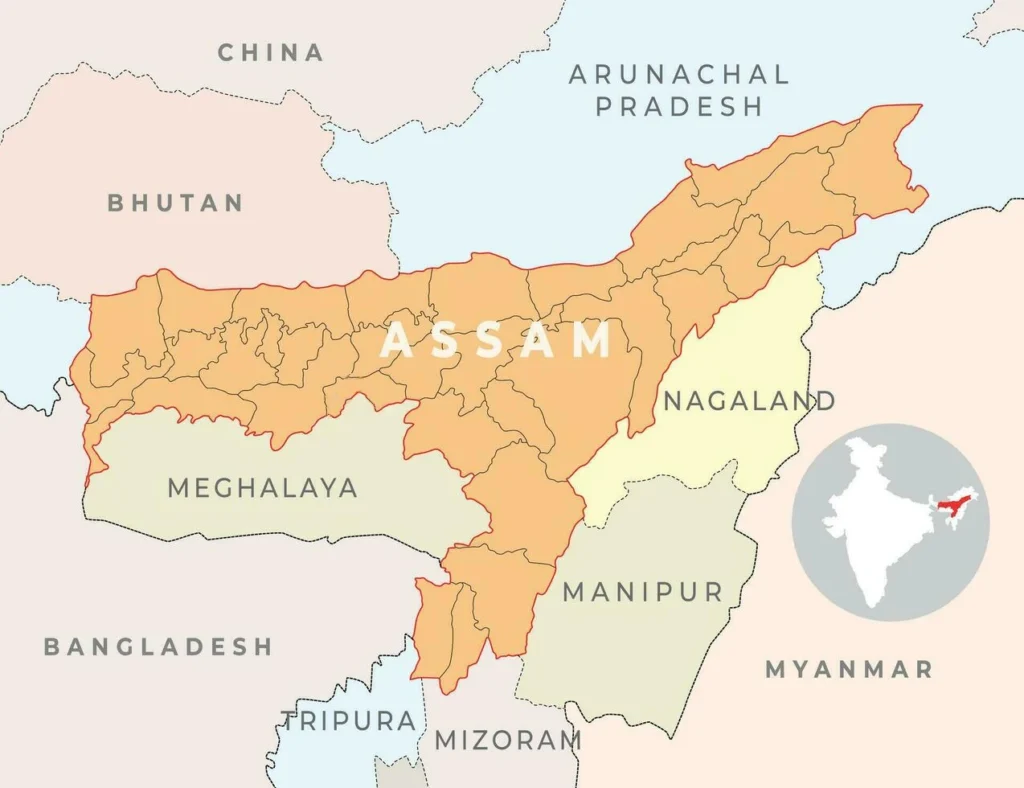
This strategic shift explains why India is strengthening the Chicken Neck corridor, increasing troop deployments, and enhancing monitoring through Bihar, West Bengal, and Assam. These actions are in response to both concrete military advancements and a changing socio-political environment on the other side of the border, where narrative engineering, election uncertainty, and outside influence operate along to promote erratic behaviour.
Where conventional analysts and experts fall short is in considering these alterations as sentiment-driven reactions or simply the result of foreign intervention. Their frame is still limited to X-variables such as force modernisation trends, military acquisitions, tactical-level skirmishes, and short-term diplomatic irritants. These metrics are important, but they only cover the surface.
Conventional analysts provide a key baseline, but it does not explain why nations behave the way they do or why some crises escalate. That necessitates the Y-variables: cultural history, insider pressure, political psychology, and competing narratives that influence decision-making. These aspects are not incidental in an area united by common memories and overlapping worries; they serve as engines of the very statecraft shaping the region.
The whole picture is recast through the prism of statecraft, emphasising how different actors use identity and history, how regional political leaders use narratives during unstable times, and how China incorporates Bangladesh and Pakistan into a larger geopolitical and cognitive playbook.
These contacts add further levels of complexity throughout India’s eastern perimeter, even as New Delhi steps up its own initiatives in narrative shaping, strategic messaging, and regional engagement to manage this shifting information terrain. However, Dhaka’s perception of its strategic alternatives is still influenced, by the China-Pakistan-Bangladesh alignment, which is gradually straining New Delhi’s hold in the Bay of Bengal, increasing psychological distance from India, and resurrecting old grievances for political purposes.
India’s current posture in the Northeast already reflects a deeper appreciation of these shifting dynamics, with intelligence coordination, border management, and diplomatic signalling functioning in closer alignment than before. Yet, the nature of the challenge—rooted in perception, identity, and political psychology—demands that these existing efforts in civil–military intelligence integration and socio-political mapping continue to grow in sophistication.
Rather than relying solely on tactical responses, India’s approach must increasingly incorporate long-term narrative frameworks, sustained political messaging, and calibrated engagement with borderland communities. Strategic empathy, carefully applied pressure, and consistent political cues must operate alongside traditional security mechanisms, allowing India to stay ahead of cognitive and informational disruptions rather than merely countering them.
It is also necessary to rethink the problem of illegal immigration, which is frequently discussed but hardly contextualised, within this cognitive framework. Large-scale, politically motivated migration from Bangladesh is a demographic pressure point from China and Pakistan can use this to undermine India’s social cohesion, change borderland identities, and induce concerns that Beijing and Rawalpindi can exploit. It represents both a population challenge and a psychological vulnerability.
The Eastern Front is shaped by the convergence of geographical, historical, social, and intellectual factors that create vulnerabilities that go much beyond traditional border dynamics into the domains of identity, perception, and consciousness. This moves the study beyond the conventional ‘boundary fortify, threats loom’ narrative, showing that current competition along India’s eastern flank is driven as much by sociology, cognition, and narrative influence as by military hardware.
As awareness of these cognitive aspects has grown, India has made significant efforts in recent years to increase its capacity for information distribution and perception control in the region. Yet, the quickly altering environment requires a larger and more integrated approach that blends historical awareness, societal resilience, and continuous cognitive counter-measures with traditional security.
Ultimately, India’s eastern frontier has evolved into a space where geopolitics and perception intersect, where identities, behaviours, and narratives are shaped as much by memory and influence as by military deterrence. Responding to this complexity requires a proactive, integrated form of statecraft—one that pairs defence preparedness with socio-political insight and sustained psychological awareness. India is already moving in this direction, but the strategic environment calls for approaches that are more continuous, coordinated, and anticipatory.
The real concern is not territorial breach but the gradual distancing of communities across the border—an erosion of trust that can occur quietly, even without conflict. The contest, therefore, is not only about borders but about belonging, and maintaining that sense of connection demands steady, thoughtful engagement.
Rebuilding or reinforcing trust is always harder than maintaining it—an insight that makes India’s long-term investment in narrative stability and regional confidence all the more essential.