-Inside Janakpur’s Vivah Panchami-
Long before treaties, state visits, or official communiqués, Nepal and India were bound by a story—the marriage of Sita and Ram. In Janakpur, where this story is retold every year through Vivah Panchami, diplomacy unfolds not across negotiating tables but across temple courtyards, pilgrim kitchens, and the wide, festive streets where myth and memory mingle. Here, culture does not merely complement politics; it transcends it.
Every winter, as thousands pour in from the plains of Uttar Pradesh and Bihar, the border seems to dissolve into a single cultural expanse. The flow of pilgrims becomes a reminder that these nations were linked long before they were divided into states—carried by the emotional continuity of Sita as “Nepal’s daughter” and “India’s daughter-in-law.” It is a relationship renewed not by high-level statements but by shared devotion, hospitality, and a wedding reenacted with undiminished fervour.
Where borders blur and cultures flow
As the bright fortnight of Margashirsha (Mangsir in Nepali) approaches, Janakpur begins its slow transformation. Trains from India fill up days in advance; buses from Ayodhya, Varanasi, Darbhanga and Sitamarhi spill passengers into the city’s gates. Languages intermingle naturally—Maithili, Nepali, Bhojpuri, Hindi—blurring boundaries that geopolitical maps struggle to contain.
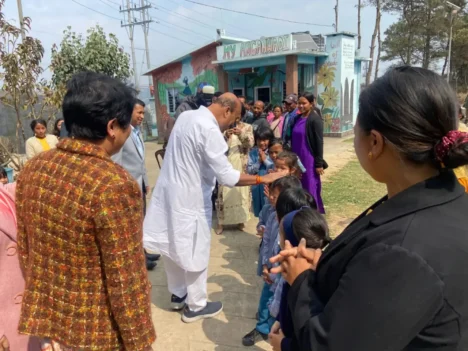
Indian families often speak as if they are travelling not to another country but to their “daughter’s home.” And Janakpur responds with equal tenderness. Locals guide pilgrims through crowded queues, offer water and directions, help with luggage, and invite strangers to share snacks or tea. These small gestures are the quiet engines of civilizational diplomacy.
“These simple interactions reinforce a bond that diplomats often refer to but ordinary people truly live,” says Professor Dr Rajendra Bimal, senior linguist and cultural scholar. “No political tension has ever shaken this relationship.”
In these exchanges—an uncle from Madhubani sharing tea with a shopkeeper in Janakpur, young Nepali volunteers escorting elderly pilgrims from Ayodhya—the region’s deepest form of diplomacy unfolds: a diplomacy of sentiment, memory, and shared ancestry.
A festival as a diplomatic bridge
The sheer scale of Vivah Panchami places Janakpur at the centre of a unique cultural diplomacy. Delegations from Ayodhya and other Indian cities participate in the ceremonies; Nepali representatives travel in return to India’s sacred towns. These exchanges may appear ceremonial, but they form a quiet architecture of trust, softening political rhetoric and preserving emotional bridges between two nations.
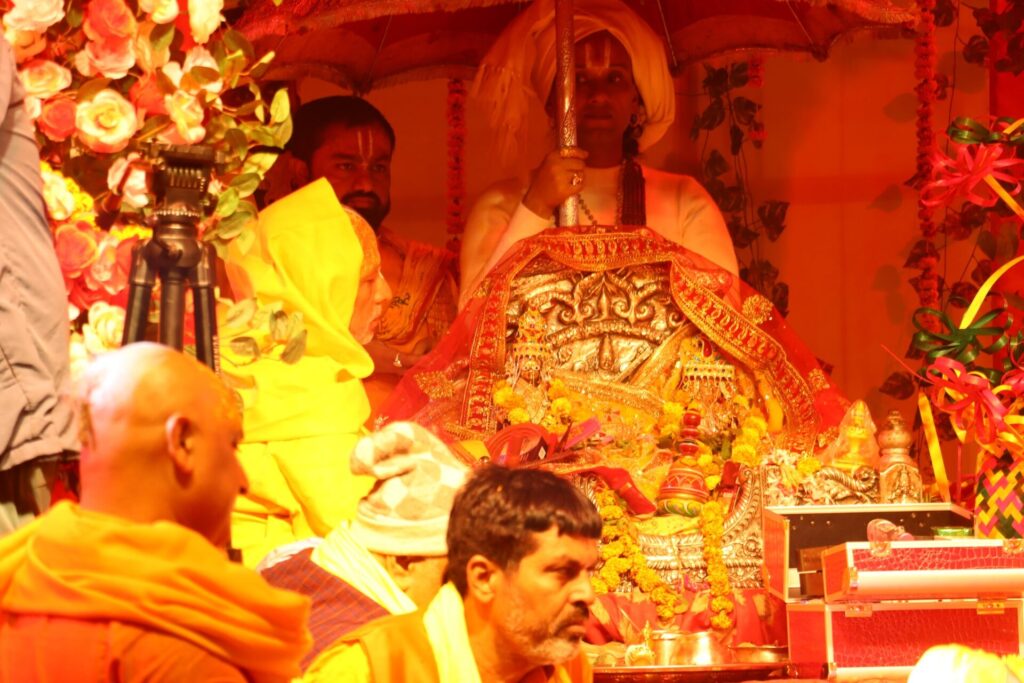
Inside the Janaki Temple, where garlands replace protocol and nostalgia replaces negotiation, officials speak a gentler language. They interact not as policymakers but as pilgrims. “These interactions carry far more weight than many formal diplomatic gestures,” notes senior journalist Santosh Shah.
In the aisles of the temple, diplomacy is not dictated—it is enacted. And it is absorbed by thousands who witness it.
A city that becomes a living mandap
This diplomatic backdrop blends seamlessly with Janakpur’s week-long reenactment of the ancient wedding, when the city itself transforms into a living mandap—courtyards scrubbed clean, flower chains dangling from windows, and pink temple walls glowing like a bride adorned for ceremony.
One can breathe the fragrance of marigold, incense, and dhuni – sacred smoke from holy fires. The wide processional streets become stages where myth steps out of scriptural silence and into human choreography.
“Janakpur, the capital of ancient Mithila, that proudly claims Sita as its daughter, itself becomes like a bride during the Vivah Panchami festival. For one extraordinary week, the city transforms into both a sacred site and a theatre—an embodied memory of the Sita-Ram wedding that took place in the Treta Yuga,” observes Ram Roshan Das, the Uttaradhikari (designated successor) to the Mahant of the Janaki Temple in Janakpur.
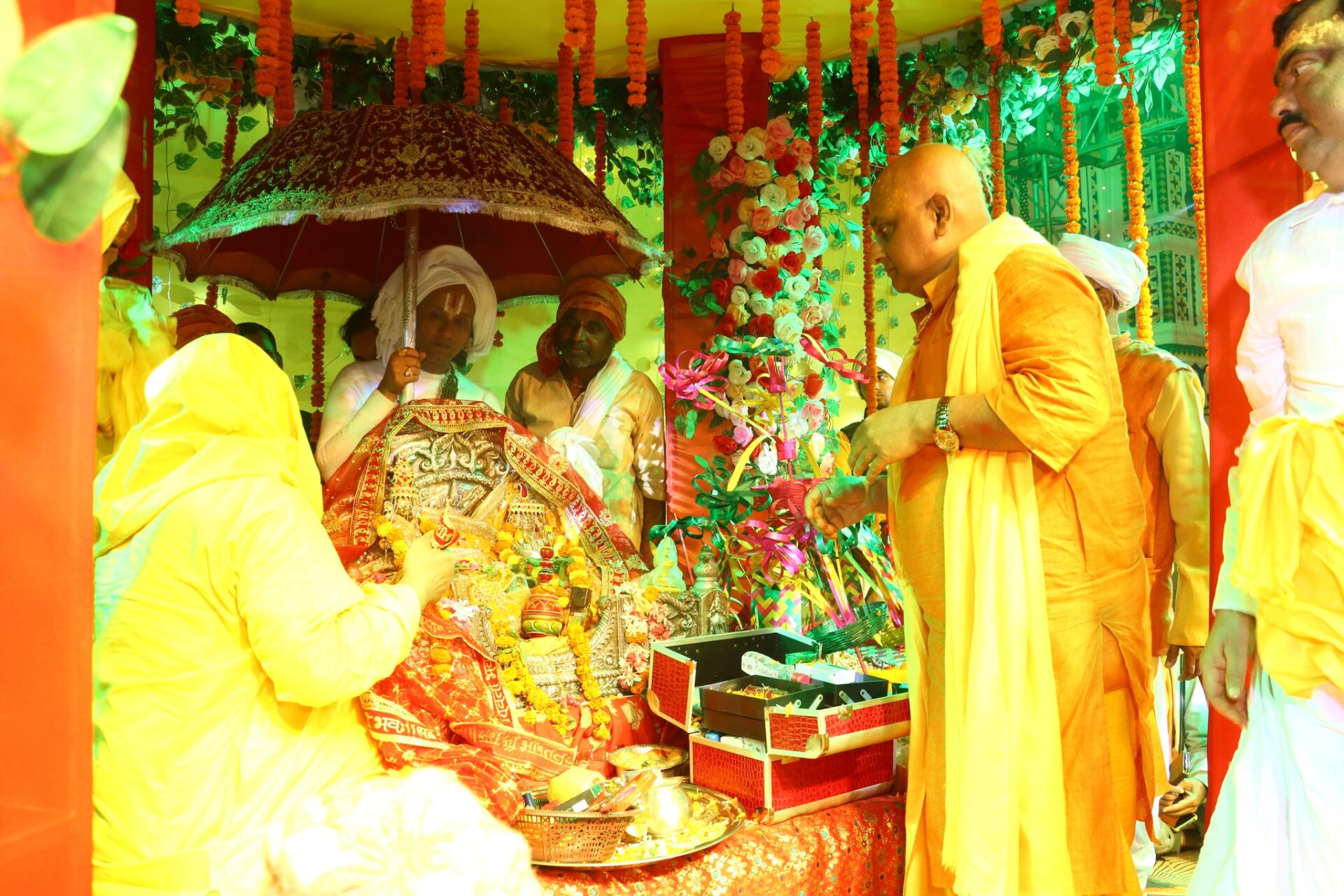
Each day unfolds like a chapter of the epic: the Nagar Darshan that welcomes Ram’s baraat across Janakpur’s lanes; the Phoolvari Leela recalling the first meeting between Sita and Ram; and the dramatic Dhanush Yagya, where the divine bow of Shiva is broken. As the festival deepens, Janakpur enters the Tilakotsav, a ceremony in which the bride’s family formally honours the groom with offerings of turmeric, vermillion, gifts, and rituals symbolising acceptance, respect, and auspicious beginnings.
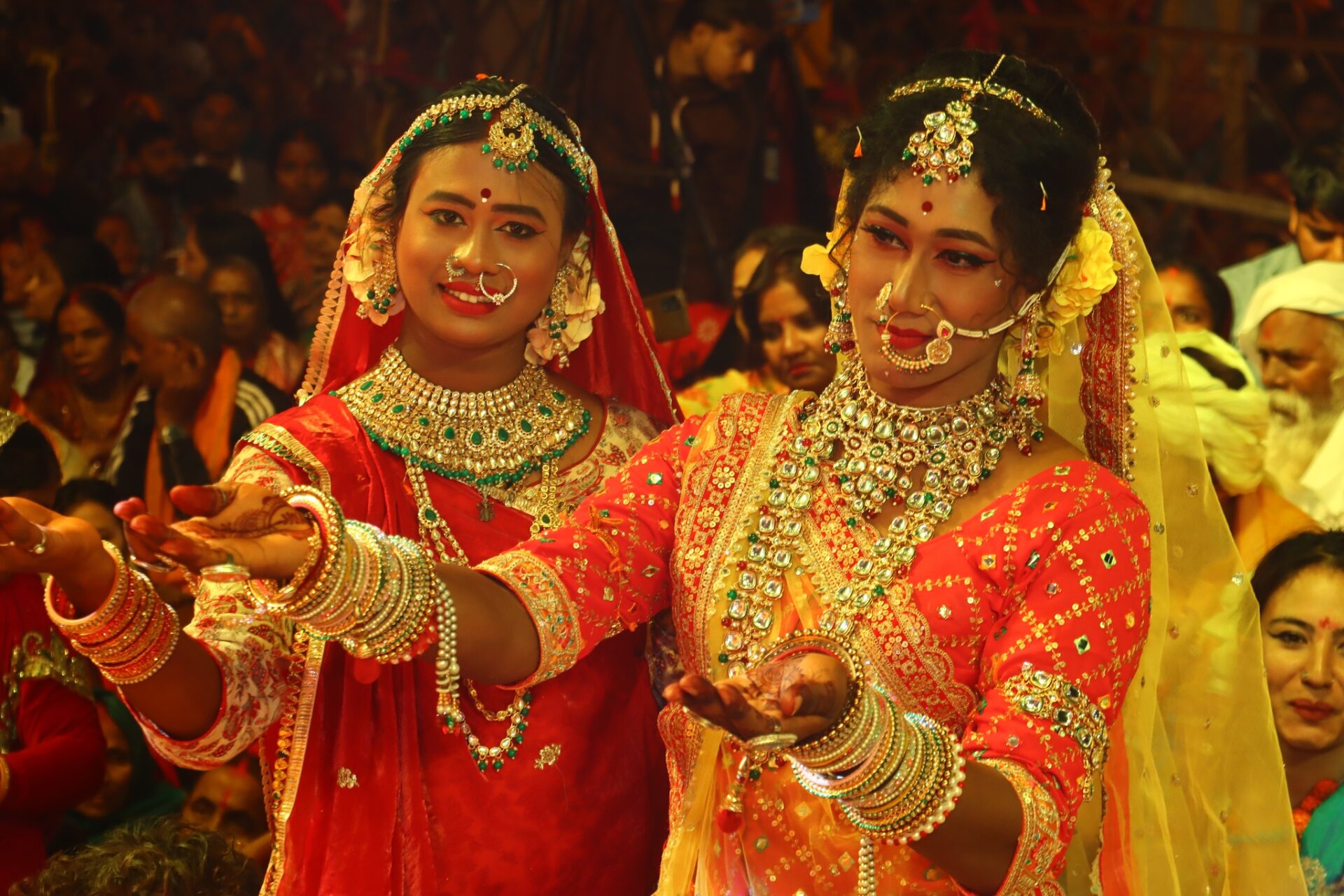
It is the moment when the two families—symbolically, two kingdoms—affirm their bond. The celebrations then move into Matkor, led by women of the community, where holy soil is collected from a sacred pond or river. This soil is essential for the traditional wedding rituals, representing fertility, purity, and the grounding of the marriage in the blessings of nature. With songs, ululations, and rhythmic steps, the women carry the earth back to the temple, turning an everyday element into something sacred.
These rituals fold seamlessly into the sixth day, when the symbolic swayamvar unfolds under a winter sky shimmering like memory itself. But nothing here feels staged or museum-like. “The residents do not witness the festival—they participate in it,” explains Dr Bimal. Priests recite in Maithili, women draw intricate aripana outside their doors, and communities perform Ramleela with a pride that spans generations. The city does not stage the story; it breathes it.
Nighttime brings its own enchantment. On the evening of the symbolic wedding, Janakpur shimmers in saffron, gold, and blue. When the actor playing Ram lifts and “breaks” the bow of Shiva, an ancient instinct ripples through the crowd—conch shells blow, chants swell, elderly devotees wipe their eyes, and children fall asleep wrapped in their mothers’ shawls. It is a night suspended between past and present, collapsing time and binding myth and memory into a single experience.
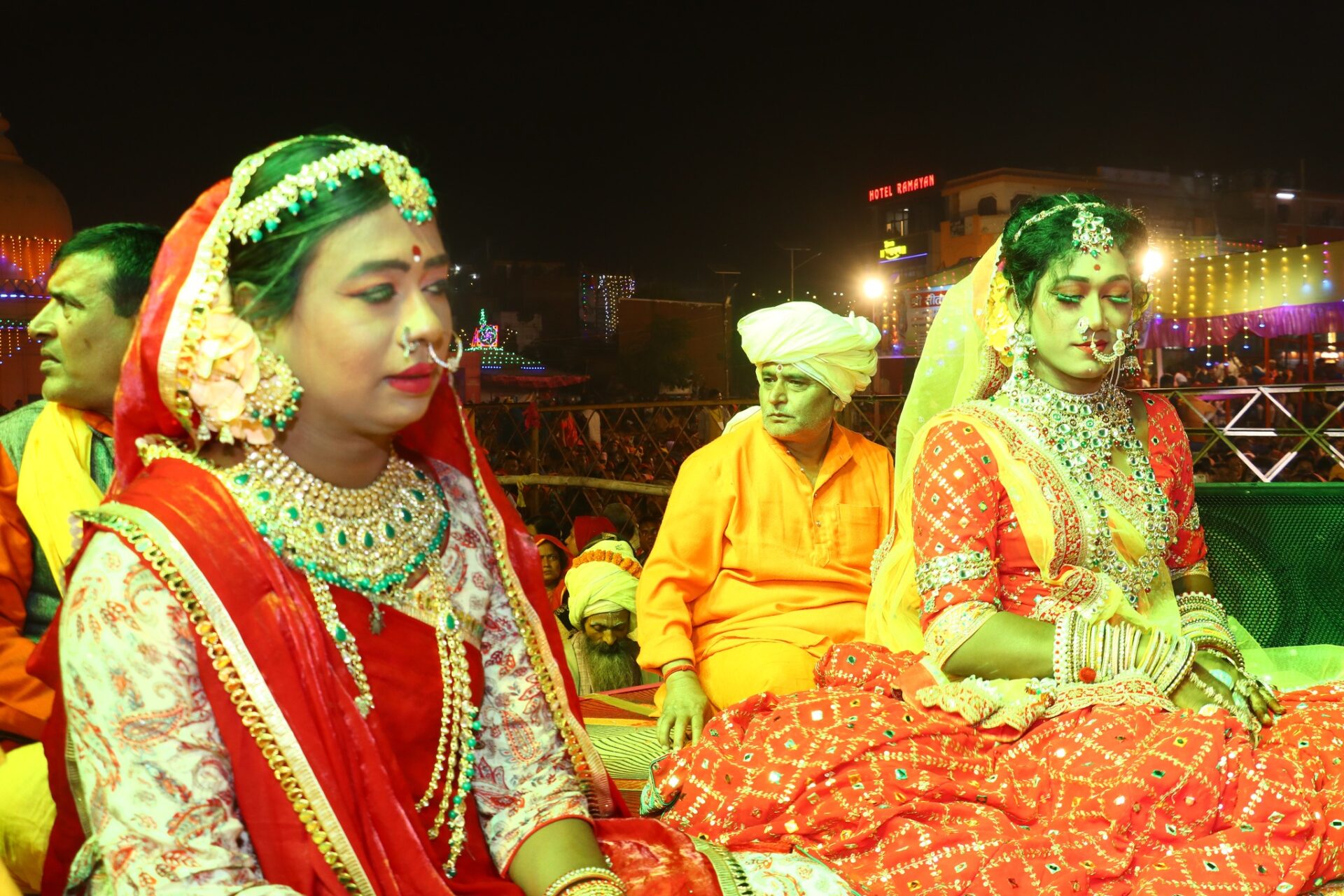
“People are transported into it,” a priest says quietly. “They do not just witness the wedding—they relive it.” The saat phere continue deep into the night as Maithil songs—older than their singers—float through the air.
The festival then moves towards Ramkaleva, the grand farewell feast for the symbolic baraat. Sadhus in crimson robes are served fifty-six traditional dishes of Mithila, echoing King Janak’s legendary hospitality. Volunteers move briskly with steaming cauldrons, musicians strike their dholaks to summon joy, and the flow of generosity becomes as important as the rituals. Blankets and kamandals are handed out as tokens of affection, carrying forward a lineage of sacred hospitality. When the sadhus finally rise and the temple bells toll one last time, Janakpur exhales—the festival retreating gently into memory.
A bond that outlives politics
To millions, Janakpur is not merely a religious site—it is the birthplace of Sita, the land of King Janak, a geography that survives as a living page of the Ramayana. Residents see themselves not as spectators but as custodians of a sacred inheritance. Even those who migrate elsewhere return during Vivah Panchami, drawn back to a landscape where story and soil remain inseparable. “Janakpur is a living canvas,” says Dr Bimal. “Every pilgrimage renews a legend that refuses to fade.”
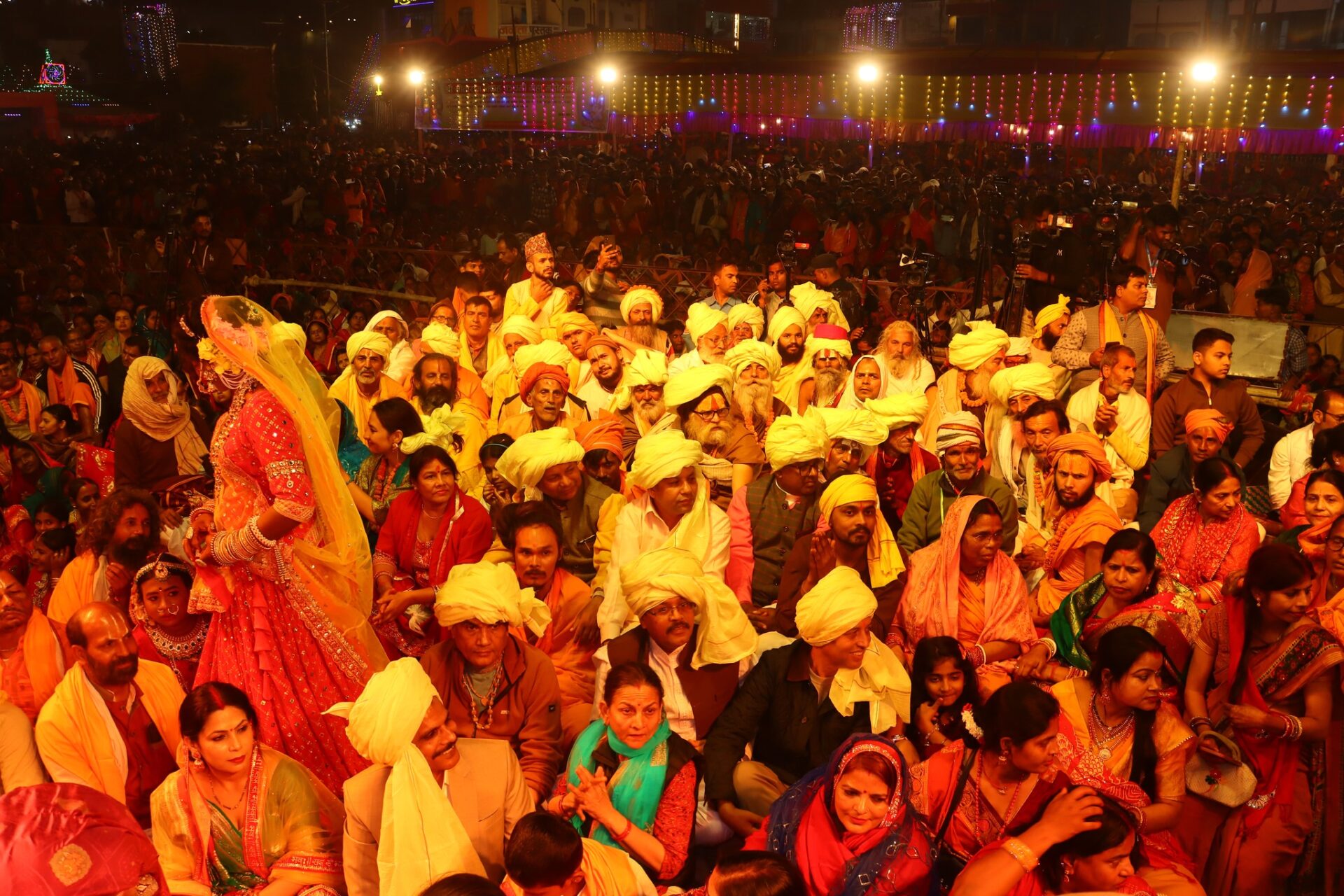
And while tradition forms its core, the festival steps confidently into the digital age—drones capturing aerial tapestries of crowds, livestreams connecting diasporas to their ancestral rituals, tourism campaigns showcasing Janakpur’s charm, and even an 11,111 sq ft rice-art portrait of Sita and Ram created in 2023. Here, modern spectacle does not dilute the ancient; it amplifies it, helping the story travel across screens and continents while speaking to a generation that lives both online and offline.
Yet the moral heart remains unchanged. Vivah Panchami continues to invoke the values embodied by Sita and Ram—dharma, humility, devotion, responsibility. These are not preached from podiums; they are lived through narrative, song, and collective memory. Folk interpretations evolve naturally, adding nuance without altering the epic’s essence.
And when the festivities end, Janakpur returns to its quieter rhythm. But the emotional bridge between Nepal and India—renewed through ritual, affection, and shared memory—endures beyond geopolitics. For one week every year, the ancient wedding reminds two nations that their bond is older than their borders. It whispers that diplomacy can be soft, emotional, and enduring—written not in treaties but in chants, garlands, and stories retold across generations.
Vivah Panchami, thus, is not just a festival; it is a bridge, a dialogue, a reassurance that some ties—woven through myth and memory—are too deep to unravel.