After twenty long years of breakthroughs, setbacks and sustained public scrutiny, the Subansiri Lower Hydroelectric Project has finally crossed a milestone that once felt distant. In early November, one of its generating units completed the crucial step of wet commissioning, marking the project’s first significant move into operational readiness and signalling that India’s most ambitious hydropower venture is finally stirring to life.
Power generation began at the Subansiri Lower Hydroelectric Power Project on Wednesday, marked by the first unit being brought onto the national grid.
This connection to the grid marks not just a technical success but the symbolic turning of a page for a project that has shaped debates on development, environment and regional politics for two decades. With its first turbines now edging toward commercial operation, Subansiri is, taking its initial steps into the operational phase long envisioned for it.
NHPC announced on 6 November 2025 that it had begun wet commissioning of Unit-2 of the 2,000 MW SLHEP. The 250 MW unit completed its first mechanical run that same day, initiating the commissioning of the project’s second generating unit. Only days earlier, in late October 2025, Unit-1—also 250 MW—had entered wet commissioning, pushing India’s most ambitious hydropower project into its operational testing phase.
The wet-commissioning event for Unit-2 was joined virtually by NHPC Chairperson and Managing Director Bhupender Gupta from the company’s Faridabad headquarters, with senior leadership, including functional and independent directors, in attendance. At the project site, Executive Director and Project Head Rajendra Prasad and Executive Director (O&M) I.P. Ranjan were present to oversee the process.
SLHEP is a central component of India’s Hydro Power Policy of 2008, which identified a nationwide hydropower potential of 148,701 MW—of which Arunachal Pradesh alone holds 34%, or 50,328 MW. As of October 2021, 1,115 MW of that potential was operational in Arunachal Pradesh, with major new projects such as the 3,097 MW Etalin Hydroelectric Project in Dibang Valley and the 600 MW Kameng Hydroelectric Project in West Kameng under construction.
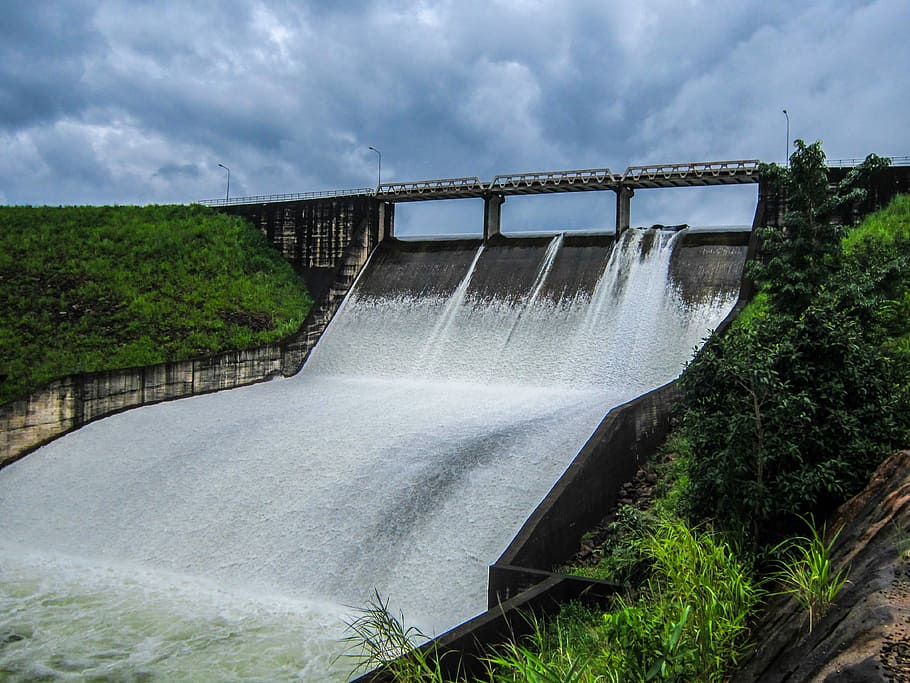
Patel Engineering, the company that won the primary construction order for SLHEP, has described the project as India’s single largest hydropower generation venture. The site lies near Kolaptukar village in Arunachal Pradesh’s Kamle district, 2.3 km upstream of Gerukamukh village in Assam’s Dhemaji district. Its concrete gravity dam rises 116 metres above the Subansiri River, forming a run-of-river system operated by NHPC. Originally sanctioned in December 2012 at a cost of ₹6,285 crore, the project cost escalated to an estimated ₹20,000 crore in 2020. SLHEP will rely on eight 250 MW turbines and is expected to generate 7,421 GWh of electricity every year. Approximately 90% of the project footprint lies in Arunachal Pradesh, with the remaining 10% in Assam.
When work began in January 2005, SLHEP was scheduled for completion by December 2012. The core design comprises a 116-metre-high concrete gravity dam, eight Francis turbines of 250 MW each, and a projected annual generation of about 7,421 MU under dependable water-flow conditions. Three additional units are likely to be commissioned this month, and the entire project is expected to be fully operational by March 2027.
At full capacity, Subansiri could supply clean, renewable energy to many Northeastern states and beyond—significantly boosting India’s energy security and carbon-neutrality goals. With the wet commissioning of Unit-1 and synchronisation of Unit-2, Subansiri is now poised to deliver its first substantial tranche of power. According to NHPC, Unit-2 may begin commercial supply by December 2025.
Project consultant A.N. Mohammad told The Assam Tribune that synchronising the first Subansiri unit with the national grid marked a defining moment in India’s hydropower history. He noted that Unit-1 and Unit-2 completed their mechanical runs on October 26 and November 6, respectively. The synchronisation of Unit-3 and Unit-4—along with the full integration of Unit-1—will follow after detailed wet-commissioning tests. Once these three units come online, they will add another 1,000 MW by December 2025.
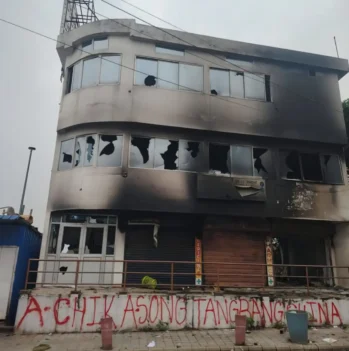
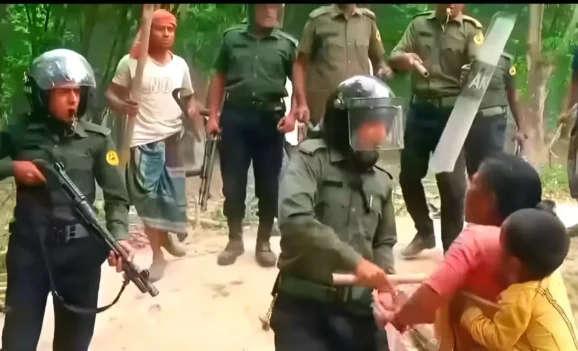
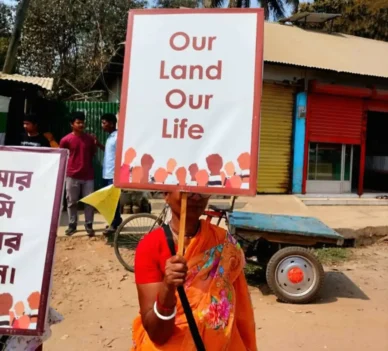
This milestone comes only after years of conflict, delay and negotiation. From December 2011 to October 14, 2019, construction was stalled due to intense protests by local communities, Project-Affected Families, and civil-society organisations including the All Assam Students’ Union (AASU), Asom Jatiyatabadi Yuba Chatra Parishad (AJYCP), and the Krishak Mukti Sangram Samiti led by activist Akhil Gogoi. Opponents raised concerns about dam safety, seismic vulnerability and downstream risks in one of India’s most ecologically sensitive river systems.
Environmental groups argued that SLHEP sits in a tectonically active Himalayan zone, exposing it to natural disasters. After prolonged hearings, the National Green Tribunal cleared the project on July 31, 2019, allowing construction to resume on October 15, 2019. The NGT’s decision followed years of petitions, expert debates and submissions by numerous committees. Even earlier, in 2022, Union Power Minister Raj Kumar Singh had announced that the project would be commissioned in early 2023, with NHPC Chief Executive Director Y.K. Subhe also assuring power generation by January 2023—timelines that ultimately shifted as technical and environmental processes unfolded.
In 2015, the Ministry of Power constituted an eight-member Project Oversight Committee with four representatives from Northeast states and four from the Centre. Their findings diverged sharply: the Central group endorsed the project, while Northeast representatives upheld concerns raised by activists and independent experts. In response, the National Green Tribunal directed the Ministry of Environment, Forest and Climate Change in 2017 to form a new expert panel comprising specialists in seismology, geology and hydrology. This committee reviewed earlier reports afresh and ultimately issued a favourable assessment, allowing work to resume after nearly eight years of uncertainty.
Despite procedural clearances, local apprehensions have persisted. When legal avenues appeared exhausted, resistance shifted to community-based movements that continue to highlight questions of safety, ecological impact and long-term accountability. Recent extreme-weather events and disasters in the region have only sharpened these fears.
Environmental experts warn of potential biodiversity loss in cold-water rivers like the Subansiri, which support some of India’s richest aquatic ecosystems. Dr. Dhrupad Choudhury notes that certain fish species migrate upstream to spawn, making uninterrupted river flow essential. Disruption, he cautions, could threaten endangered and endemic species. He stresses the need for an institutional mechanism through which project stakeholders, local communities and both state and central governments can meet, raise concerns and work towards mutually acceptable solutions. “There is a lot at stake here,” he says.
Minor monsoon damage to the spillway recorded earlier in 2025—officially described as non-structural—has further reminded many that natural hazards remain ever relevant. Critics argue that now, more than ever, robust disaster-management plans, ecological monitoring and community participation must accompany power generation.
To address longstanding doubts, the Government of India had formed several expert bodies even before the 2015 Oversight Committee. The Technical Expert Committee (TEC), constituted by the Planning Commission in July 2012, re-examined and dismissed hydrological objections raised by the Assam Expert Group. The Dam Design Review Panel (DDRP), formed in June 2013, recommended major structural reinforcements, including widening the dam from 171 metres to 271 metres, extending upstream cut-off walls, adding downstream seepage barriers, strengthening foundations through intensive grouting and anchoring the abutments with cable tendons. The National Committee for Seismic Design Parameters (NCSDP) also evaluated and approved the project’s earthquake-resilience measures.
A landmark study by the Central Water Commission—the Cumulative Impact and Carrying Capacity Study of the Subansiri Sub-Basin (December 2014)—stressed the importance of ecological balance and mandated a minimum environmental flow of 240 cubic metres per second to sustain aquatic life and preserve the river’s natural rhythm even as power generation begins.
The commissioning of SLHEP marks a turning point in India’s hydropower story—an achievement shaped by decades of engineering ambition, environmental debate and persistent public scrutiny. The dam has finally come alive, but the coming years will determine whether it can deliver power and public trust in equal measure.