Arunachal Pradesh continues to sit at the centre of long-standing tensions between India and China. Apart from routine claims on the territory and renaming of different areas in the region by the Beijing administration, one recent incident involving the alleged harassment of a woman from Arunachal Pradesh in China, on account of her Arunachal passport, proves that tensions are always simmering among the two Asian giants.
PM Narendra Modi visited China to attend the SCO summit, after another earlier meeting with Xi Jinping at the BRICS summit. With the imposition of US tariffs and economic considerations, future cooperation took centre stage in these two meetings, apart from a tacit understanding not to flare up tensions along the international border shared by the two giants.
A four-day conference on the ‘cultural and historical significance of Tibetan spiritual leader, the Sixth Dalai Lama, Gyalwa Tsangyang Gyatso’, was held from December 3–7 at Tawang, Arunachal Pradesh, his birthplace. The conference brought together leading researchers in Tibetan literature, Buddhist studies, arts, history and anthropology from premier institutions across India and abroad.
Hosted by the Arunachal Karmik and Adhyatmik Affairs Department, the Thubten Shedrubling Foundation, and the Centre for Cultural Research and Documentation (CCRD), the conference critically examined the multifaceted legacy of the sixth Dalai Lama (1683–1706/46), a figure whose life and writings have profoundly shaped Tibetan intellectual and spiritual history. Gyalwa Tsangyang Gyatso left behind a remarkable body of poetic works composed primarily in Tibetan. His verses, often meditations on impermanence, exile and spiritual longing, continue to resonate globally.
Looking back at Buddhism and Indo-Tibet relationship
Buddhism was one of the largest religions in ancient India before its decline due to numerous political and cultural changes. Through the efforts of hundreds of Indian scholars including Atisha and Shantarakshita, the Nalanda tradition gained stronghold in Tibet and many other Himalayan countries.
The history of Tibet extends beyond its recorded beginnings with Nyatri Tsenpo in 127 B.C., revealing a rich cultural heritage rooted in the pre-Buddhist civilisation of the Kingdom of Shangshung. Located in Western Tibet, near Mount Kailash (known as Mt Tise), it flourished with a sophisticated culture linked to the indigenous Bon tradition. The recorded history of Tibet begins with the Yarlung Dynasty, ruling from the 5th to the 9th century CE.
As Tibet embraced Indian Buddhist texts, practices and philosophies, it also preserved them. Many Sanskrit manuscripts were lost in India after its subsequent invasions, but survived in Tibetan translations, which later helped scholars restore India’s Buddhist legacy.
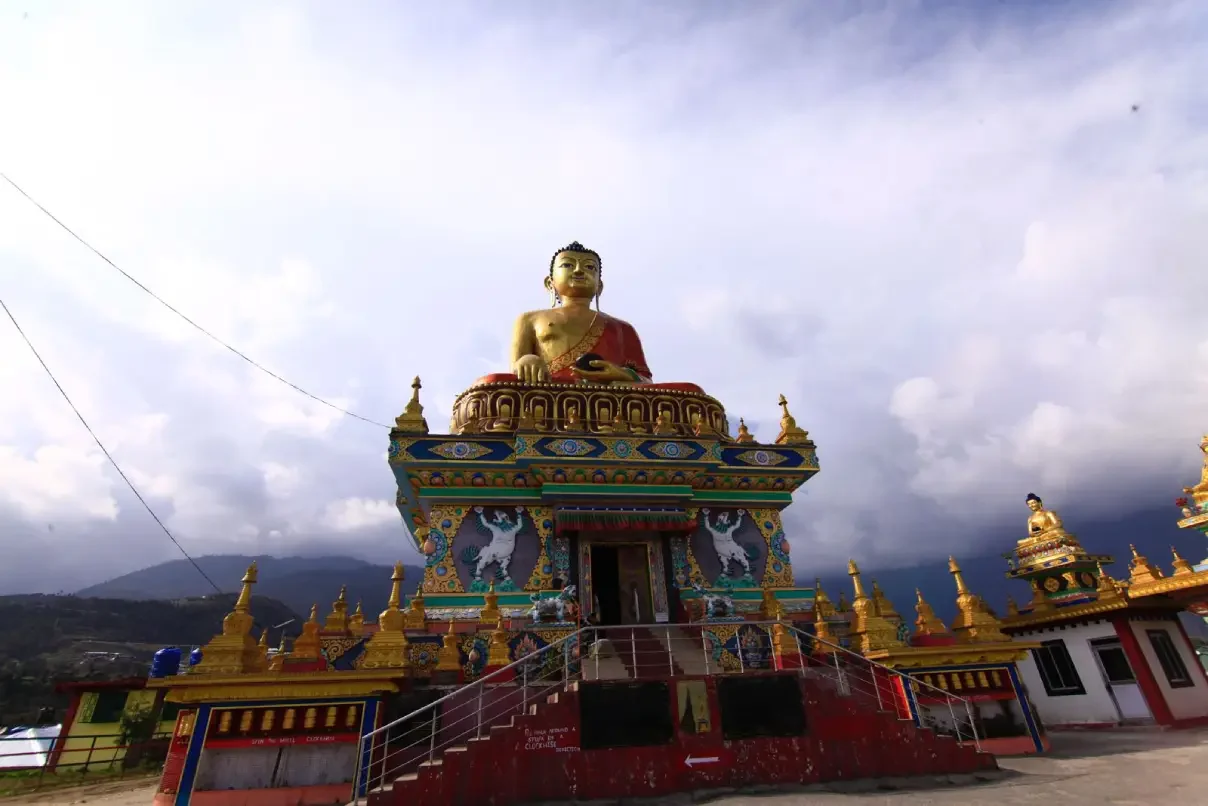
Buddhism formally arrived in Tibet during the reign of Thori Nyatsen in the 5th century A.D. Legend has it that a casket containing the Mantra of Avalokiteshvara fell from the sky onto Yubulakhang, the royal palace, marking the auspicious introduction of Buddhism. Although the king could not decipher the scripts within, he preserved them as sacred relics for future generations, symbolising the divine transmission of Buddhist teachings to Tibet.
The first Buddhist monastery in Tibet at Samye, known as Samye Mingyur Lhungyi Drupe Tsuklakhang, was officially patronised by the Tibetan Emperor Trisong Detsen (755–798 AD) and constructed under the guidance of Shantarakshita, the abbot of Nalanda, and the master Padmasambhava, revered as Guru Rinpoche.
One of the unique aspects of Tibetan Buddhism is its integration of indigenous Tibetan beliefs, particularly the Bon religion. This syncretism resulted in a rich tapestry of rituals, deities and practices distinct from Indian Buddhism. While Vajrayana traditions existed in India, Tibetan Buddhism developed these practices into a highly elaborate and distinct system.
A desperate China has sought to use Buddhism in the promotion of the Belt and Road Initiative (BRI). In 2018, a two-day symposium was organised in the Tsongon (Qinghai) region of Tibet to discuss how Tibetan Buddhism could better serve China’s Belt and Road Initiative and resist separatism.
In the Seventh Tibet Work Forum held in Beijing on August 29–30, 2020, Xi Jinping emphasised that Tibetan Buddhism must be guided to adapt to socialist society and be developed in the Chinese context.
Tawang, Buddhism and strategic contestation
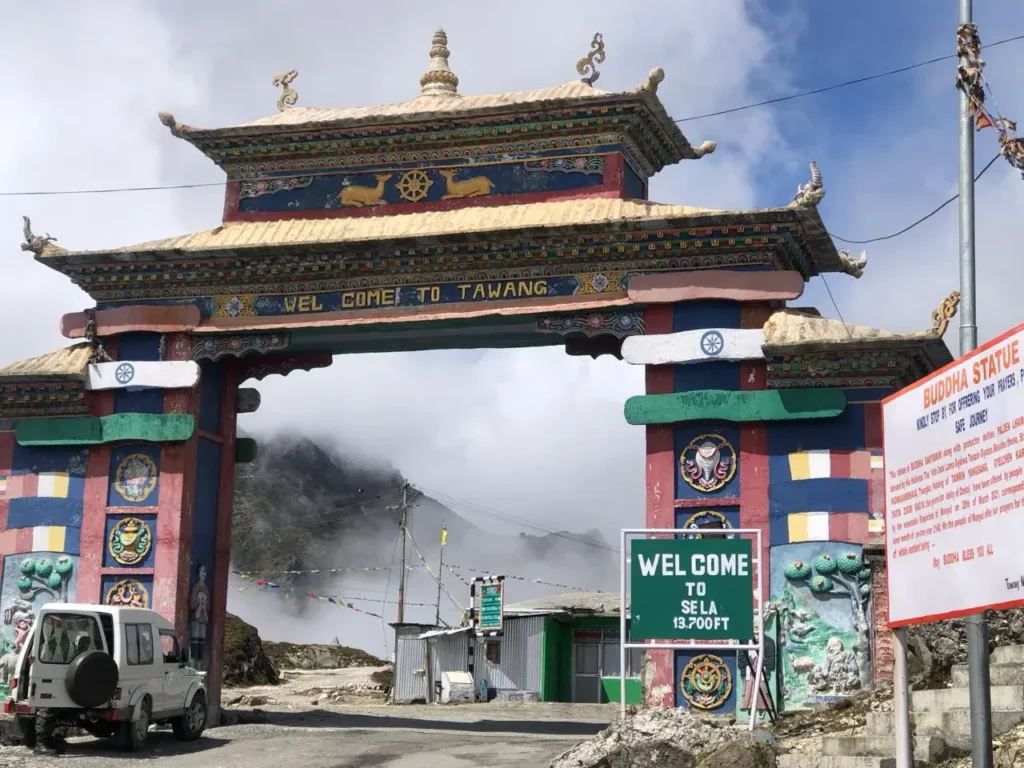
However, the venue of the conference itself was politically significant. Tawang, a mountain town in the border state of Arunachal Pradesh, is claimed by China as Zangnan or southern Tibet. The fragile rapprochement between China and India may face a fresh test.
In a symbolic move to assert ownership of his legacy, India announced that a mountaineering team from a defence ministry institute had scaled a 6,383-metre peak near Tawang for the first time and named it after Tsangyang Gyatso. On expected lines, the move drew strong protests from Beijing. The peak lies close to the Line of Actual Control, the de facto border between India and China.
The conference was held at a time when both countries are cautiously navigating their way out of years of hostility triggered by the deadly border clashes of 2020, alongside growing sensitivities around the succession plans for the 14th Dalai Lama, who turned 90 in July.
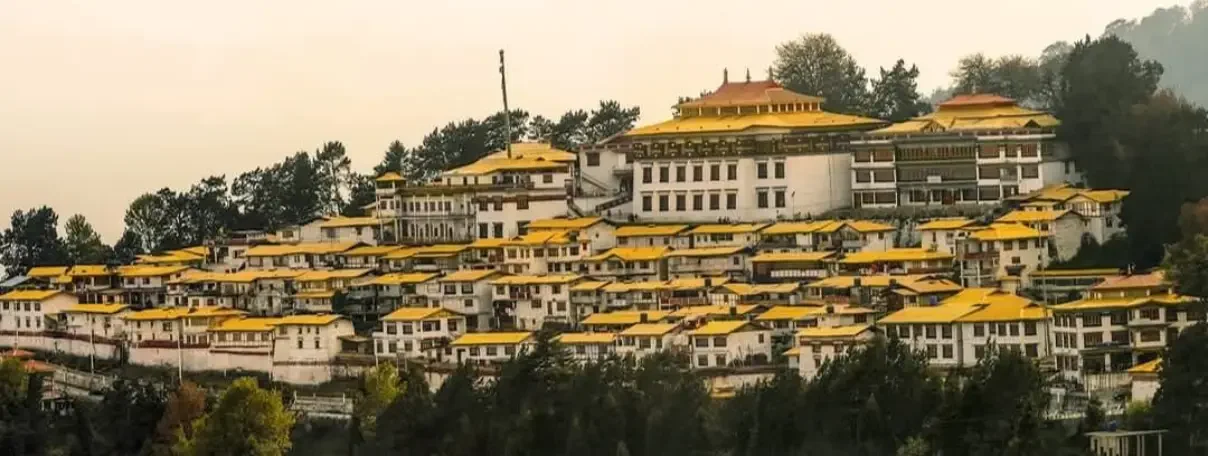
For the Chinese government, the focus on the sixth Dalai Lama reflects a major geopolitical concern. Of all the Indian territory claimed by China, Tawang appears to be the most critical, lying south of the Himalayan ridge and offering a direct route to the plains. It is the one area Beijing has said must be ceded to China in any future border settlement, suggesting that broader claims over Arunachal Pradesh may serve as negotiating leverage over Tawang.
Historically, Tawang was ceded to India in 1914 by the Tibetan government under the 13th Dalai Lama, following an agreement with the British colonial government. The agreement was signed in the absence of the then Beijing government, which held sovereignty over Tibet. Beijing never acknowledged the agreement.
In 2008, then British foreign secretary David Miliband issued a statement distancing the UK from the colonial-era accord that resulted in the McMahon Line. China has long rejected the McMahon Line as illegal and unacceptable, even though India treats it as the effective border.
The Dalai Lama succession and the politics of legitimacy
Earlier this year, the 14th Dalai Lama said that the issue of his reincarnation should be decided by Tibetans and Buddhists through the Ganden Phodrang Trust and that his successor would be born outside China during his lifetime. Beijing, which views the Dalai Lama as a separatist despite his renunciation of Tibetan independence, rejected the idea and insisted that reincarnation must follow Chinese law.
The stage is set for an unprecedented situation: two rival Dalai Lamas—one endorsed by China and another recognised by the Tibetan exile government in India. China has invoked the Qing-era “Golden Urn” tradition to justify its authority, a claim disputed by the Dalai Lama’s office.
This dual succession risks pushing the Tibet-China issue deeper into geopolitics, with India caught in the middle. As host to the Tibetan government-in-exile and over 100,000 Tibetan refugees, India cannot easily remain neutral. India is also the birthplace of Buddhism and is viewed by many Tibetan Buddhists as a spiritual homeland.
The Dalai Lama’s decision to name his successor during his lifetime marks a break from tradition and an attempt to pre-empt Beijing’s interference. India’s continued support for the Dalai Lama gives New Delhi a strategic counterweight amid increasingly strained relations with China.
Although the Dalai Lama formally renounced political power in 2011, his spiritual influence continues to challenge Beijing’s claims over Tibet. The United States has also taken a firm position. In 2024, President Joe Biden signed legislation affirming Tibetans’ right to choose their religious leaders and rejecting any Chinese role in the process.
From Samye Monastery in the 8th century to exile settlements across the Indian subcontinent, the civilisational link between India and Tibet has survived wars, occupations and shifting geopolitics. Arunachal Pradesh Chief Minister Pema Khandu paid tribute to the Dalai Lama, calling him a beacon of peace and compassion.
December 10 marked the 36th anniversary of the Dalai Lama’s Nobel Peace Prize, commemorated at Chamleng, Tawang Monastery. The anniversary holds special significance for Tawang, one of the most important centres of Tibetan Buddhism in India and home to the world’s second-largest Gelugpa monastery after Tibet.
It remains to be seen how Beijing responds to the conference and the anniversary celebrations held in close succession at Tawang, especially as both sides attempt to restore ties following an October agreement to ease the military stand-off along the Himalayan border. The impact, however, is likely to be significant.