How decades of quiet labour by Hally War shaped the Umkar Living Root Bridge, long before national recognition arrived
On January 25, 2026, the central government announced that Hally War would be honoured with the Padma Shri for his lifelong dedication to crafting and preserving one of Meghalaya’s living root bridges—the Umkar Living Root Bridge. When I heard the news, it stirred something deep within me. I felt compelled to seek out this elder, to understand the beginnings of his work and the quiet persistence behind a bridge that has grown, quite literally, from the soil of time.
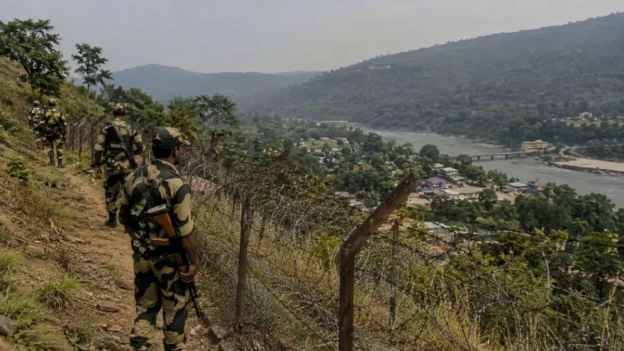
Early one morning, I set out from my home in Shillong and travelled down towards Siej Village, where Hally War lives. After reaching Sohra, we continued past Mawmluh, the road narrowing as the landscape opened into dense greenery and mist. Siej Village, which falls under the Shella–Bholaganj Block, lies about 67.5 kilometres from Shillong. With only around 20 households, it is a small settlement, but one that feels richly blessed—surrounded by betel nut trees, betel leaves, flowering shrubs, and forests alive with birds and insects. From certain points in the village, one can even glimpse the Bangladesh border, reminding visitors how closely nature and geography intertwine here.
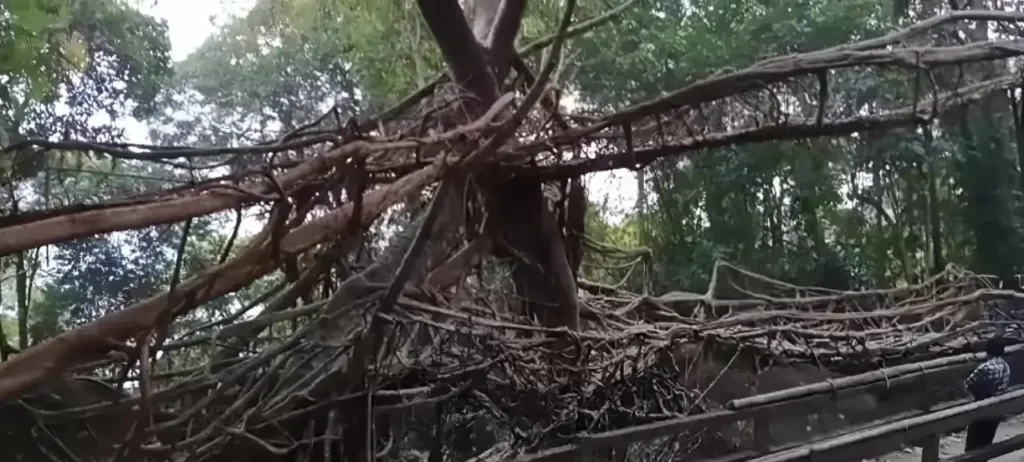
When I arrived, I was warmly welcomed by Hally War, his wife, and his children. There was a quiet dignity about the household—simple, unassuming, and deeply rooted in the land. After resting for a while, we set out together to visit the Umkar Living Root Bridge. It took barely ten minutes to reach the site, but the moment we arrived, a sense of awe settled in. Before us stood a bridge shaped not by concrete or steel, but by patience—over fifty years of careful tending since it was first guided into form.
Video credit : Rilinda Manih
At the heart of the site is a large rubber tree, from which the bridge’s roots spread and intertwine. From this same tree, Hally and his family later began shaping additional bridges, some of which are now around twenty years old. The roots, thick and sinewy, have been coaxed across the stream, slowly knitting themselves into a structure that is both functional and alive.
As we spoke, Hally War shared his joy at receiving the Padma Shri. “I am filled with happiness,” he said, his face glowing. “That I have been chosen for this honour is through the blessing of God the Creator. I am beyond happy.” Now over sixty years old, Hally is a farmer and a father of four. His days are spent tending his plantation—planting betel nut, betel leaf, black pepper, and bay leaf. He told me that although he had the chance to go to school as a child, his desire to work and be self-reliant led him to leave his studies early.
The story of the Umkar Living Root Bridge, however, goes back even further. Hally explained that the rubber tree from which the bridge grew was planted by his ancestors. As it matured, its roots spread near a stream that villagers needed to cross to reach Mawlong, where many of their farms were located. In the past, Sohra was known for receiving some of the heaviest rainfall in the world, and during the monsoon, the stream would swell violently. Wooden and bamboo bridges were built again and again, only to be destroyed by the force of the water.x
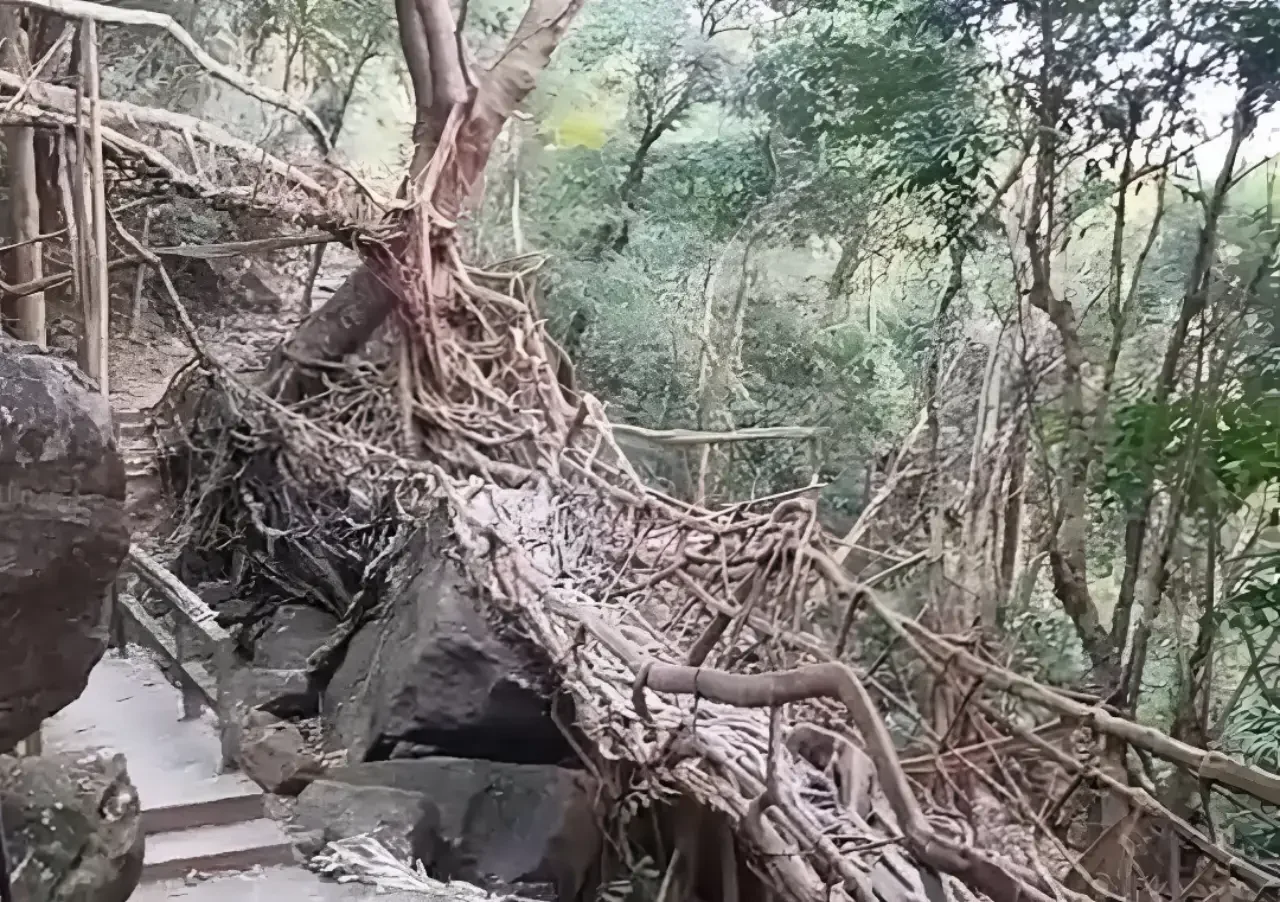
It was during this search for a safer solution that Hally’s grandfather and father noticed the strength of the rubber tree’s roots. When Hally was just ten years old, he joined them in an experiment that would shape his life. Treating the roots like threads, they began guiding them—one across, one to the side, one in the middle—supporting them temporarily with bamboo and wood. Slowly, the roots crawled, thickened, and fused, taking the shape of a bridge that could connect one side of the stream to the other.
A living root bridge, Hally explained, takes about forty to fifty years to become strong and fully walkable. Its final form depends on human intention—how wide one wants it to be, how strong, how enduring. In Meghalaya, these bridges are more than pathways; they are living examples of indigenous knowledge, ecological balance, and a relationship with nature based on care rather than conquest. Unlike conventional bridges, they grow stronger with time and adapt to their environment, surviving floods that would wash away man-made structures.
As we stood there, Hally spoke with quiet pride. “I never imagined that something I built simply to make a path walkable would bring honour to the state,” he said, smiling. “I feel inspired.” Yet for him, the work does not end with recognition. He is determined that the tradition of crafting living root bridges should continue. He teaches his children, grandchildren, friends, and neighbours, passing on the knowledge patiently, just as it was once passed on to him.
Video credit : Rilinda Manih
“I teach the future generations,” he told me, “so that they will preserve and strengthen these bridges and build more—not only in this village but in other villages too. Living root bridges uplift the locality through tourism and, more importantly, through the identity of the state.”borderlands.featured,
As I prepared to leave Siej Village, Hally expressed a final hope—that future generations would continue to tend, care for, and preserve the Umkar Living Root Bridge, allowing it to grow stronger with each passing decade. Walking back through the village, surrounded by mist and greenery, it struck me that this bridge is more than an architectural wonder. It is a living archive of patience, resilience, and community—one man’s lifelong dialogue with nature, now finally recognised by the nation.