A tribute to the legendary Lou Majaw as Meghalaya moves towards celebrating his 80th birth anniversary in 2027.
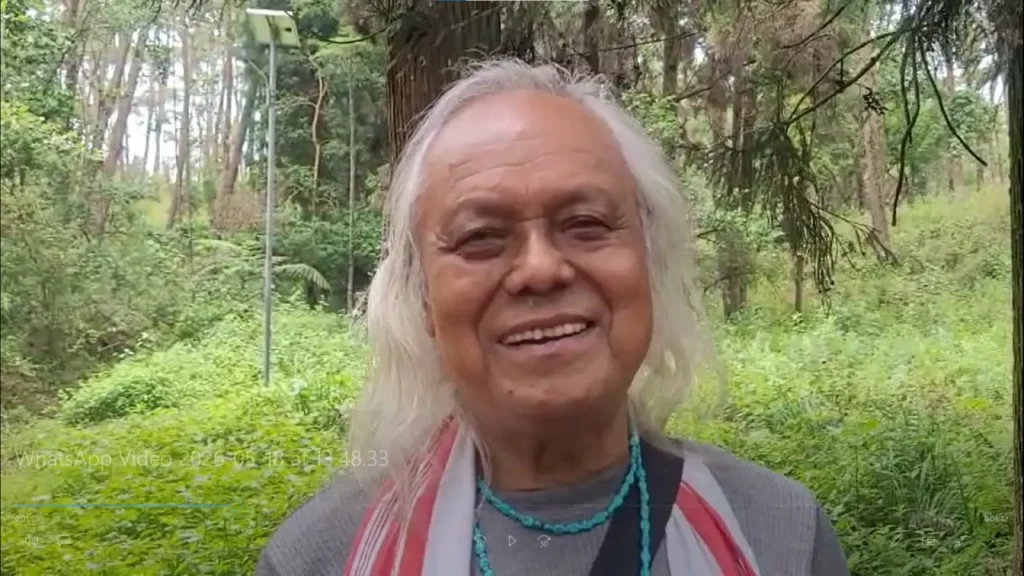
“Blowin’ in the Wind changed my life.” That is something Lou Majaw has often admitted over the years while reflecting on his lifelong connection with Bob Dylan. For Majaw, Dylan was never merely a musician. He represented freedom, honesty and the power of simple words carried through music. That connection eventually became so deep that generations of music lovers across India would come to know Lou Majaw as the “Bob Dylan of India” and the “Bard of Shillong.”
As Meghalaya slowly moves towards celebrating his 80th birth anniversary in 2027, Majaw’s extraordinary life continues to stand as one of the most remarkable stories to emerge from Northeast India’s cultural landscape. Music, hardship, survival and sincerity have all blended together across a journey that began in poverty in Mawlai, Shillong, long before recognition and applause ever arrived.
Born on April 14, 1947, in Mawlai Phudmari, Majaw grew up in extremely modest circumstances. Musical instruments were luxuries his family simply could not afford. His first exposure to music came through school boarding programmes where he learned to play the guitar, side drum, saxophone and trumpet. Even as a young boy, music became less of a hobby and more of a refuge.
In the early 1960s, he travelled to Kolkata, then Calcutta, at a time when the city’s Park Street was still one of India’s great live music destinations. The move would become a defining chapter in his life. Like many struggling musicians of that era, survival itself was difficult. Majaw earned barely five rupees a week while performing, an amount that had to cover both food and rent.
Yet Calcutta also exposed him to a larger musical world. He performed with bands such as Little Richard and the Small Frys and Oracle Bones while slowly building his own identity as a performer. It was during this period, around 1964, that he first encountered Bob Dylan’s music.
Songs like “Blowin’ in the Wind” struck him deeply. Dylan’s raw songwriting, protest spirit and emotional honesty resonated with the young musician from Shillong in a way few artists ever had. The admiration soon turned into lifelong devotion.
Eventually, the owner of the iconic Trinca’s restaurant recognised Majaw’s talent and offered him his first solo performance slot under the stage name “Louis Lewis.” It was a small but important breakthrough in a life built almost entirely through persistence.
Despite the growing recognition, Majaw never developed the instincts of a celebrity. He remained deeply uncomfortable with self-promotion and often preferred distance from the media spotlight. For him, satisfaction came from simply singing, playing music and staying true to himself. It was only later, after encouragement from his nephew, that he began to understand how his personal struggles and artistic journey could inspire younger generations.
On May 24, 1972, Majaw organised his first Bob Dylan tribute concert in Shillong. What began as an act of admiration slowly evolved into one of the Northeast’s most enduring musical traditions. More than five decades later, the annual Dylan tribute continues to bring together musicians and audiences from across the region.
Majaw often modestly describes himself as a “Duhalia” or traditional musician and insists that he never possessed a technically refined voice. Yet audiences connected with the honesty and soul in his performances. He has long believed that music is a divine gift and that songs carrying meaningful lyrics can shape both society and individuals.
Over the decades, he became one of the central figures of independent music in Northeast India. In 1977, he formed The Great Society, a landmark band that helped shape the region’s rock music culture. His musical journey also included The Fentones, Supersound Factory, Blood and Thunder and Lou Majaw & Friends.
Although he became widely celebrated for his Bob Dylan renditions, Majaw’s own compositions revealed a powerful social consciousness. Songs like “Across the Sea of Sorrow” explored emotional pain and struggle, while “Jingkyrmen ka Ri Khasi” (The Weeping of the Khasi Land) reflected anxieties surrounding environmental destruction in Meghalaya.
Through “Ka Heroin,” he confronted the devastating impact of drug abuse within society, while “Nongrim Nongbah” captured nostalgia, belonging and love for home. His songwriting consistently carried themes that ordinary people could relate to deeply.
Even his eccentric appearance became part of his identity. Majaw’s famous hot pants, mismatched socks and minimalist clothing style were never simply fashion statements. They were shaped by childhood hardship. He once recalled how his family could not afford slippers during winter and had to make makeshift footwear from charcoal-stained wood tied together with rope.
Perhaps because of those experiences, he never became attached to material excess or elaborate appearances. Comfort, simplicity and freedom mattered far more to him than glamour.
Recognition eventually followed the decades of contribution he made to music and culture. In 2016, he received the 4th Dr Bhupen Hazarika National Award from the Governor of Assam. In 2023, filmmaker Sattyakee D’com Bhuyandocumented his life through the film The Platinum Gong. A year later, the University of Science and Technology Meghalaya honoured him with a Doctor of Letters (D. Litt.) degree for his immense contribution to music and culture.
Even today, Majaw’s message to younger generations remains grounded in simplicity. He urges young people to live with honesty, discipline and moderation, and to dedicate themselves completely to whatever path they choose. Hardships, he says, are inevitable, but patience and resilience ultimately carry people forward.
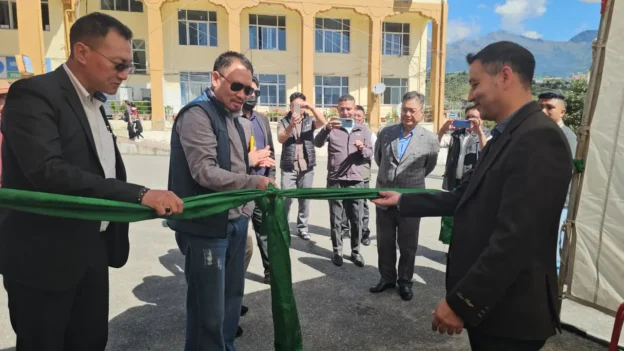
That spirit was visible once again recently when the Lou Majaw Foundation, together with Seng Samla Mawlai Phudmuri and Mawjam Event Network, organised a plantation drive near the Mawlai Phudmuri Forest beside the natural water sources of Umpynthor and Um Shyniar.
Held under the theme “Plant More Trees, Gift More Life,” the programme brought together local residents, youth organisations and community leaders who planted 100 indigenous saplings. The initiative officially marked the beginning of the year-long celebrations leading up to Lou Majaw’s 80th birth anniversary in 2027.
The morning began with a felicitation ceremony and a collective pledge towards environmental stewardship before the plantation drive officially commenced at 8:30 AM. Traditional leaders, including the Rangbah Shnong of Mawlai Phudmuri and the Rangbah Dong of Madan Heh East ‘B’, joined members of Seng Samla Mawlai Pyllun, Seng Samla Mawlai Phudmuri and Seng Longkmie Mawlai Phudmuri in the effort.
In many ways, the gathering reflected the very essence of Lou Majaw himself — rooted in community, shaped by hardship and quietly enduring across generations.