The debate over the Uniform Civil Code (UCC) in Assam has gradually moved beyond constitutional interpretation or electoral politics. It now reflects a deeper question confronting many Asian societies in the twenty-first century: how should modern states balance religious identity, customary traditions and equal citizenship under one legal framework?
When Himanta Biswa Sarma announced that Assam would move towards implementing a customised version of the UCC, many initially saw it as part of the ideological agenda of the Bharatiya Janata Party. But the political intensity surrounding the proposal suggests something larger. The issue is no longer merely legal. It concerns the future relationship between state authority and community identity in one of India’s most socially layered regions.
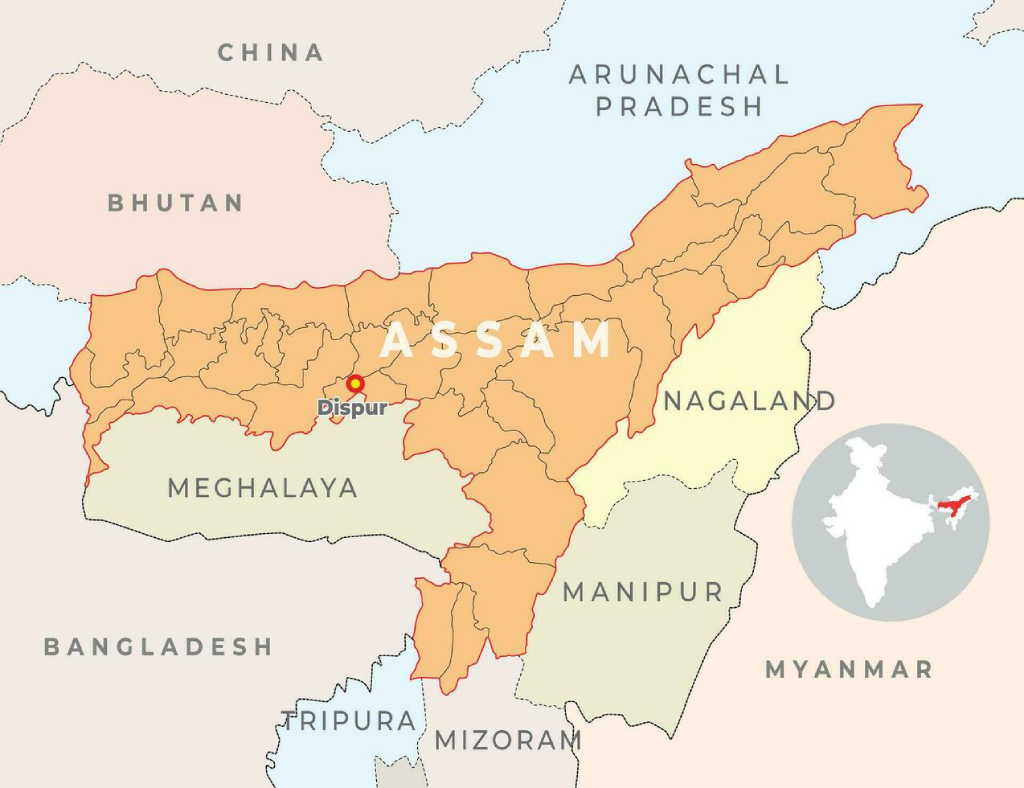
Assam presents a uniquely sensitive landscape. Religion here intersects with tribe, migration, language and ethnicity in unusually complex ways. The Assamese Muslim cultivator in lower Assam, the Bodo villager in Kokrajhar, the Karbi customary authority in the hills and the caste Assamese Hindu in Guwahati inhabit very different historical and social memories. Any attempt to introduce legal uniformity therefore enters emotionally charged terrain.
The roots of the UCC debate lie in Article 44 of the Indian Constitution, which encourages the State to move towards a common civil code for all citizens. Yet independent India retained separate personal laws relating to marriage, inheritance and divorce, especially for religious communities. The Muslim Personal Law (Shariat) Application Act continued to shape Muslim family law after Independence, while tribal customary systems also survived across many regions.
This legal pluralism was not unique to India. Across Asia, societies evolved differently while negotiating the relationship between religion and state law.
In Turkey, Mustafa Kemal Atatürk abolished Islamic personal laws in the 1920s and introduced a European-style civil code. The reforms strengthened women’s rights and centralised state authority, but they also created long-term resentment among conservative sections of society. Decades later, the rise of Recep Tayyip Erdoğan reflected a broader social reaction against aggressive secularism.
If Turkey represented legal secularisation, Pakistan moved towards stronger Islamisation. During the rule of Muhammad Zia-ul-Haq in the 1980s, Sharia-based reforms became increasingly linked with state identity. Yet Pakistan’s experience also exposed the complexity of religious law itself. Questions involving women’s rights, inheritance, sectarian interpretation and minority protection continue to generate tension between constitutional governance and conservative morality.
The experience of Bangladesh is particularly relevant for Assam because of deep linguistic, migratory and historical connections. Though Bangladesh emerged with a secular constitutional vision under Sheikh Mujibur Rahman, Islamic identity gradually regained stronger public influence over time. Muslim personal law still shapes family relations in much of Bangladeshi society, especially in rural regions.
Yet Bangladesh also witnessed major social transformations through women’s education, urbanisation and industrial employment. In many cases, social behaviour evolved faster than formal law itself. This duality — modern economic participation alongside traditional family structures — mirrors the social transition now visible in parts of Assam as well.
Among Asian nations, Indonesia perhaps offers the most practical model of legal pluralism. Instead of imposing complete uniformity, Indonesia institutionalised coexistence between civil law, Islamic law and customary tribal traditions known as “adat”. Regions like Aceh follow stronger Sharia regulations, while other provinces remain largely secular in civil administration.
Indonesia’s approach emerged from necessity. A country containing hundreds of ethnic groups and islands could not easily survive through rigid legal centralisation. Yet even there, pluralism created uneven experiences of citizenship and differing standards of gender rights across regions.
Similarly, Malaysia and Singapore adopted hybrid systems where Muslims retain aspects of Islamic personal law while broader civil administration remains secular. These systems maintained social balance but often generated jurisdictional complications involving marriage, conversion and custody disputes.
The broader Asian experience reveals that no country has fully resolved the tension between modern citizenship and inherited identity. Some societies pursued strong legal uniformity but faced cultural resistance. Others preserved diversity but struggled with fragmented legal systems.
This larger Asian backdrop helps explain why Assam’s UCC debate has become so politically sensitive.
For Himanta Biswa Sarma, the UCC appears to be both a governance reform and a political statement. His government has already moved against polygamy and proposed mechanisms to regulate live-in relationships. Supporters describe these steps as efforts to ensure women’s rights and legal accountability. Critics, however, argue that the state is increasingly entering private social spaces historically governed by family and community norms.
The proposal to monitor or register live-in relationships particularly reflects a wider conservative anxiety visible across many Asian societies. Governments increasingly fear that rapid urbanisation, digital culture and changing youth behaviour may weaken traditional family structures and social discipline.
In Assam, however, the challenge remains deeper than administrative reform. Every debate in the state eventually returns to questions of identity, belonging and demographic insecurity.
That is why the future of the UCC debate in Assam may ultimately depend not only on constitutional legality, but on whether ordinary communities perceive the reform as an instrument of justice or as a vehicle of cultural dominance.
In one of Asia’s most socially layered societies, that distinction may determine whether legal uniformity produces social trust — or deeper civilisational anxiety.