For the first time in decades, senior Bangladeshi officials are undergoing official training in Pakistan — free of cost and outside the long-established India-centric bureaucratic exchange framework that had shaped Dhaka’s administrative engagement for years.
Twelve senior officials, including an additional secretary and 11 joint secretaries, travelled to Lahore to participate in a leadership and skills development programme at Pakistan’s Civil Services Academy (CSA) from May 4 to May 21. Fully funded by Islamabad, the visit may appear administrative on the surface, but in South Asian geopolitics symbolism often carries deeper meaning than official protocol suggests.
Yet even as Dhaka and Islamabad deepen engagement, important questions remain about both the sustainability and the limits of this emerging relationship.
Pakistan has extended a series of diplomatic and institutional overtures toward Bangladesh over the past year, ranging from trade and connectivity initiatives to bureaucratic exchanges and security cooperation. However, whether Islamabad possesses the long-term political and economic capacity to consistently deliver on its commitments remains uncertain.
There are also structural constraints that make any dramatic geopolitical shift unlikely.
Economically, India remains far more important to Bangladesh than Pakistan. Trade volumes between Dhaka and New Delhi are significantly larger, while geography, border connectivity, energy cooperation and transit interdependence continue to bind the two neighbours in ways Pakistan cannot easily replicate.
Public sentiment also continues to matter. For many Bangladeshis, distrust toward Pakistan still lingers because of the unresolved emotional and historical legacy of the 1971 Liberation War. Moreover, Pakistan itself continues to grapple with economic fragility, political turbulence and internal security challenges, limiting its ability to emerge as a dominant strategic partner for Dhaka.
For that reason, analysts caution against portraying recent developments as evidence of Bangladesh abandoning India or decisively pivoting toward Pakistan.
Instead, what appears to be unfolding is a more calibrated attempt by Dhaka to diversify its regional engagements while preserving strategic flexibility.
That shift becomes more significant when viewed against the backdrop of Bangladesh’s long-standing institutional relationship with India.
For more than a decade, India remained the principal destination for foreign training programmes involving Bangladeshi bureaucrats. Under agreements signed and periodically renewed during the Awami League era, thousands of Bangladeshi civil servants attended programmes at India’s Lal Bahadur Shastri National Academy of Administration in Mussoorie and institutions linked to the National Centre for Good Governance (NCGG) in New Delhi.
These programmes were never merely technical exercises. They helped India cultivate institutional familiarity and administrative influence within Bangladesh’s governance ecosystem, reinforcing the broader strategic closeness between the two neighbours.
However, the political transition in Dhaka following the collapse of the Sheikh Hasina-led Awami League government in August 2024 disrupted that trajectory. Since October 2024, no Bangladeshi bureaucratic delegation had travelled to India for training, creating a vacuum that Pakistan was quick to recognise.
Islamabad had long sought deeper institutional engagement with Bangladesh. During the Awami League years, Pakistani authorities repeatedly invited Bangladeshi officials for similar exchanges, but those overtures received little response. The situation changed after the interim administration led by Nobel Laureate Dr Muhammad Yunus began recalibrating Bangladesh’s regional diplomacy.
The breakthrough reportedly came during a visit to Pakistan by then Home Secretary and current Cabinet Secretary Nasimul Ghani, when Islamabad renewed its proposal for cooperation and Dhaka responded positively.
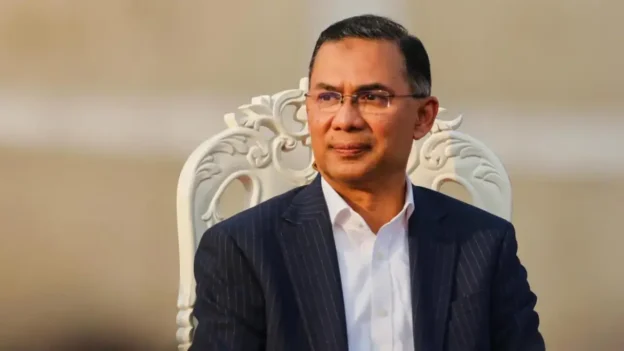
Now, under the Tarique Rahman-led BNP government, the Lahore visit has become the first known official administrative training mission by senior Bangladeshi bureaucrats to Pakistan since Bangladesh’s independence in 1971.
The delegation itself reflects the seriousness of the engagement. Officials from ministries overseeing health, commerce, public administration, home affairs, disaster management and local government are participating, suggesting that this is not merely ceremonial diplomacy but an effort to establish functional institutional linkages between the bureaucracies of the two countries.
The timing is equally significant.
Relations between Bangladesh and Pakistan have warmed noticeably over the past year, even as Dhaka’s ties with New Delhi have experienced periods of rhetorical strain despite deep economic and geographic interdependence.
Diplomatic contacts between Bangladesh and Pakistan have increased steadily. Bilateral trade has expanded, connectivity has improved and previously dormant channels of engagement have reopened.
In November 2024, a Pakistani cargo vessel docked directly at Chittagong Port for the first time in decades. Earlier this year, direct flights between Dhaka and Karachi resumed. This month, the two countries signed a 10-year memorandum of understanding on counter-narcotics cooperation — an unprecedented development in recent decades.
Together, these developments point toward a broader shift in Bangladesh’s diplomatic posture. Dhaka no longer appears willing to view Pakistan solely through the lens of historical hostility and the unresolved memory of 1971. Instead, it is increasingly engaging Islamabad pragmatically in areas such as trade, connectivity, bureaucracy and security cooperation.
At the same time, the outreach does not necessarily signal disengagement from India. Rather, Bangladesh appears to be searching for greater diplomatic manoeuvrability at a time when South Asia itself is entering a more fluid geopolitical phase.
This balancing approach mirrors a broader trend visible across the Indo-Pacific, where middle powers increasingly seek strategic autonomy amid intensifying regional competition.
For India, these developments are unlikely to go unnoticed.
For years, Bangladesh has been one of New Delhi’s most important strategic partners in South Asia. However, the political changes of 2024 introduced new uncertainties into that relationship. Sections of Bangladeshi society increasingly perceived India as being overly aligned with the Awami League government, contributing to resentment and fuelling anti-India rhetoric in parts of social media and political discourse.
Against that backdrop, Pakistan’s renewed outreach carries undeniable symbolic value.
Yet India does not appear to be responding with confrontation. Instead, New Delhi has quietly intensified efforts to rebuild engagement. Bangladesh’s Ministry of Public Administration recently circulated fresh calls for applications under India’s Indian Technical and Economic Cooperation (ITEC) framework, signalling that bureaucratic and institutional cooperation between the two countries remains very much alive.
That reality is important.
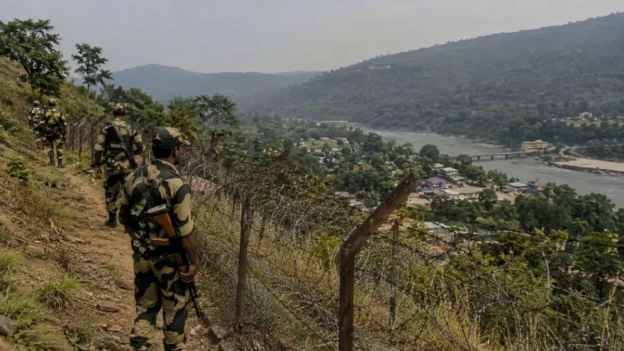
Despite moments of friction, the India-Bangladesh relationship remains anchored in deep structural realities — geography, trade, security cooperation, border management, energy connectivity and shared regional interests. Those foundations are far too substantial to be displaced easily.
What Dhaka appears to be pursuing is not strategic rupture, but strategic balance.
In that sense, the journey of 12 Bangladeshi officials to Lahore represents something larger than administrative training alone. It reflects Bangladesh’s attempt to recalibrate its regional posture with caution and pragmatism — engaging Pakistan where beneficial, maintaining critical ties with India, and seeking a foreign policy less constrained by rigid alignments.