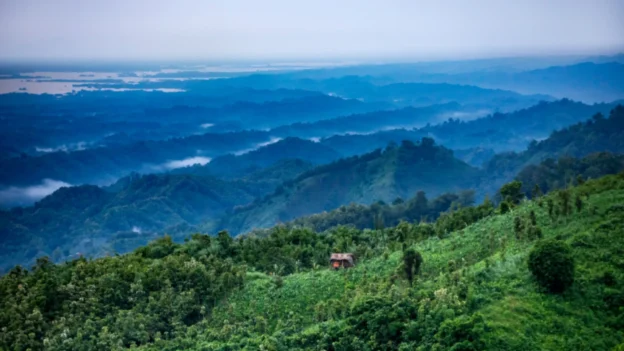
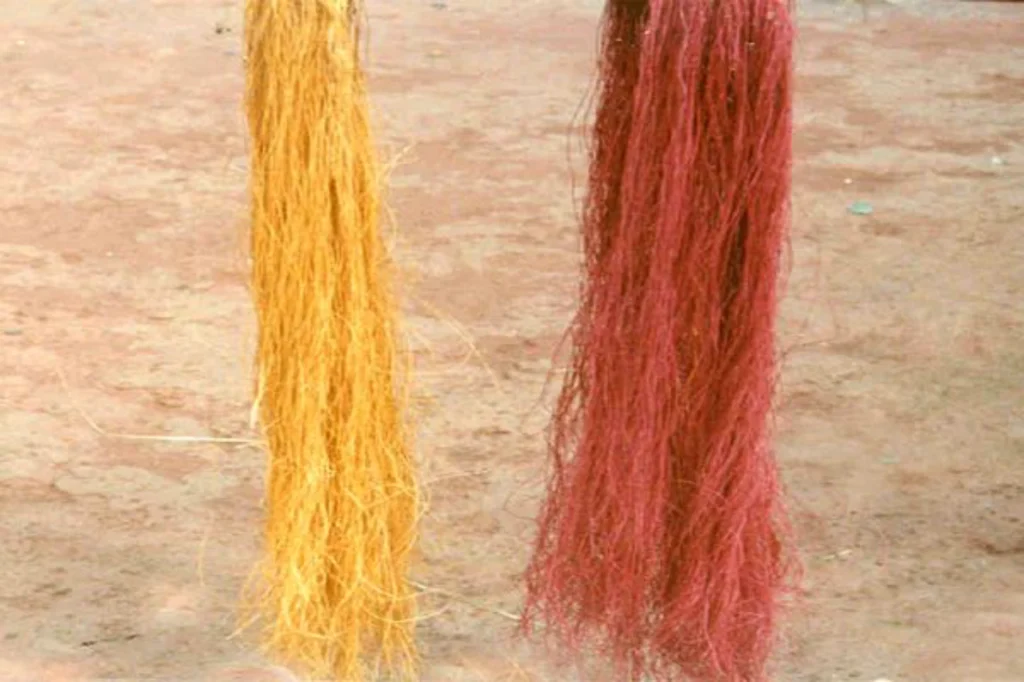
In a landmark moment for India’s textile landscape, the mist-covered hills of Ri Bhoi witnessed a historic transformation on May 11, 2026. Chief Minister Shri Conrad K. Sangma officially inaugurated the ‘Sai Lum Eri Silk Manufacturing Unit’ at Lumdaitkhla, Bhoirymbong, signalling a new era for Meghalaya’s traditional Ryndia.
Supported by the PRIME Meghalaya initiative, this facility represents far more than just industrial expansion; it is a profound commitment to sustainable livelihoods, the empowerment of local entrepreneurs, and the preservation of ancient knowledge systems.
The significance of this unit lies in its ability to bridge a long-standing gap in the silk value chain. For generations, Eri silk farmers in the state operated without an organised market, often struggling to find a consistent outlet for their cocoons.
During the inaugural event, Chief Minister Sangma highlighted how entrepreneurship serves as the heartbeat of the government’s vision. He noted that Sai Lum has effectively filled a vacuum in the industry, creating an ecosystem where farmers can now sell their cocoons locally at fair prices, while weavers gain access to high-quality, affordable yarn right at their doorstep.
The story of Sai Lum is also one of individual courage and institutional support. Founded by Shri Wallambok Pyngrope — hailed as a “son of the soil” — the unit began its journey with ₹50 lakh in zero-interest support from PRIME. Today, the facility spins 20 kg of yarn daily and provides direct employment to 15 local residents.
However, its ripple effect is much wider, positively impacting the lives of over 2,000 weavers across the region. The Chief Minister was so moved by the dedication of the team and their impact on the community that he presented an additional cheque of ₹35 lakh to Shri Pyngrope during the ceremony, further fuelling the venture’s growth.
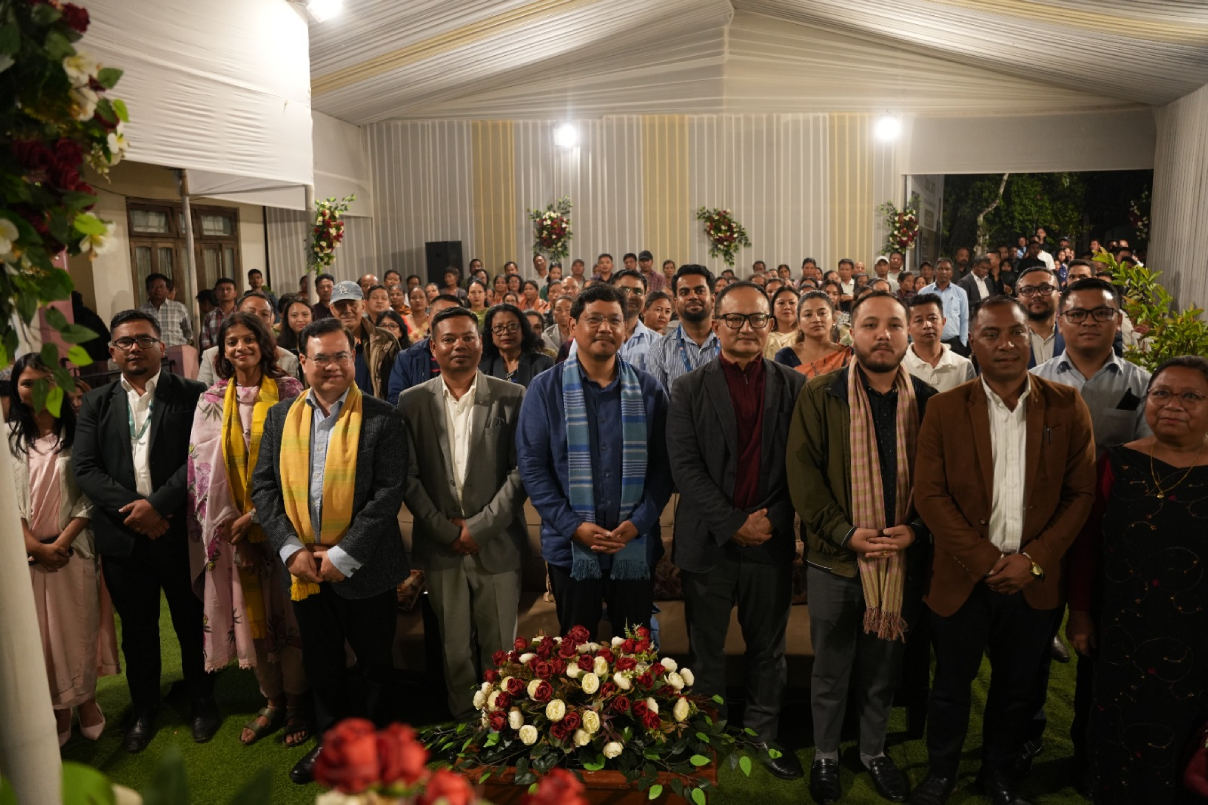
Smti Saloni Verma, IAS, Executive Director of the Meghalaya Basin Management Authority (MBMA), described the unit as a “source of dignified and sustainable livelihood” for people on their own land. She emphasised that the success of Sai Lum is the result of months of intense collaboration between government departments, all aimed at facilitating more meaningful ventures that allow local residents to dream big without leaving their roots.
Meghalaya’s Eri silk, or Ryndia, has uniquely positioned itself as a global leader in ethical fashion. Known as “peace silk”, the process is entirely cruelty-free and eco-friendly, as it does not harm the silkworms. This dedication to sustainable practices led to traditional Ryndia receiving the prestigious GI (Geographical Indication) tag in April 2025. Its cultural and economic importance was further elevated when Prime Minister Narendra Modi lauded the state’s silk production in a 2025 episode of Mann Ki Baat, praising the way Meghalaya balances modern economic needs with deep respect for traditional weaving heritage.
The statistics behind the industry are as impressive as the craftsmanship. Meghalaya stands as the second-largest producer of Eri cocoons in India, yielding nearly 500 metric tonnes annually. In Ri Bhoi alone, 7,200 Eri farmers produce about 60 metric tonnes of cocoons, which are then transformed by a dedicated force of 1,000 weavers. Shri Wallambok Pyngrope, reflecting on his journey through financial hardship, expressed deep gratitude to the government for recognising the potential of rural industries.
As the state moves forward, the government remains focused on building a robust entrepreneurial framework. By combining traditional wisdom with market-driven growth, Meghalaya is not just manufacturing silk; it is weaving a future where local artisans, self-help groups, and rural entrepreneurs are the primary architects of the state’s economic and cultural prosperity.