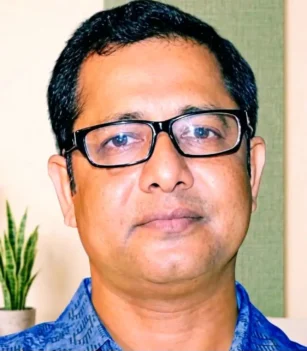
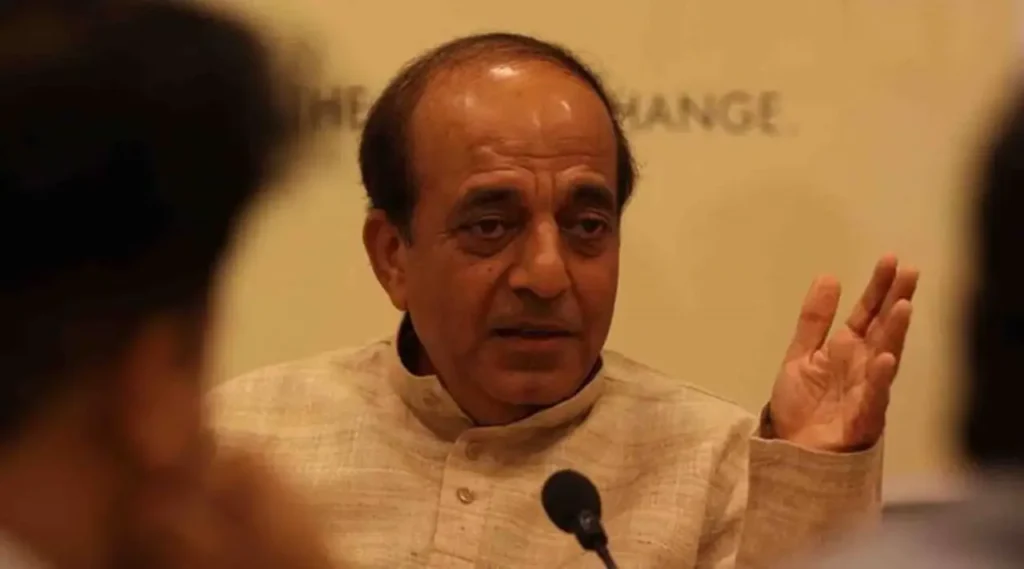
In a carefully calibrated moment of diplomatic continuity and strategic transition, India–Bangladesh relations entered a new phase on May 4. Outgoing Indian High Commissioner Prannoy Verma met Bangladesh Foreign Minister Khalilur Rahman in Dhaka for a farewell call that, while cordial in tone, carried deeper geopolitical undertones.
Both sides reaffirmed their commitment to strengthening cooperation based on mutual benefit and people-centric development. Yet the timing of the meeting — alongside the appointment of veteran politician Dinesh Trivedi as India’s next High Commissioner to Bangladesh and shifting political currents in both Dhaka and West Bengal — points to a broader recalibration in New Delhi’s regional approach.
More than a routine diplomatic reshuffle, the transition reflects a gradual shift from bureaucratic diplomacy towards a more politically driven model of engagement in one of South Asia’s most sensitive bilateral relationships.
Diplomatic continuity and a strategic shift
During the farewell meeting, Verma highlighted the steady progress made in bilateral ties across sectors such as trade, connectivity, security cooperation and cultural exchange. His tenure is widely viewed as a period marked by institutional stability and incremental trust-building between Dhaka and New Delhi.
Foreign Minister Khalilur Rahman acknowledged Verma’s role in advancing bilateral cooperation and expressed optimism about the future trajectory of ties. Publicly, the messaging from both governments remained centred on continuity and stability.
Yet diplomacy often signals intent through appointments and timing as much as through official statements. The replacement of a career diplomat with a senior political figure suggests that India anticipates a more politically sensitive phase in its engagement with Bangladesh.
A political envoy for a political moment
The appointment of Dinesh Trivedi marks a notable departure from precedent. Traditionally, India has relied on seasoned Indian Foreign Service officers to manage relations with Dhaka, given the complexity of issues ranging from water-sharing disputes and border management to migration and security coordination.
Trivedi brings a fundamentally different profile.
A veteran politician with more than three decades in public life, he has served as Union Railway Minister between 2011 and 2012, Minister of State for Health and Family Welfare from 2009 to 2011, and as a Member of Parliament in both the Lok Sabha and Rajya Sabha.
He has also been associated with multiple political formations over the years, including close ties with former West Bengal Chief Minister Mamata Banerjee during his tenure in the Trinamool Congress before joining the Bharatiya Janata Party (BJP) in 2021. His proximity to Prime Minister Narendra Modi, combined with his fluency in Bengali, gives him both political and cultural leverage in Dhaka.
From a geopolitical perspective, Trivedi’s appointment appears less about technocratic diplomacy and more about political signalling.
Why the appointment matters
By appointing a senior political figure to Dhaka, New Delhi appears to be signalling that Bangladesh is no longer being treated merely as a diplomatic file but as a relationship requiring closer political management at the highest levels.
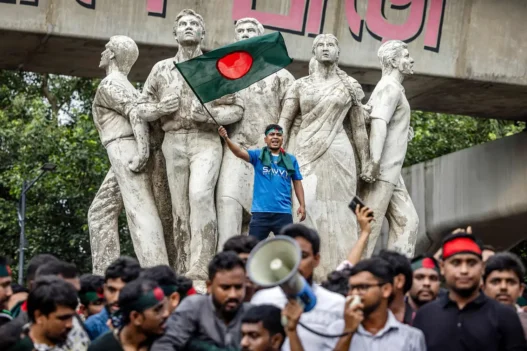
The move also comes at a time when recent political shifts in Bangladesh, particularly following the departure of Sheikh Hasina, have introduced fresh uncertainty into bilateral ties. A political envoy may provide greater flexibility in rebuilding trust and maintaining leadership-level communication during a potentially volatile transition period.
Trivedi’s deep roots in West Bengal politics add another important dimension. West Bengal is not simply a border state; it functions as the political, cultural and economic interface between India and Bangladesh. Issues such as migration, border tensions, trade connectivity and water-sharing frequently spill into domestic politics on both sides of the border.
Unlike conventional diplomats bound more strictly by institutional channels, a political appointee with direct access to India’s top leadership may also be able to facilitate faster communication and quicker decision-making during periods of crisis or sensitive negotiations.
West Bengal elections and the Bangladesh factor
The ongoing West Bengal Assembly elections add another layer to this strategic recalibration. Early political trends suggest a highly competitive contest between the BJP and the Trinamool Congress, reflecting a deeply polarised political environment.
Developments in West Bengal hold direct implications for Bangladesh. Electoral narratives surrounding migration, border security and identity politics frequently shape bilateral discourse. Trade routes, connectivity projects and border management mechanisms are similarly influenced by the political climate in Kolkata.
A stronger BJP presence in the state could potentially align regional politics more closely with New Delhi’s broader foreign policy priorities concerning Bangladesh.
Trivedi’s familiarity with both the Trinamool Congress and the BJP may position him uniquely to navigate these overlapping political and diplomatic complexities.
Bangladesh’s political transition and India’s calculations
On the Bangladeshi side, the political landscape is also undergoing transition. The emergence of a new leadership structure has introduced variables into a relationship that, for more than a decade, operated with a degree of predictability under Sheikh Hasina’s government.
For India, several questions now loom large. The future of long-pending agreements, particularly on water-sharing arrangements such as the Teesta issue, remains uncertain. There are also concerns regarding how Dhaka may recalibrate its regional alignments and whether existing security cooperation frameworks can remain insulated from domestic political shifts.
Against this backdrop, India appears to be moving from a policy centred primarily on continuity towards one focused on active recalibration and strategic management.
Rebuilding trust and reasserting influence
At the core of New Delhi’s evolving approach lies the need to rebuild political confidence amid changing leadership dynamics in Dhaka. The appointment of a politically experienced envoy suggests an effort to move beyond procedural diplomacy and restore trust through direct political engagement and informal channels of communication.
Bangladesh’s growing geopolitical importance — situated between South Asia and the Indo-Pacific — has also made the country increasingly central to India’s wider strategic calculations. Ensuring that Dhaka remains closely aligned with India’s regional priorities has become essential not only for bilateral relations but also for maintaining India’s broader influence in the region.
The shift additionally reflects an attempt to integrate political authority more closely with diplomatic engagement. Complex issues such as border management, migration, water disputes and connectivity increasingly require political judgment alongside formal negotiations.
The importance of the Eastern Corridor
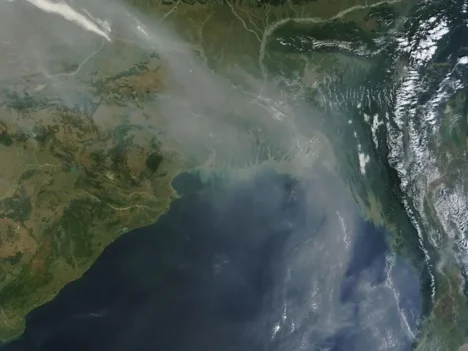
Perhaps the most significant objective behind this recalibration is the stabilisation of India’s eastern geopolitical corridor — an interconnected strategic space stretching from eastern India through Bangladesh to the Bay of Bengal.
This region is not merely a borderland but a critical artery for trade, connectivity and security.
Maintaining stability along the India–Bangladesh border remains essential to prevent illegal crossings, trafficking networks and localised tensions from escalating into wider diplomatic problems. Infrastructure projects involving roads, railways and ports also depend heavily on stable bilateral relations, particularly for improving connectivity between mainland India and the Northeast.
Water diplomacy forms another sensitive dimension. Rivers such as the Teesta carry not only environmental significance but also political and economic implications tied to livelihoods and regional stability.
At the same time, the Bay of Bengal has emerged as an increasingly contested geostrategic space. A stable and cooperative Bangladesh is therefore central to India’s maritime interests and its broader regional security calculations.
Instability in Bangladesh or along the border also risks influencing political narratives in West Bengal and India’s Northeast, making stability a domestic political necessity for New Delhi as much as a foreign policy objective.
A more political phase in Dhaka–Delhi relations
The farewell of Prannoy Verma and the appointment of Dinesh Trivedi together signal a potentially significant turning point in India’s neighbourhood diplomacy.
New Delhi appears to be moving towards a more politically engaged and strategically assertive model of managing relations with Bangladesh — one shaped not only by diplomatic protocol, but also by leadership dynamics, domestic political calculations and shifting regional realities.
Whether this approach leads to deeper cooperation or generates new frictions remains uncertain. What is increasingly clear, however, is that the Dhaka–Delhi relationship is entering a more politically charged and closely watched phase in the evolving geopolitics of South Asia.