The trajectory of Myanmar’s conflict is no longer defined only by battlefield gains and losses. Beneath the surface, a quieter but consequential shift is unfolding—one where internal strains within the resistance are beginning to shape the course of the war as much as the military’s offensives.
While the military has been making rapid advances in recent months, the resistance led by the People’s Defence Forces (PDF) appears increasingly stretched. Disruptions within its ranks, coupled with territorial setbacks, suggest a movement under pressure, though not one that can be written off just yet.
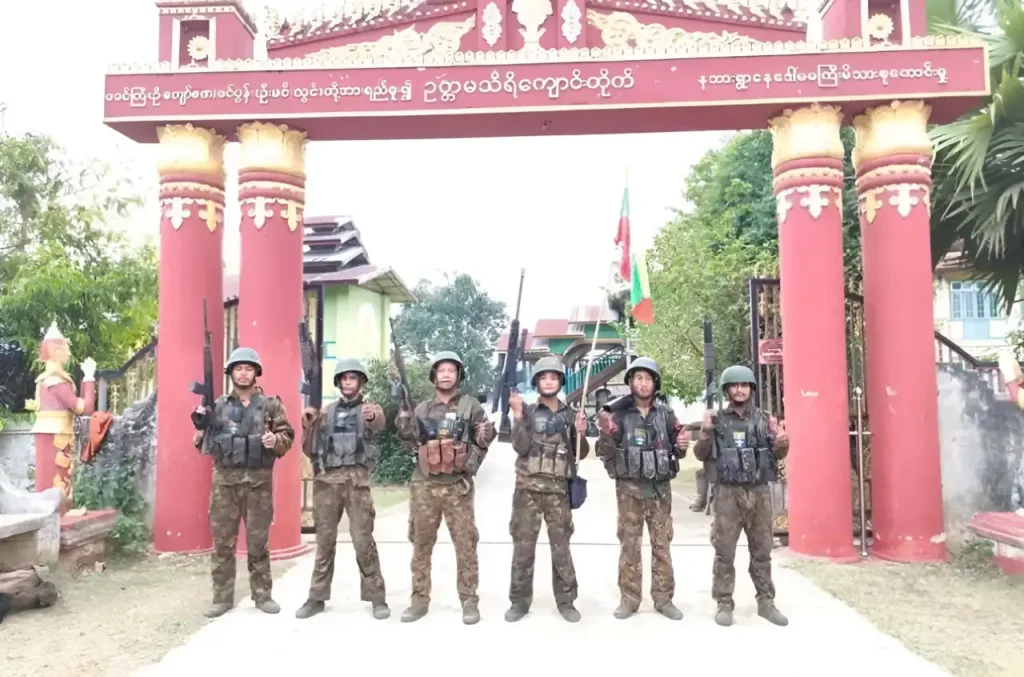
The acting president of Myanmar’s National Unity Government (NUG) in exile, Duwa Lashi La, has acknowledged as much, noting that the resistance is “facing challenges and frequent territorial losses.” His remarks, delivered during the fifth anniversary of the PDF’s formation, carried both candour and caution.
“I earnestly urge all comrades to strengthen their wisdom and resilience during the revolutionary period and to fight bravely,” he said in his statement. The appeal reflects a leadership seeking to reinforce cohesion at a time when unity is being tested on multiple fronts.
The strain is visible in two parallel trends. On one side, divisions and episodes of infighting within the PDF and its allied structures are becoming more pronounced. On the other, the military has been able to exploit these vulnerabilities to regain ground it had previously ceded.
A recent episode in Myaing Township, in Pakokku District of Magway Region, illustrates these tensions. Battalions under the NUG’s Ministry of Defence reportedly encircled units of the People’s Defence Teams (PDT), locally known as PaKaPa—forces that typically handle security in resistance-held areas.
Although the move has been framed as a response to disobedience, accounts from the ground point to a more layered contest involving authority, resources and control. Some describe it bluntly as a struggle for power, with the emergence of local strongmen beginning to alter the resistance’s internal balance.
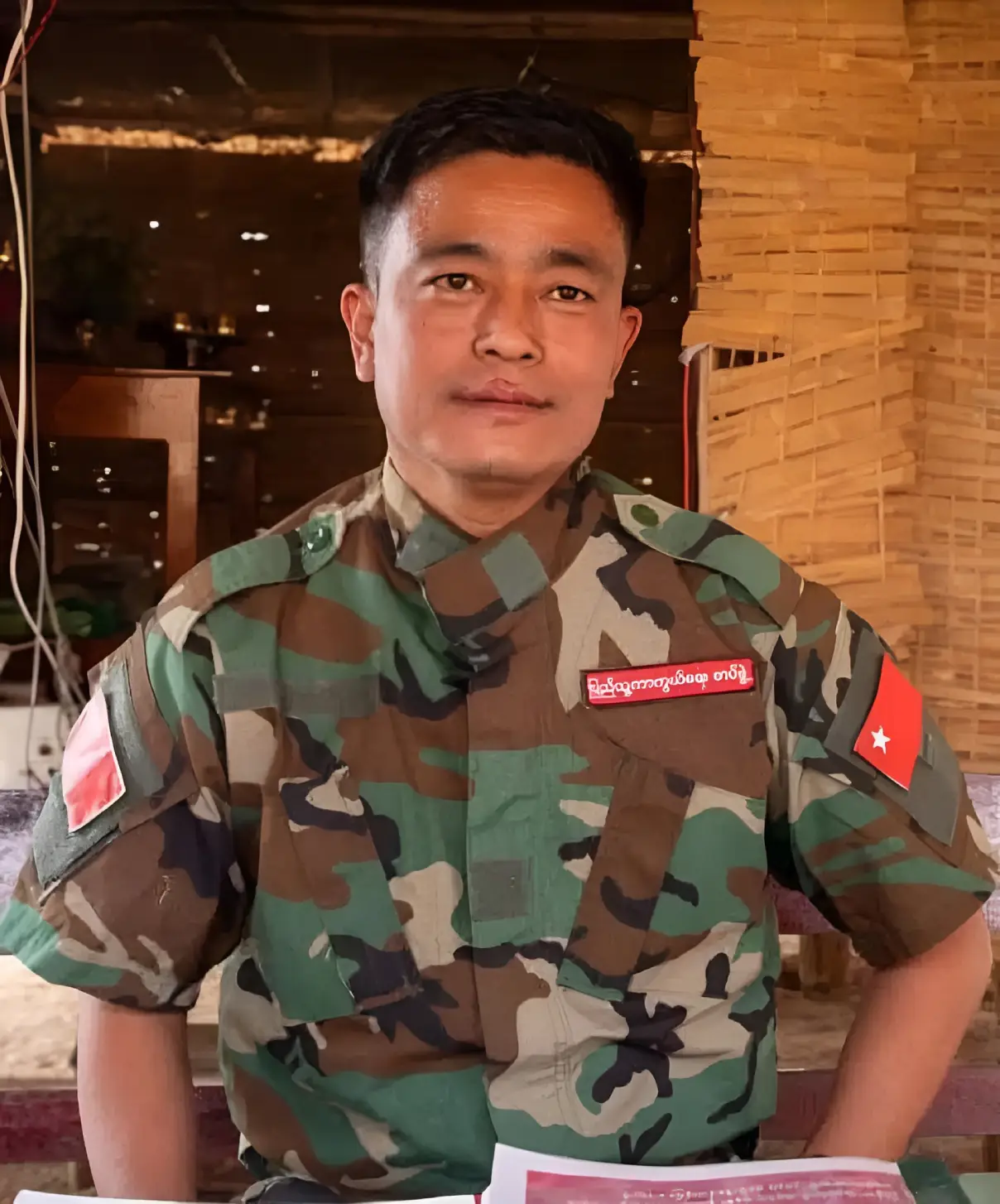
Central to this episode is Bo Let Yar, the former head of the Myaing PaKaPa and now Defence Minister of the Magway Federal Unit. His growing influence reflects a broader shift, where localised command structures are asserting themselves more forcefully against central coordination, at times resembling the early contours of warlord-style authority.
The Magway Federal Unit, under his leadership, is said to be at odds with the NUG’s Ministry of Defence. Several battalions have reportedly broken away from the NUG’s command structure to align with his special forces, deepening existing fissures.
Efforts to mediate appear to have backfired. When a Deputy Regional Military Commander was dispatched to address the dispute, he was detained by fighters loyal to the Myaing PaKaPa, turning a disciplinary issue into a wider confrontation.
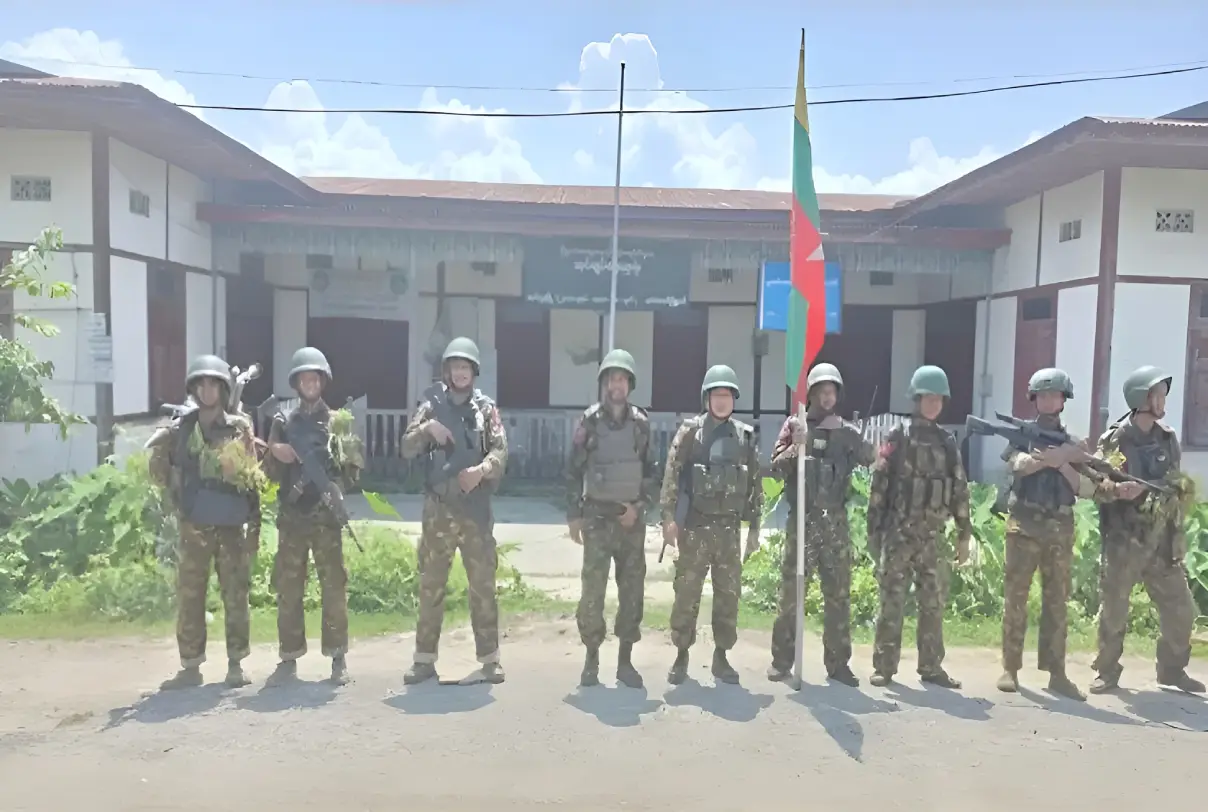
Such incidents offer a window into the evolving nature of the resistance. What began as a broad-based, decentralised movement is now showing signs of fragmentation, with overlapping chains of command and competing loyalties complicating coordination.
Observers note that the military has been watching these developments closely. A senior source, speaking anonymously, suggested that rival resistance-aligned groups—each with significant manpower—are increasingly expending energy against one another.
The idea of federal units was originally conceived as part of a future decentralised political order, combining local autonomy with broader coordination. In practice, however, the functioning of some of these units appears to be drifting towards personalised control rather than institutional governance.
Bo Let Yar’s trajectory is often cited in this context. Since assuming his current role, he has reportedly overseen the realignment of at least six PDF battalions—Nos. 2, 6, 7, 14, 15 and 17—from among more than twenty in Pakokku District—into his own structure.
The detention of the Deputy Regional Commander appears to have marked a turning point. In response, the NUG’s central command has reinforced its presence in the area, drawing in units from Mandalay, Magway and Sagaing.
At the local level, authority is also being asserted through administrative measures. An order issued on 30 March, signed by an individual named Let Wel, imposed strict controls on movement and arms within Myaing Township, including threats of force and even landmines for non-compliance. Notably, the Myaing PaKaPa itself has not publicly clarified its position.
Control over resources forms an important part of this contest. In Magway, where onshore oil fields provide significant revenue, disputes over taxation and distribution appear to run alongside questions of command and legitimacy.
Reports in Burmese-language media indicate that 15 civil society organisations in Pakokku District, along with the six battalions aligned with Bo Let Yar, have characterised the situation as a natural resource dispute. Their appeal for dialogue over confrontation highlights the risks of further escalation.
The economic dimension is hard to ignore. Oil extraction in Myaing Township has, for several years, generated substantial monthly income—running into tens of millions of kyats—making control over these assets both strategically and financially significant.
Against this backdrop, the military has continued to consolidate its position elsewhere. Pro-regime media reports claim that forces have re-established control over Indaw town in Katha District, describing the operation as being carried out with the support of local residents, while portraying resistance fighters in sharply critical terms.
The same accounts suggest that Mawlu, a nearby town along the Shwebo–Myitkyina road, has also been brought back under military control. Given its location on a key route linking Sagaing Region with Kachin State, the town carries logistical importance.
Accounts of the operation describe clashes with PDF fighters and the seizure of weapons, fuel supplies and vehicles. Claims that advancing troops were welcomed by civilians, however, remain difficult to verify due to restricted access and the contested nature of such narratives.
Further west, developments in Chin State point to a similar pattern of shifting control. Resistance groups had previously held Falam, but recent reports indicate that regime forces have moved back into the town, altering the local balance.
Fighting has since extended along the road linking Falam with Hakha, the state capital, with resistance positions coming under sustained pressure. The stretch, though relatively short, holds tactical importance for movement and supply.
Leaders within the Chin resistance anticipate that attention may now turn towards Rikhawdar, a town near the India–Myanmar border. Previously captured by Chin forces, it functions as a key node for cross-border trade and connectivity.
There are concerns that if Rikhawdar were to fall, it could disrupt critical supply lines. As one former soldier aligned with the Civil Disobedience Movement observed, the loss of such routes would carry consequences beyond immediate territorial control.
The broader picture that emerges is not one of simple advance or retreat. Instead, it reflects a conflict in which internal cohesion, local power structures and resource control are becoming as decisive as battlefield engagements, raising questions about how the resistance can sustain a unified front in the long run.