Meghalaya has officially entered a new era of governance and data collection with the launch of the self-enumeration campaign for Census 2027. The exercise, which marks India’s transition to its first fully digital population count, was inaugurated on Thursday at Lok Bhavan in Shillong.
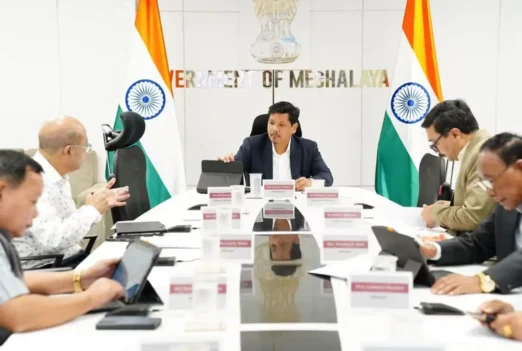
Governor C. H. Vijayashankar initiated the process, followed by participation from Chief Minister Conrad Sangma. Their involvement signals a strong state-wide push to encourage public participation in this technology-driven initiative.
The digital shift represents the 16th Census overall and the 8th since India gained independence. It will utilise mobile applications and the Census Management and Monitoring System (CMMS) portal to manage the entire process, from data collection to final analysis.
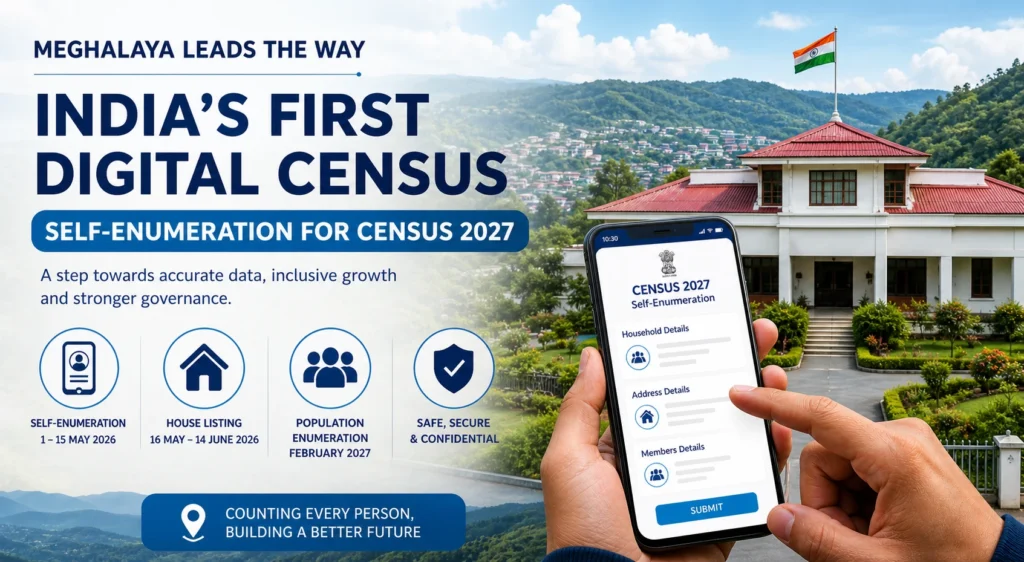
The self-enumeration window, open from 1 May to 15 May 2026, allows citizens to enter their household details through an online portal. This marks a significant shift towards participatory data collection.
Chief Minister Conrad Sangma emphasised the importance of the self-enumeration ID, advising citizens to retain this digital receipt for verification during subsequent field visits. Officials have stressed that this step will streamline the process during door-to-door enumeration.
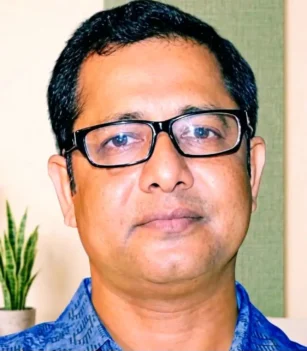
Director-cum-Chief Principal Census Officer Biswajit Pegu noted that the initial response has been encouraging. Data has already been collected from key public figures, including the Governor, the Chief Minister, and Assembly Speaker Thomas A. Sangma.
While the first day saw minor technical issues related to location tagging, officials described the platform as largely user-friendly. The interface requires only basic inputs, with a simple submission process.
A defining feature of Census 2027 is its focus on inclusivity and accessibility. Officials from the Directorate of Census Operations Meghalaya highlighted that no document verification is required for participation.
The primary objective is to count every individual residing within the state, including the homeless and those living on the margins. Only individuals with diplomatic status are excluded from the exercise.
To address the challenges posed by Meghalaya’s terrain and monsoon conditions, approximately 9,000 enumerators and supervisors have been deployed. These personnel are typically drawn from local areas to ensure familiarity with the region.
Each enumerator has been assigned between 150 and 200 households. A 30-day operational window has been planned to accommodate delays caused by heavy rainfall and difficult access.
In regions with limited internet connectivity, a hybrid system will be implemented. Data will be collected manually using physical forms in such areas.
Once enumerators reach locations with stable connectivity, the data will be uploaded to the central system. This approach ensures that remote and rural populations are not excluded from the digital process.
To assist the public, a national toll-free helpline, 1855, has been set up. It will provide guidance on procedures and address concerns related to house listing and population enumeration.
The Census will be conducted in two phases. Phase I begins with the current self-enumeration process and includes the House Listing Operations (HLO), scheduled from 16 May to 14 June 2026.
During this phase, enumerators will conduct door-to-door visits to verify submitted data. They will also collect information on housing conditions, assets, and basic amenities through a structured 33-question survey.
Phase II, the Population Enumeration, is scheduled for February 2027. The reference date for this phase has been set as 1 March 2027.
To ensure consistency, administrative boundaries across Meghalaya were frozen as of 31 December 2025. This step is crucial for maintaining accuracy in data collection and analysis.
A multi-layered supervision mechanism has been put in place, led by Deputy Commissioners acting as Principal Census Officers. This framework is designed to ensure transparency and reliability throughout the exercise.
Officials have reassured the public that personal data, including mobile numbers, will be used strictly for communication and verification purposes. The information collected is intended to support future policy planning and development initiatives.
The state government and the Directorate of Census Operations continue to urge citizens to participate actively. The success of this landmark digital census will depend on the cooperation of every household, laying the groundwork for evidence-based governance and inclusive development.