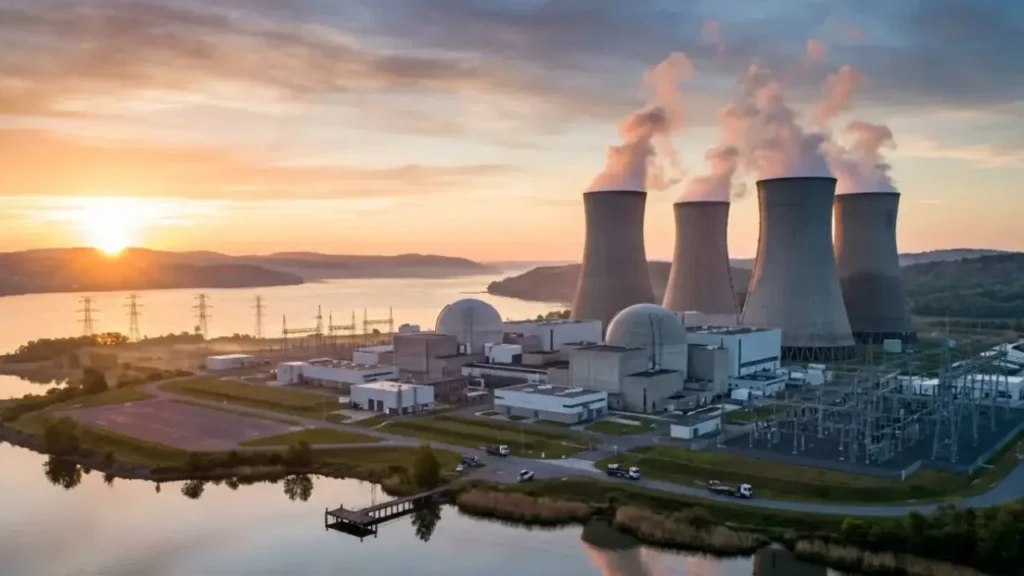
The image is deceptively simple: a ceremonial switch pressed in rural Pabna, officials applauding, cameras flashing. Yet beneath that moment lies a transformation decades in the making. With uranium fuel now loaded into the first unit of the Rooppur Nuclear Power Plant, Bangladesh has crossed a technological Rubicon—joining a select group of nations capable of generating electricity from nuclear energy.
For a country of over 170 million people grappling with persistent energy shortages, this is not merely an engineering milestone. It is a statement of intent: to secure energy sovereignty, sustain industrial growth, and step onto a geopolitical stage where even civilian nuclear capability carries weight.
But as with many grand projects in South Asia, the story of Rooppur is layered. It is at once a triumph of political will, a testament to international partnership, and a high-stakes gamble with long-term consequences.
Beyond the button
In public discourse, fuel loading often appears as a ceremonial climax. In reality, it marks the beginning of the most delicate phase of a nuclear plant’s life cycle.
Once uranium fuel assemblies are inserted into the reactor core, the plant transitions into commissioning—a prolonged period of low-power physics tests, system calibration, turbine synchronisation, and exhaustive safety verification. This phase is neither quick nor predictable.
Experts, including those from Dhaka University, suggest that it may take anywhere from six months to over a year before the reactor reaches stable commercial operation. During this time, electricity generation will be intermittent and limited—more a proof of capability than a solution to chronic load shedding.
The expectation that Rooppur will rapidly resolve Bangladesh’s energy deficit is therefore optimistic. The reality is more gradual: a phased integration into the national grid, contingent on technical success and regulatory approval.
The political engine
Any honest assessment of Rooppur must begin with the political leadership that revived it. The project, first conceived in the 1960s, remained dormant for decades until it was forcefully reintroduced under Sheikh Hasina. Her administration framed nuclear energy as essential to long-term development, pushing the project forward despite financial risks and geopolitical sensitivities.
What is striking, however, is the continuity that followed. Even as Bangladesh’s political landscape evolves—with figures like Tarique Rahman now associated with ceremonial milestones—the project itself has remained insulated from partisan reversal. In a region where infrastructure often becomes collateral in political change, Rooppur reflects a rare bipartisan consensus: energy security transcends electoral cycles.
Russia’s deep footprint
If political will was the catalyst, the project’s material backbone lies in Moscow. The Russian state nuclear corporation Rosatom—under the leadership of Alexey Likhachev—has effectively designed, financed, and is now operationalising the plant.
Russia’s role extends far beyond construction. It encompasses reactor technology (VVER-1200 units), fuel supply, technical training, and long-term maintenance. With nearly 90 percent of the project financed through Russian state credit, Rooppur is as much a financial instrument as it is an energy asset.
This creates a structural dependency. Bangladesh will rely on Russian fuel, expertise, and servicing for decades—binding its energy future to Moscow’s strategic calculus. In an era of shifting global alignments and sanctions regimes, that dependence carries both opportunity and risk.
The IAEA’s role and its limits
The presence of the International Atomic Energy Agency, led by Rafael Grossi, lends Rooppur international legitimacy. The agency’s guidelines shape everything from reactor safety to emergency preparedness, offering assurance to both domestic and global audiences.
Yet its role has limits. The IAEA does not operate reactors; it advises and audits. The ultimate responsibility for safety rests with Bangladesh’s own regulatory institutions—particularly the Bangladesh Atomic Energy Regulatory Authority, which is still developing its capacity.
In a densely populated country, where evacuation logistics alone pose immense challenges, the margin for error is minimal. Compliance with international standards is not just desirable—it is essential.
India’s measured response
Across the border, India has approached Rooppur with cautious pragmatism. The plant lies close to Indian territory, making its safety and operational integrity a matter of direct concern.
Rather than oppose the project, New Delhi has chosen engagement. Indian firms have participated in building transmission infrastructure, and there is a quiet understanding between India, Russia, and Bangladesh on safety coordination. India’s own experience with Russian-designed reactors at Kudankulam Nuclear Power Plant offers a useful reference point.
This approach reflects a broader strategic logic: cooperation reduces risk. At the same time, India remains attentive to the geopolitical implications of an expanded Russian footprint in its neighbourhood.
Structural risks beneath the promise
For all its promise, Rooppur carries structural vulnerabilities that will shape its future long after the initial moment of celebration fades.
The most immediate is technical dependence. Bangladesh’s nuclear programme has been built with external expertise, with Russia providing reactor technology, fuel, and operational support.
This is not unusual for a first project. But it does mean that, for years to come, the country’s ability to run the plant will remain closely tied to outside assistance. There is also the question of institutional capacity. A nuclear plant demands not just engineers, but strong regulators and a culture of safety that develops over time.
Bangladesh has made progress in training and partnerships. Yet institutions like the Bangladesh Atomic Energy Regulatory Authority are still evolving, and their credibility will be tested in practice. In a densely populated country, even small lapses can carry outsised consequences. The margin for error is minimal.
Then there is the financial burden. With costs exceeding $12 billion, Rooppur is Bangladesh’s largest infrastructure investment, much of it financed through external credit. Its long-term success will depend on whether the electricity it produces remains affordable. If costs rise, the strain will likely fall on public finances.
These risks do not diminish Rooppur’s importance. But they do underline a simple reality: this is not just a technological leap, but a long-term test of capacity, cost, and control.
The road ahead
Fuel loading is not the culmination of Rooppur’s journey; it is the beginning of its most consequential phase. The coming months—marked by testing, regulatory scrutiny, and gradual grid integration—will determine whether the project fulfills its promise.
Success would position Bangladesh as a model for emerging economies seeking to balance growth with sustainability. Failure would underscore the complexities of entering the nuclear domain without deep institutional readiness.
What is certain is this: Bangladesh has crossed a threshold it cannot retreat from. The challenge now is not merely to generate power, but to sustain it—safely, affordably, and with a degree of independence—amid the shifting currents of South Asian geopolitics.