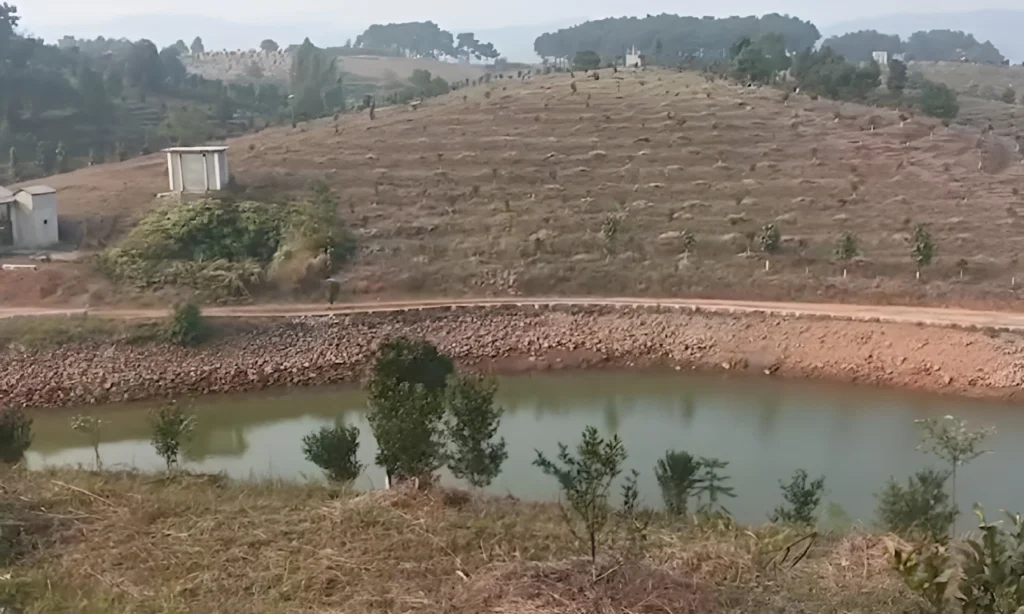
The old adage that the earth rewards those who tend to it with care finds its perfect expression in the hills of East Jaintia Hills. In a region often defined by its industrial scars, a journey in 2025 to M/S SD Lyngdoh & Society Khasi Mandarin Farm in Madan Muklot, Sutnga Elaka, reveals a story of environmental redemption and visionary farming.
What was once a landscape hollowed out by the extraction of fossil fuels has been reborn as a lush, emerald sanctuary of Khasi Mandarin oranges.
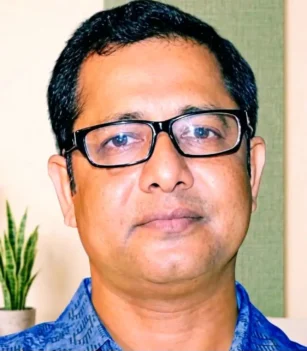
The architect of this transformation is SD Lyngdoh, the owner and chairman of the farm. His journey began in 2003—not with seeds, but with coal. For over a decade, he operated a coal mine on this very land.
However, the 2014 ban imposed by the National Green Tribunal on coal mining in Meghalaya brought his operations to a sudden halt. Left with a vacant expanse of land that many considered “spent” or unusable, Lyngdoh felt a deep sense of concern for his property.
Upon closer inspection, he realised that despite years of intensive mining, the soil remained remarkably fertile and still held the potential for new life.
In 2015, driven by a desire to stay active and find peace of mind rather than mere profit, he began planting fruit trees as a hobby. He sought a way to spend his time productively and found solace in the daily rhythm of nurturing the land.
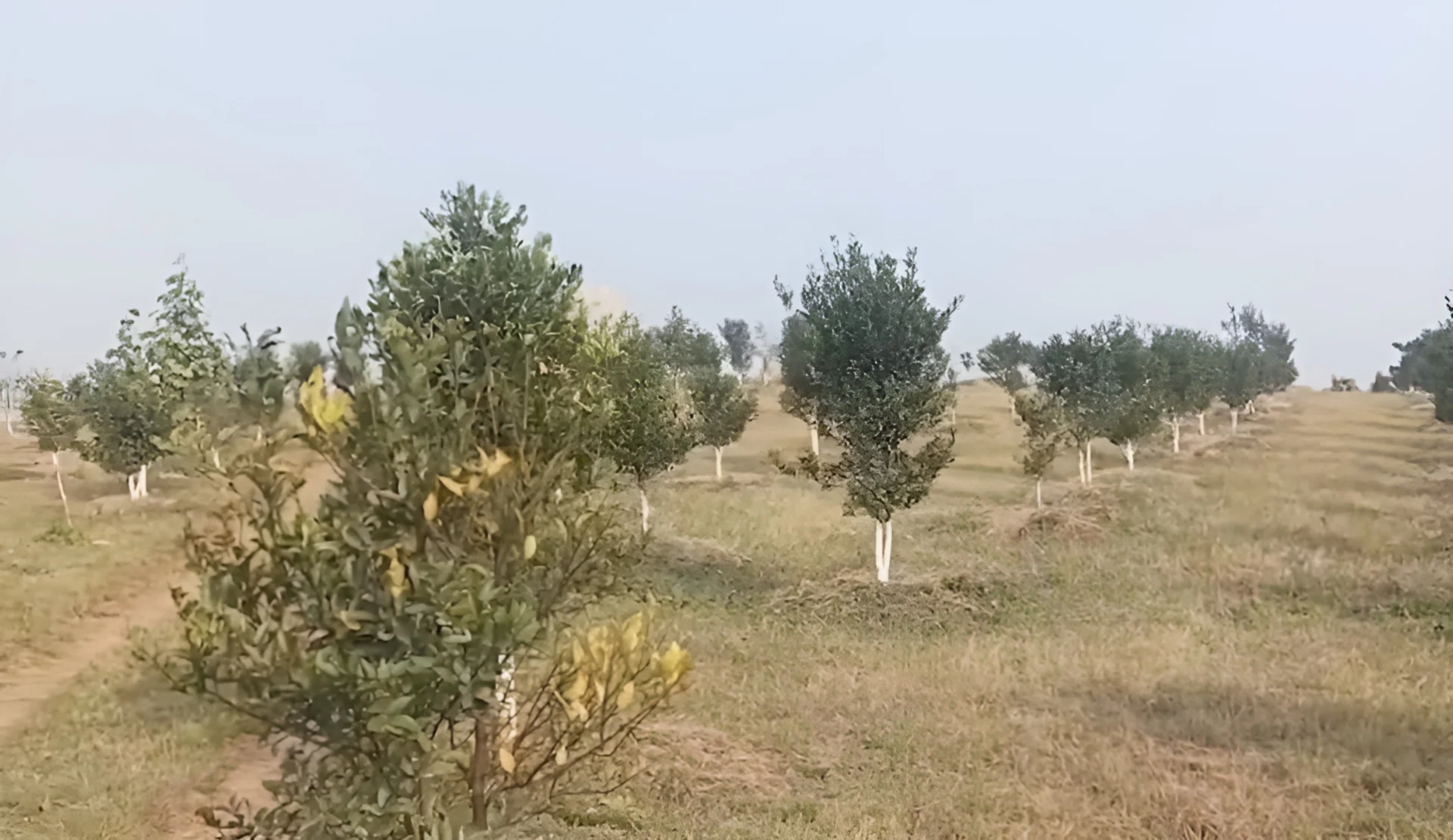
To his surprise, the saplings did not just survive—they thrived. Encouraged by a year of vigorous growth, Lyngdoh decided to expand his vision.
What started with 3,000 Khasi Mandarin saplings soon grew into a much larger undertaking. By 2013, a collaborative spirit had taken root as he partnered with a local society comprising 12 families.
In a gesture of immense community support, Lyngdoh provided his land free of cost, allowing these families to cultivate and harvest the oranges, ensuring that the livelihoods and profits went directly to them.
The transition, however, was not without its challenges. Because the land had been a coal mining site for 15 to 20 years, it required consistent care, including the application of organic manure and careful pest control measures.
Despite underground hollows left behind by mining, the Khasi Mandarin trees proved remarkably resilient, maturing rapidly under proper supervision.
The market response has been equally encouraging. These oranges are highly sought after not only within Meghalaya but also by traders from other Indian states and neighbouring Bangladesh.
The economic impact is tangible—during the 2022–23 season alone, the farm produced a yield worth over ₹2 lakh from the mature trees.
This success story has been significantly strengthened by government intervention. The Madan Mawkhlot Minor Irrigation Project, funded under the Pradhan Mantri Krishi Sinchayee Yojana (PMKSY), has been a cornerstone of the farm’s expansion.
According to T. Tongper, a Junior Engineer with the Water Resources Department, this ₹42 lakh project covers 35 hectares and benefits the 12 participating families.
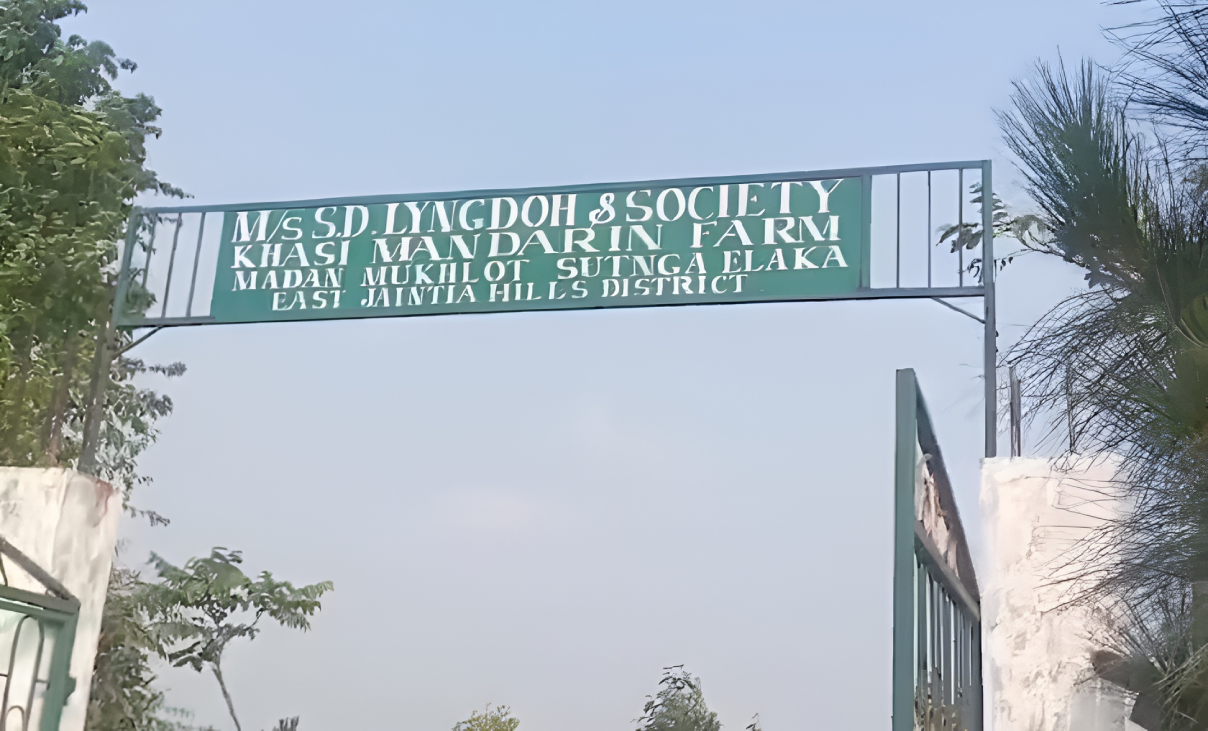
While the farm initially had only 20 hectares of orange groves, the completion of the irrigation system in 2022–23 enabled cultivation to expand to over 35 hectares. Today, the farm houses approximately 20,000 trees.
This achievement is the result of close collaboration between the Horticulture Department and the Water Resources Department. The Horticulture Department provided saplings, fertilisers, and pest management expertise, while the Water Resources Department developed the crucial irrigation infrastructure.
Together, they have transformed this farm into a model of sustainable development in a region long dominated by mining.
Lyngdoh remains optimistic about the future. He believes that within the next decade, continued cooperation with the government could see the entire area fully re-greened.
His farm stands as a powerful testament to the idea that land once considered “spoiled” by mining is not lost forever. It offers inspiration across the coal belt—showing that with patience, investment, and a shift in perspective, the earth can be restored from a site of extraction into a flourishing source of life and prosperity.