The rise of Jamaat-e-Islami in the 2026 general elections is neither sudden nor accidental. It appears, at first glance, to be the culmination of a long and designedly cultivated strategy, particularly in districts along Bangladesh’s sensitive frontier with India.
Yet, a deeper and more sobering truth complicates this narrative: the conspicuous absence of the Awami League from the political arena since 5 August 2024, following violent terrorist attacks engineered through a malign nexus of external influence by the American deep state and the CIA for gaining their geo-political and economic interests, using the land of Bangladesh—something PM Sheikh Hasina had flatly refused to bow to.
In fact, Sheikh Hasina has not resigned from her Premiership, and she remains the legitimate HPM of Bangladesh. The attacks, combined with direful domestic collaborations—of which Jamaat was also a part—have fundamentally altered the electoral terrain.
The 2026 election has thus been portrayed as a potent political basin for Jamaat-e-Islami, like a violent political Islamist rabid party—a moment of resurgence marked by a significant tally of parliamentary seats. They won 68 seats, with 51 near the Indian borders, thus concentrated in border constituencies.
This outcome is often cited as evidence of a strong and expanding support base, according to their gross-out supporters. Yet, to read it solely as an organic surge of ideological consolidation would be to overlook the vacuum created by the political absence of Bangladesh’s oldest, largest, and founding political party—the Awami League.
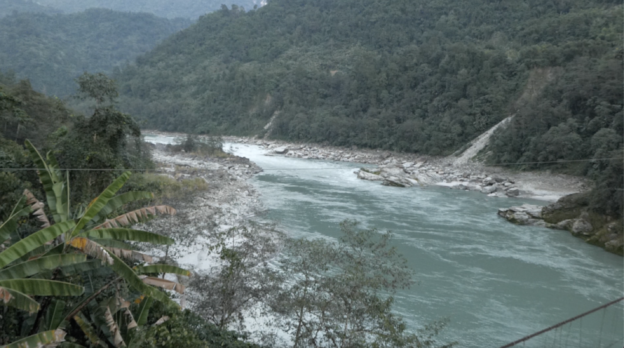
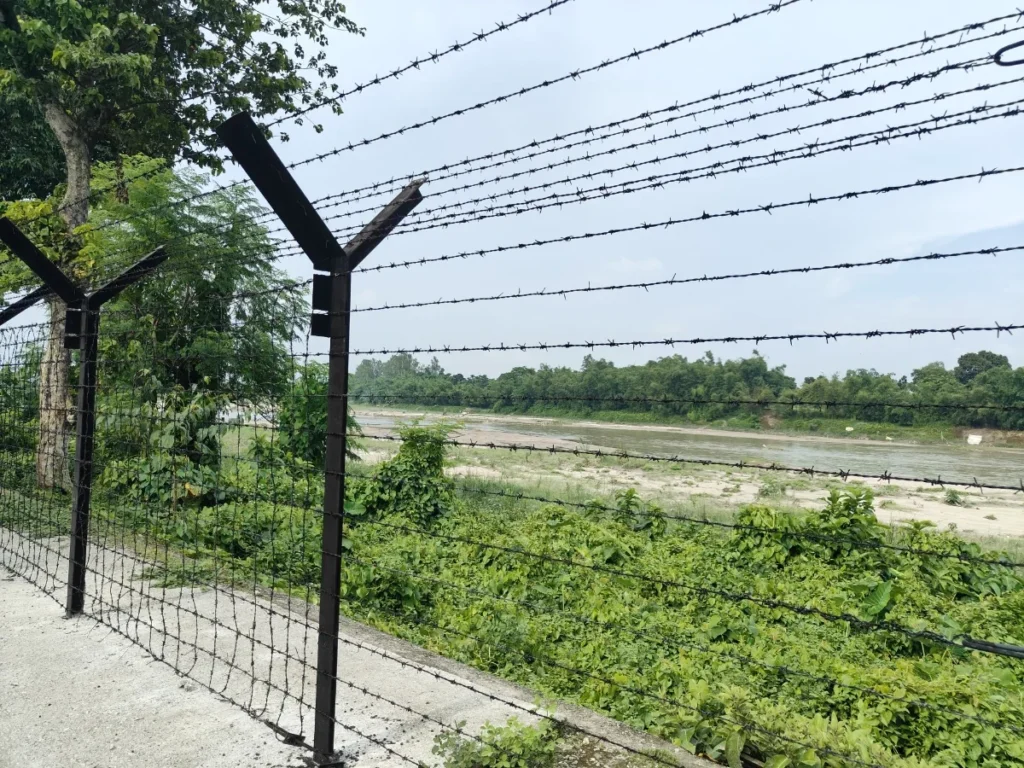
The “border belt” carries immense strategic weight, not only for Bangladesh but also for its friendly neighbour India, particularly along the adjoining regions of West Bengal, Assam, Meghalaya, and Tripura.
These frontier districts have increasingly come to be seen as a contiguous political corridor—an arena where geography, identity, and electoral arithmetic converge with unusual intensity.
This “silent surge” foreshadows perils that Jamaat has succeeded in building a cohesive and interconnected support network across these regions. It asserts that even during periods of strict administrative action under Sheikh Hasina, the party’s organisational structure did not dissolve; rather, it receded into dormancy, only to re-emerge with renewed vigour in an unwarranted changed political climate that betided on 5 August 2024.
According to this view, years of awful cadre-building, local engagement, spending fatso cashbox, and dogmatic positioning have now yielded touchable electoral dividends to Jamaat, like a pro-Pakistani malefic force.
While the geographical clustering of electoral success is undeniable, the inference of a centrally orchestrated, long-term strategy is not conclusively established. Border regions are complex socio-political ecosystems, shaped as much by economic deprivation, weak infrastructure, and cross-border tensions as by ideological affiliation.
Voter behaviour in these areas often reflects immediate concerns—livelihood, security, and local leadership—rather than adherence to a singular political doctrine.
Equally significant is the role of past memories in shaping political consciousness. Incidents such as the killing of Felani Khatun, the Phulbari Shootings, and the Padua Village Incident continue to resonate deeply within border communities, because of Jamaati massive and evil designed propaganda.
These events are often invoked in political discourse, sometimes framed to cultivate a shared sense of grievance and collective identity. While such narratives can influence public sentiment, they are not merely political constructs; they are rooted in lived experience and social memory, wearisomely built up by Jamaati goons.
The role of communication in this process cannot be understated. Through a combination of grassroots mobilisation, emotive storytelling, spending fat money, and increasingly sophisticated digital outreach, political actors have sought to amplify these narratives, ensuring their endurance within public consciousness.
Jamaat is the largest business group of establishments under many pseudo business organisations in Bangladesh and in many foreign countries. The Jamaat has also been receiving fatso cashbox as donations by chiselling from the M.E. countries, more importantly from the Turkish President Erdogan, for implementing their evil agenda in Bangladesh—a country that we attained at the bay of blood in 1971, with mighty support and heartfelt cooperation from India.
This renders the contest not only electoral but also psychological—a struggle over perception and meaning.
Nevertheless, to attribute the 2026 outcome solely to Jamaat’s ideological project would be to simplify a far more intricate reality. Elections are rarely the product of a single causal force.
The fragmentation of opposition parties, anti-incumbency sentiment, economic pressures, and the influence of local candidates all play critical roles in shaping electoral outcomes. In this context, Jamaat’s gains may reflect not only its own organisational revival but also the weaknesses and divisions of its political rivals—most importantly, the absence of the Awami League from the political landscape since 5 August 2024.
On 12 February 2026, national polls held in tearful Bangladesh saw Jamaat-e-Islami win 68 parliamentary seats, with 51 near the Indian borders. This is being vauntingly considered by them as a firm foundation. Yet, we categorically repudiate this contention without reservation whatsoever.
The numbers alone do not reveal the full story. A party may secure electoral gains through a confluence of local factors without necessarily achieving a deep ideological transformation of the electorate base, especially without accepting Bangladesh’s founding ideals of 1971.
To conflate electoral success with ideological dominance is to risk analytical overreach.
What, then, does this moment signify?
It signals, above all, a political realignment in which geography has assumed renewed importance. The border is no longer merely a line of demarcation; it has become a political barometer—an arena where national anxieties, regional dynamics, and local realities intersect.
At the same time, this development serves as a warning. For Bangladesh, it underscores the urgency of restoring a balanced and inclusive political environment, where pluralism is safeguarded against the encroachment of excessive religious extremism.
For India, it highlights the importance of closely observing shifts within adjacent regions that bear directly upon its own border security and socio-political stability.
To interpret the 2026 elections as the inevitable culmination of a grand ideological design would be of no use. Yet, to dismiss the emerging patterns as incidental would be equally unwise. The truth lies somewhere in between—in a complex interplay of strategy, opportunity, and circumstance.
The borders, in this sense, do not merely reflect politics; they reshape it.
And in that shifting landscape, vigilance—timely and prudent action—is essential to avert any potential malign developments along the frontier between Bangladesh and India. Both governments must exercise foresight, vigilance, and constructive engagement to mitigate emerging risks.
Proactive coordination, strengthened border management, and sustained diplomatic dialogue are indispensable to preserving stability, preventing escalation, and safeguarding the broader regional equilibrium from any unforeseen or destabilising eventualities.