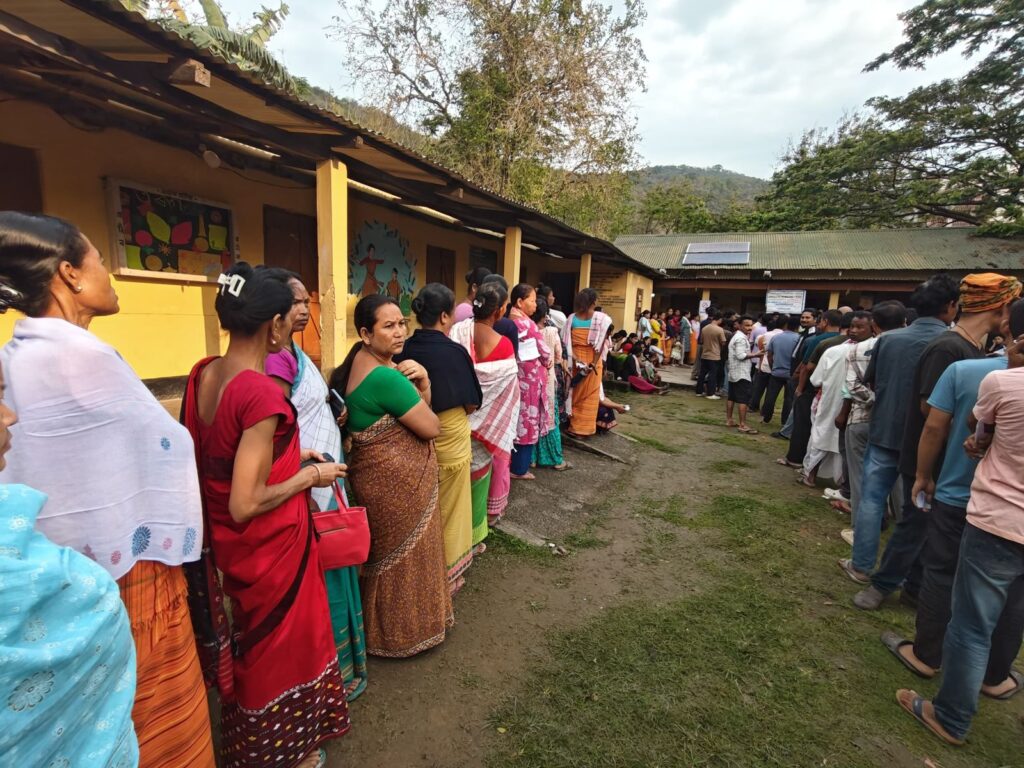
As Assam completed its single-phase and largely peaceful polling on 9 April to elect 126 members to the State Legislative Assembly, attention has now shifted to the likely outcome, with both the ruling and opposition parties expressing confidence in their respective prospects.
A record voter turnout of 85.96 per cent has further intensified speculation. Several constituencies—including Parbatjhora, Golakganj, Gauripur, Dhubri, Birsing Jarua, Bilasipara, Mankachar, Jaleshwar, Goalpara West, Goalpara East, Abhayapuri, Srijangram, Bongaigaon, Mandia, Chenga, Pakabetbari, Chamaria, Barkhetri, Nalbari, Dalgaon, Laharighat, Dhing, Rupahihat, and Samaguri—recorded over 90 per cent polling. In contrast, urban areas in Kamrup and Kamrup (Metropolitan) districts reported comparatively lower turnout, with constituencies such as Dimoria, Dispur, Guwahati Central, Jalukbari, and New Guwahati averaging around 80 per cent. Overall, the electorate’s participation reflects a strong engagement with the democratic process.
The fate of 722 candidates representing various political parties and independent contenders now rests in electronic voting machines until 4 May, the counting day designated by the Election Commission of India. The same day will also see results from assembly elections in Kerala and Puducherry, along with by-elections in Karnataka, Nagaland, and Tripura, and the outcomes of ongoing polls in Tamil Nadu and West Bengal.
In Assam, the Bharatiya Janata Party-led alliance had secured a comfortable majority in 2021, winning 75 seats against the halfway mark of 64, and forming the government for a second consecutive term in Dispur. In the current election cycle, senior leaders from the ruling alliance have projected a strong performance, attributing the high voter turnout to support for continuity and governance.
On the other hand, the opposition, led by the Indian National Congress, has interpreted the same turnout differently—arguing that it reflects a desire for change. Opposition leaders have raised concerns over issues such as governance, allegations of corruption, and the treatment of minority communities, presenting these as central themes in the campaign.
The campaign period also witnessed a series of high-profile allegations and counter-allegations. Statements made by opposition figures regarding the personal and financial affairs of the chief minister’s family triggered sharp responses, including legal action and public rebuttals. These developments introduced an additional layer of political tension during the election period.
The chief minister, in response, questioned the timing of such allegations and indicated the possibility of pursuing legal recourse, including raising concerns with the Election Commission of India about the potential impact of such claims on electoral processes. At the same time, opposition leaders maintained their stance, framing the issues as matters of public accountability.
Beyond electoral arithmetic and political exchanges, the campaign has also brought forward a range of substantive issues requiring attention. These include governance, economic development, infrastructure, social welfare delivery, and concerns around inclusivity and representation.
As Assam awaits the results, the election represents more than a contest for power. It reflects competing narratives about continuity and change, governance and accountability, and the broader direction in which the State is expected to move.