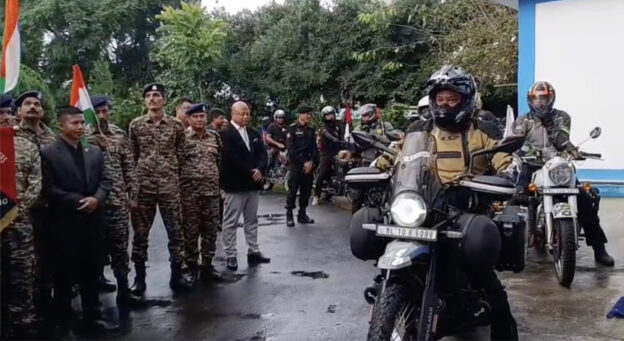
As Meghalaya moves beyond its 54th year of statehood and looks toward its 55th Statehood Day in 2027, questions surrounding the promise of statehood continue to resonate in some of its most remote border regions. While the creation of Meghalaya was rooted in the aspiration to safeguard the identity, rights, and aspirations of its indigenous communities, many Khasi-Pnar residents living along the state’s disputed border areas continue to struggle for something fundamental — official recognition from the very state created to protect them.
The issue is particularly acute in Elaka Labangnongphyllut, located within the disputed Block I areas along the Meghalaya-Assam border. For decades, many residents of these villages have remained outside the formal administrative framework of Meghalaya, leaving them without access to essential civic documentation and state services.
To understand the roots of the problem, it is necessary to revisit the historical developments that shaped modern Meghalaya. The state attained full-fledged statehood on January 21, 1972, under the North-Eastern Areas (Reorganisation) Act, 1971. The legislation carved out the Khasi, Jaintia, and Garo Hills from Assam, culminating a long political movement for a separate hill state.
This historic achievement was preceded by an important transitional phase on April 2, 1970, when Meghalaya was inaugurated as an autonomous state within Assam under the Assam Re-organisation (Meghalaya) Act, 1969. The eventual transition to full statehood in 1972 marked the successful culmination of the peaceful Hill State Movement. The occasion was commemorated by then Prime Minister Indira Gandhi at Shillong’s Polo Ground, where Captain Williamson A. Sangma was sworn in as Meghalaya’s first Chief Minister.
Despite the achievement of statehood, several territorial disputes remained unresolved. Among the most sensitive of these are the disputed areas known as Block I and Block II, which continue to be at the centre of the long-standing boundary dispute between Meghalaya and Assam.
The origins of the dispute can be traced to a 1951 notification issued by the Government of Assam for the creation of the erstwhile Mikir Hills district, now known as West Karbi Anglong. As part of this administrative reorganisation, the tribal-dominated Block I and Block II areas were transferred from the Jowai sub-division of the then United Khasi-Jaintia Hills to the newly constituted district.
This decision laid the foundation for decades of disagreement between the two states. Meghalaya maintains that Block I and Block II historically, culturally, and geographically belong to the Jaintia Hills and that the 1951 boundary arrangement arbitrarily separated indigenous Pnar-dominated villages from their traditional administrative and cultural ties.
Assam and several Karbi organisations, however, argue that these areas historically formed part of the ancient Karbi Kingdom and that the administrative boundaries established in 1951 should remain unchanged. Today, Block I and Block II remain among the key sectors being discussed during the second phase of border negotiations between Meghalaya and Assam.
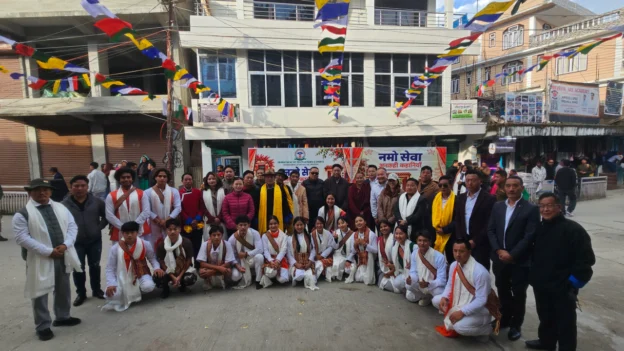
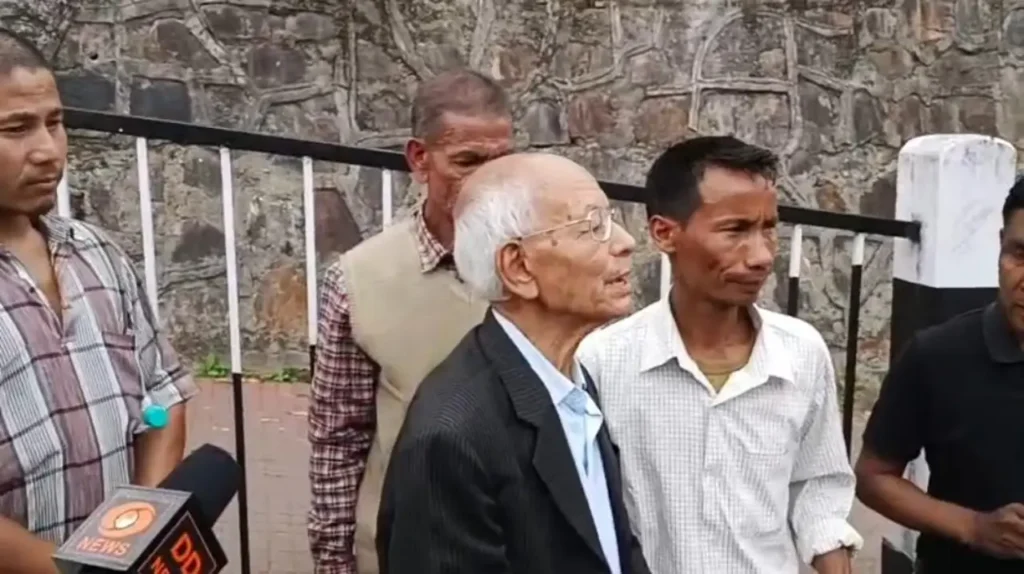
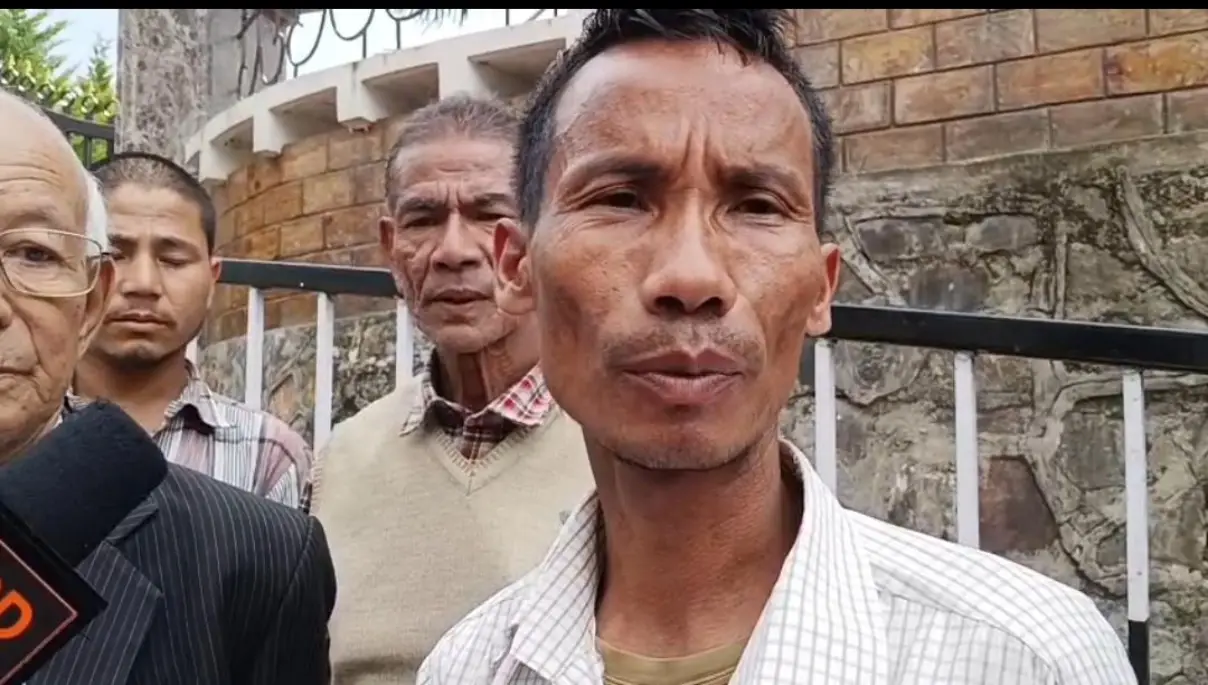
Against this backdrop, the Hynniewtrep Border Dispute Redressal Forum recently met the Chief Minister of Meghalaya to highlight the concerns of residents living in the disputed border regions. The delegation drew attention to the difficulties faced by residents of Lapangap, particularly in carrying out routine agricultural activities, and raised concerns over the continued lack of official recognition for villages located within Elaka Labangnongphyllut.
The Forum pointed out that the Jaintia Hills Autonomous District Council has already formally recognised the Elaka, validated its boundaries, and issued the traditional sanat to the Acting Doloi, Prince Maiang, as well as to the respective Waheh Shnong of the villages concerned.
During the meeting, the Forum submitted a memorandum urging the Meghalaya government to immediately extend official recognition to all villages within Elaka Labangnongphyllut and align state policy with the administrative measures already undertaken by the District Council.
The delegation expressed deep concern over the prolonged hardships faced by residents due to the absence of formal state recognition. It highlighted a stark contrast between the treatment of Block I and Block II. In 2004, the Meghalaya government officially recognised 22 villages in Block II, enabling residents to receive Electors Photo Identity Cards and other civic documents while facilitating the extension of government departments and development programmes into the area.
Residents of Block I, however, continue to remain outside the state’s formal administrative system. As a result, many lack Electors Photo Identity Cards, Birth Certificates, and Scheduled Tribe certificates. Without these essential documents, residents face significant barriers in accessing government services, welfare schemes, and other basic rights available to citizens.
The Forum therefore urged the government to immediately enroll these villages within the state’s administrative framework so that residents can obtain official documentation from Meghalaya and benefit from development initiatives and government welfare programmes.
The challenges confronting these communities extend beyond development deficits. According to the Forum, the absence of official documentation has created a profound crisis of identity and human security, leaving residents unable to access many of the rights and protections associated with citizenship.
In an effort to provide some relief, the Executive Committee of the Jaintia Hills Autonomous District Council recently decided to issue Landholding Certificates and land pattas to local residents free of cost, enabling them to formally register their landholdings and properties.
The Forum argued that since the District Council has already fulfilled its responsibilities by recognising the Elaka and initiating measures to secure land rights, it is now incumbent upon the state government to formally recognise Elaka Labangnongphyllut without further delay.
Responding to the delegation, the Chief Minister provided an update on the ongoing border negotiations. He informed the Forum that the Government of Assam is expected to appoint a new chairman to its Regional Committee shortly. Following the appointment, a joint meeting is expected to be convened to resume discussions on resolving the remaining disputed sectors.
Ahead of those discussions, the Forum advised the Chief Minister that the historical notification of 1958 should not be overlooked, arguing that it constitutes an important foundation for any legitimate deliberations concerning Block I.
The Forum further stressed that the dispute is not a recent development but one deeply rooted in historical records. It pointed to a Joint Demarcation exercise conducted in 1957 by the Mikir Cachar Hill District Council and the United Khasi-Jaintia authorities.
During that exercise, officials reportedly undertook extensive field visits across the disputed villages and compiled a detailed report based on ground-level assessments. The study examined the language spoken by residents, cultural practices, food habits, and documentary records. According to the Forum, the findings clearly established that a majority of the villages in Block I were predominantly inhabited by Khasi-Pnar communities belonging to the indigenous Hynniewtrep people.
Citing this historical evidence, the Forum maintained that Meghalaya should not compromise or cede any portion of Block I or Block II during negotiations with Assam. The Chief Minister, according to the delegation, assured them that the state’s territorial interests would not be compromised during the talks.
Reaffirming their commitment to protecting both ancestral land and the rights of border residents, representatives of the Hynniewtrep Border Dispute Redressal Forum stated that if the ongoing negotiations fail to produce a fair and mutually acceptable outcome, they are prepared to pursue legal avenues to secure justice for the affected communities.