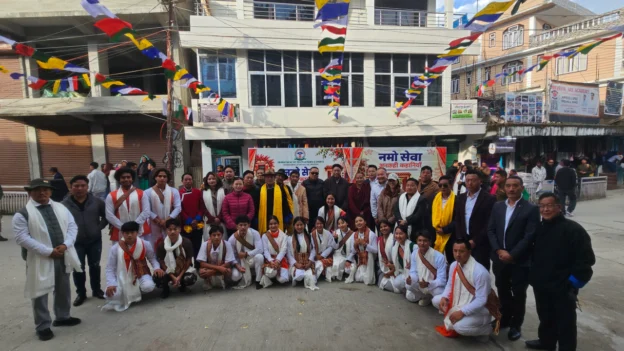
The quiet cake-cutting ceremony at Namgyal Higher Secondary School in Swayambhu on July 6, 2026, unexpectedly transformed into a geopolitical event with far-reaching implications. Hundreds of people, including Tibetan refugees, Buddhist devotees, and diplomats from several Western countries, gathered to celebrate the 91st birthday of the 14th Dalai Lama. What appeared to be a religious and cultural occasion quickly evolved into a diplomatic flashpoint, exposing the fragile balance that Nepal has long attempted to maintain between competing regional powers.
Although the Nepalese administration tightly controlled the celebrations by restricting activities such as the Tibetan national anthem, public processions, and readings of statements by the Central Tibetan Administration (CTA) in an apparent effort to satisfy Beijing, the very fact that the event proceeded under an implicit official permit sent shockwaves through diplomatic circles. Within days, Nepal’s old political establishment responded with fierce criticism.
Former Deputy Prime Minister Narayan Kaji Shrestha publicly warned that the government’s foreign policy shift was “serious” and could have “catastrophic consequences.” At the same time, seven former Nepalese ambassadors to China jointly argued that the participation of foreign diplomats amounted to a direct violation of Nepal’s longstanding commitment to the One China policy.
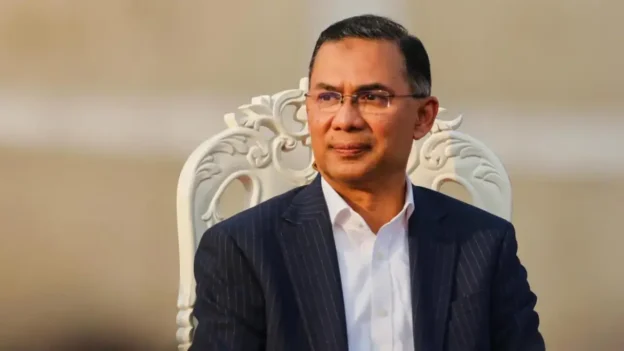
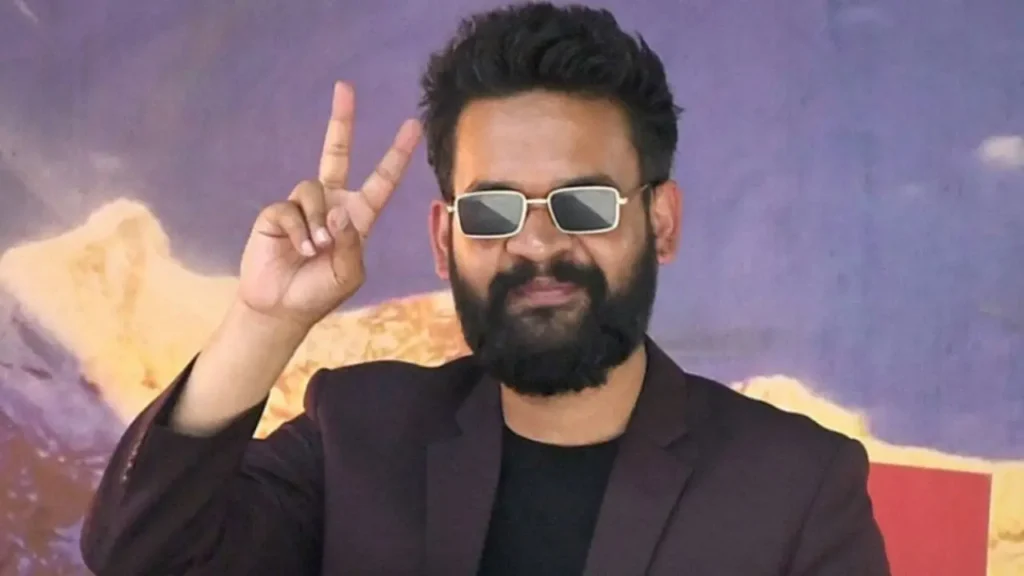
At the heart of this diplomatic controversy stands Prime Minister Balendra “Balen” Shah, the 36-year-old former rapper and engineer who assumed office in March 2026 following the historic Gen Z-led electoral victory of the Rastriya Swatantra Party (RSP). His government came to power promising a populist and anti-establishment agenda aimed at fundamentally reshaping Nepal’s domestic politics. Yet the Dalai Lama’s birthday celebration has demonstrated how quickly domestic political aspirations become entangled in the realities of Himalayan geopolitics, where governance cannot be separated from the strategic rivalry among Beijing, New Delhi and Washington.
Nepal’s political transformation in three phases
To understand why a single public event has generated such intense diplomatic repercussions, Nepal’s recent political evolution must be viewed through three distinct structural phases. Each phase has reshaped the country’s domestic political landscape while simultaneously redefining its relationship with regional and global powers.
The era of the syndicate (pre-Gen Z revolution)
For more than two decades following the end of the civil war and the abolition of the monarchy, Nepal was governed by a rotating political establishment dominated by the Nepali Congress (NC), the Communist Party of Nepal (Unified Marxist-Leninist) under K.P. Sharma Oli, and the Communist Party of Nepal (Maoist Centre) led by Pushpa Kamal Dahal ‘Prachanda’. The frequent alternation of power among these traditional parties created continuity in political leadership but did little to address deeper structural challenges.
This period became characterised by endemic corruption, weak state institutions, heavy dependence on remittances, and persistent political instability. Rather than pursuing a coherent long-term foreign policy, successive governments frequently oscillated between Beijing and New Delhi, often responding to immediate political necessities instead of pursuing strategic national interests.
The consequences were evident. Major infrastructure projects progressed slowly, international agreements became trapped in domestic political disputes, and successive governments struggled to establish institutional stability. Foreign policy itself increasingly appeared transactional rather than strategic.
The Gen Z revolution and the interim government (2025–early 2026)
Mounting public frustration over inflation, youth unemployment, and entrenched corruption eventually culminated in the youth-led Gen Z Revolution during 2025. Nationwide demonstrations gathered momentum throughout the year, fuelled by repeated political scandals and growing uncertainty over Nepal’s economic future.
By September 2025, Prime Minister K.P. Sharma Oli’s coalition government collapsed under sustained street protests led largely by young Nepalese demanding structural political change rather than another routine transfer of power. The movement represented far more than dissatisfaction with a single administration; it reflected widespread rejection of an entire political order that many believed had exhausted its legitimacy.
To restore stability, President Ram Chandra Poudel appointed former Supreme Court Chief Justice Sushila Karki to lead an interim government. The Karki administration ensured continuity in state functioning while maintaining political neutrality during preparations for the March 2026 general elections. In doing so, it created the institutional conditions necessary for one of Nepal’s most significant democratic transitions in recent history.
The post-election era: The Balen-RSP government
The March 2026 elections fundamentally altered Nepal’s political landscape. Riding the momentum generated by the Gen Z movement, Balen Shah—who had already established himself during his tenure as Mayor of Kathmandu between 2022 and 2026—joined forces with the Rastriya Swatantra Party. The alliance secured a historic landslide victory, winning 59 First-Past-the-Post seats and propelling Shah to become the world’s youngest serving head of government.
The new administration inherited enormous public expectations. It sought to convert revolutionary energy into institutional governance through ambitious reforms and digital accountability mechanisms, presenting itself as a government committed to transparency and administrative efficiency rather than conventional patronage politics.
Yet the events surrounding the Dalai Lama’s birthday have demonstrated that electoral legitimacy alone does not insulate a government from geopolitical pressures. The Balen-RSP administration has discovered that governing Nepal requires balancing domestic reform with the strategic expectations of powerful neighbours, making foreign policy an equally important test of its political maturity.