Meghalaya has achieved an impressive milestone by securing nearly eighty-five percent coverage in the distribution of Enumeration Forms under the Special Intensive Revision (SIR) 2026. This significant progress marks a steady step forward in the Election Commission of India’s ongoing drive to compile an accurate, clean and inclusive electoral roll for the state.
Alongside the rapid physical distribution of forms, state election authorities have significantly accelerated their digital recording processes, backed by intensified field monitoring and comprehensive voter outreach programmes.
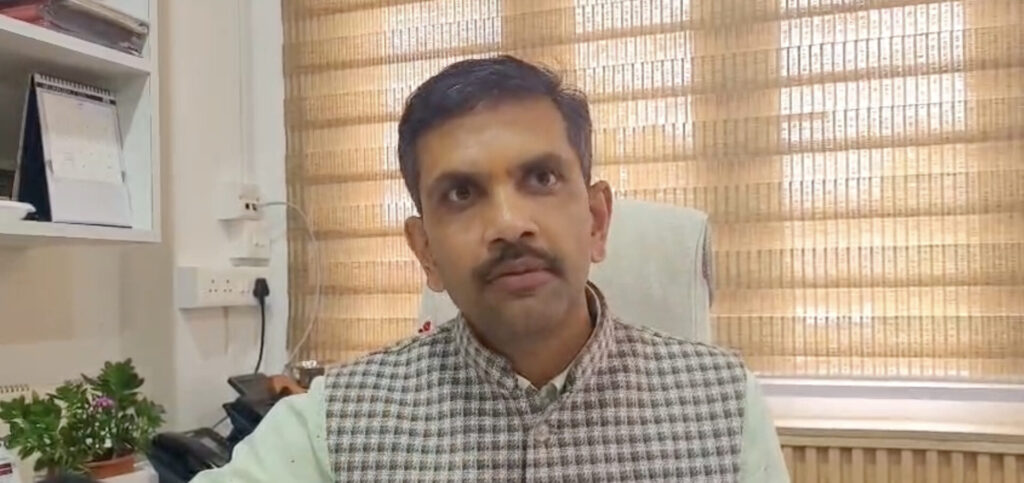
However, this massive logistical exercise is also being accompanied by strict administrative oversight. Chief Electoral Officer Dr BDR Tiwari has firmly warned that all procedures must strictly adhere to official guidelines following recent controversies over improper distribution practices in certain areas.
According to official data released by the Chief Electoral Officer, as of the morning of July 14, state authorities had successfully distributed pre-printed Enumeration Forms to exactly 1,991,883 of the state’s 2,349,645 registered electors.
This represents an overall coverage rate of 84.77 per cent across Meghalaya.
Meanwhile, digital processing is progressing steadily, with 564,610 forms already digitised and uploaded to the centralised database, accounting for 24.03 per cent of the total electorate.
The progress reports reveal exceptional performance across several districts, although some regional differences remain.
In terms of physical distribution, West Jaintia Hills is leading the state with an impressive coverage rate of 98.94 per cent. It is followed by South West Garo Hills at 97.77 per cent, North Garo Hills at 95.12 per cent, South West Khasi Hills at 90.37 per cent, and East Garo Hills at 88.84 per cent.
In the digitisation process, East Jaintia Hills has recorded the highest progress at 41.55 per cent. It is followed by South West Khasi Hills at 40.31 per cent, Eastern West Khasi Hills at 36.73 per cent, South West Garo Hills at 34.01 per cent, and West Garo Hills at 33.23 per cent.
While welcoming the progress, Chief Electoral Officer Dr BDR Tiwari reiterated that the integrity of the revision exercise must not be compromised.
He reminded Booth Level Officers that they are required to strictly follow the Election Commission of India’s house-to-house verification guidelines. Enumeration Forms must be hand-delivered directly to electors at their residences and should never be distributed from private premises, commercial establishments or any unauthorised public locations.
The clarification follows allegations that Booth Level Officers in the West Shillong Assembly constituency had distributed official Enumeration Forms from the private residence of a former local legislator.
The unauthorised distribution reportedly took place over three days—June 30, July 1 and July 2.
After the allegations surfaced, the East Khasi Hills District Election Officer immediately ordered the concerned Booth Level Officer to retrieve all forms distributed from the politician’s residence to preserve the neutrality and non-partisan character of the electoral process.
To address the issue, District Election Officer Abhilash Baranwal convened an urgent meeting with representatives of various political parties.
Following the discussions, the Assistant Electoral Registration Officer conducted an on-site inspection and instructed the Booth Level Officer Supervisor to closely monitor field staff. Officials were directed to ensure that all future distributions are carried out strictly through door-to-door visits in accordance with Election Commission guidelines.
Apart from administrative challenges, the election machinery is also contending with seasonal constraints.
Dr Tiwari acknowledged that the pace of digitisation and uploading has slowed because of poor mobile and internet connectivity caused by heavy monsoon rains.
Responding to concerns over slower progress in East Khasi Hills district, he explained that field teams are carrying out detailed physical verification of electors.
He noted that rural constituencies are progressing faster than urban areas, as many urban residents are away from home during normal working hours, making physical verification more challenging.
Despite these difficulties, Dr Tiwari expressed confidence that the entire exercise would be completed within the stipulated timeline.
To strengthen public awareness and secure political cooperation, the Office of the Chief Electoral Officer recently organised a hybrid interactive session with Members of the Meghalaya Legislative Assembly at the MLA Hostel Conference Hall in Shillong.
During the meeting, legislators were briefed on the timeline, technical procedures and significance of the Special Intensive Revision.
Dr Tiwari urged legislators to encourage active public participation in their respective constituencies.
The Election Department is also conducting mandatory weekly review meetings with District Election Officers, Electoral Registration Officers and Assistant Electoral Registration Officers to closely monitor the daily progress of Booth Level Officers and promptly address logistical challenges.
The department has also issued detailed instructions to electors on completing the verification process.
Citizens who have received pre-printed Enumeration Forms have been requested to carefully fill in their personal details and submit the completed forms directly to their designated Booth Level Officer.
After submission, each elector will receive an official acknowledgement receipt, following which the Booth Level Officer will upload the details using the designated digital application.
Special arrangements have also been made for residents currently living outside Meghalaya, including students studying elsewhere, individuals working in other states and those undergoing medical treatment.
Such electors can submit their information online through the official Election Commission of India web portal or mobile application.
The revision exercise also contains provisions for historical verification.
Electors requiring reference details from the baseline electoral roll of 2005 can access the rolls through the official websites of the Chief Electoral Officer and the respective district administrations, or seek assistance from their local Booth Level Officer.
For younger voters whose names do not appear in the 2005 electoral roll because they registered later, the process has been simplified.
They may provide the 2005 registration details of their parents or grandparents in the relevant section of the form.
Where neither the applicant nor their parents or grandparents appear in the 2005 electoral roll, electors may choose the third option provided in the form, enter their current details, and submit at least one of the eleven identity documents approved by the Election Commission of India during the claims and objections period.
Concluding his appeal, Chief Electoral Officer Dr BDR Tiwari urged all remaining electors across Meghalaya to cooperate fully with visiting Booth Level Officers and actively participate in the Special Intensive Revision exercise.
He emphasised that public cooperation remains essential to ensuring a comprehensive, accurate and updated electoral roll for the state.