For decades, the Bay of Bengal occupied an unusual place in global geopolitics. Everyone agreed it mattered — strategically and economically — yet it rarely made headlines. Attention was focused elsewhere: the South China Sea, the Taiwan Strait, the Strait of Hormuz, the Persian Gulf, and, more recently, the Red Sea. That is now beginning to change.
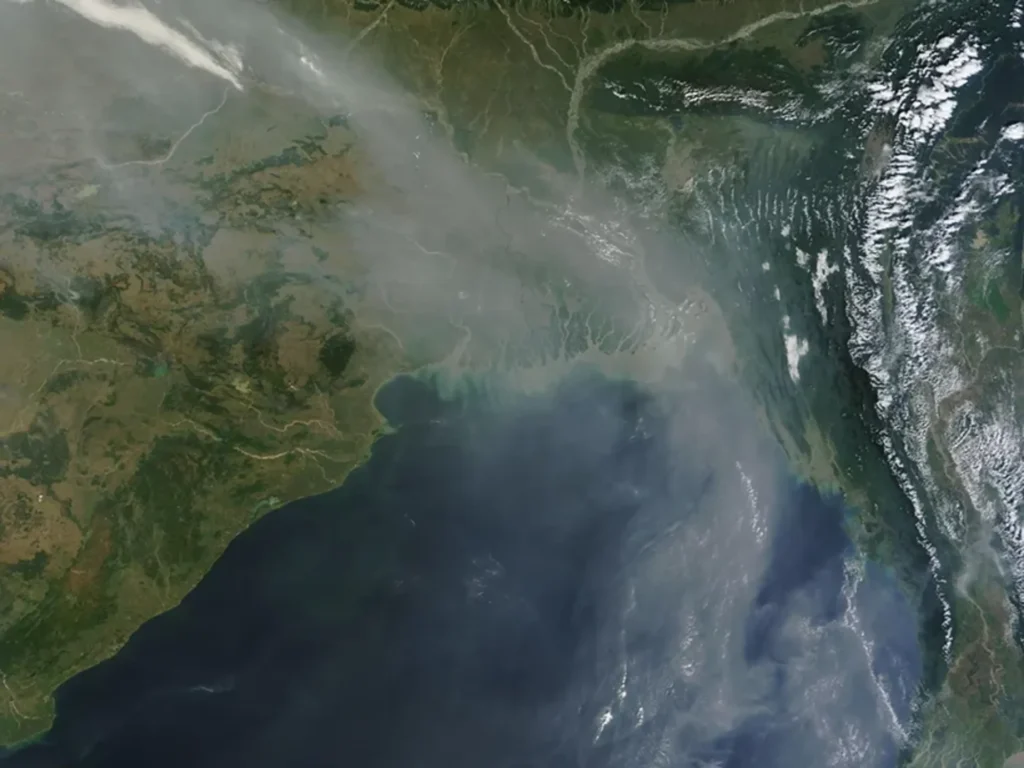
Stretching from Sri Lanka to Myanmar before opening into the wider Indian Ocean, the Bay of Bengal has, over the past few years, become one of the most contested stretches of water in the Indo-Pacific. You would not necessarily know it from the headlines. There are no daily naval stand-offs here, nothing like the constant drumbeat of territorial disputes in the South China Sea.
What is unfolding in the Bay of Bengal is much quieter. It is about ports, trade agreements, energy corridors, undersea surveillance that rarely attracts public attention, military logistics, and diplomatic pressure applied so gradually that it is almost easy to miss.
And right at the centre of it all sits Bangladesh.
No aircraft carriers. No nuclear submarines. Nothing close to a blue-water navy capable of projecting power far beyond its own coastline. Nor is it part of the military alliances now reshaping Indo-Pacific security. And yet, somehow, its 710 kilometres of coastline has placed it precisely where Chinese, Indian and American strategic interests converge.
The remarkable thing, however, is that these three powers are not looking at the same Bangladesh. China sees a gateway — the missing link in its access to the Indian Ocean. India sees a strategic vulnerability on its eastern flank that it cannot afford to overlook. Washington, meanwhile, increasingly views Dhaka as an important partner in what it describes as a “free and open Indo-Pacific”.
Throughout all this, Bangladesh has continued to repeat the principle it has upheld since independence: friendship with everyone, malice towards none. It is an admirable doctrine. The real question — and one of the defining questions in South Asia today — is whether such neutrality can endure at a time when the major powers are competing more intensely than they have in decades.
Geography: Bangladesh’s greatest strategic asset
Few countries are fortunate enough to possess geography as strategically significant as Bangladesh’s. Its southern coastline lies almost exactly where South Asia meets Southeast Asia — with India to the west, Myanmar to the east, and the Bay of Bengal opening southwards into the Indian Ocean, by far the busiest maritime region in the world.
Everything moving between East Asia and Europe, Africa and the Middle East passes through these waters.
Nearly every major Asian economy depends on the Bay of Bengal in one way or another. Oil from Saudi Arabia and the United Arab Emirates crosses it on its way to China, Japan and South Korea. So do container ships carrying electronics, garments, automobiles and machinery, bound for Singapore, Colombo and beyond through the Suez Canal.
For centuries, these waters connected civilisations through trade. Today, they sustain global supply chains, and influence over the Bay is no longer primarily about naval firepower. It is about access — who controls the ports, who operates the logistics hubs, who owns the undersea cables, who monitors maritime activity, and who secures the trade agreements.
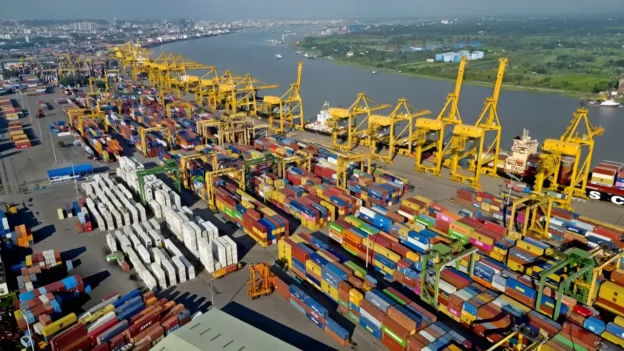
Bangladesh happens to sit at the centre of this evolving landscape. Its two principal ports, Chattogram and Mongla, are expanding rapidly, while Matarbari is close to becoming the country’s first fully fledged deep-sea port capable of handling larger vessels. Alongside these commercial developments, Bangladesh has been quietly modernising its navy for years under its long-term defence modernisation programme, Forces Goal 2030.
None of these developments, taken individually, would significantly alter the regional balance. Taken together, however, they have made Bangladesh a country that the major powers can no longer afford to ignore.
China’s long search for the Indian Ocean
If you want to understand why Bangladesh matters so much to Beijing, begin with what Chinese strategists call the “Malacca Dilemma”. That is where this story really starts.
More than three-quarters of China’s crude oil imports arrive by sea, with most passing through the Strait of Malacca — the narrow channel between Malaysia, Singapore and Indonesia that narrows to less than three kilometres at its tightest point. It is one of the busiest shipping lanes in the world, and that is precisely what makes it such a strategic concern for Beijing. In any future conflict involving the United States and its allies, a disruption of traffic through the Strait could severely affect China’s economy and energy security.
Former Chinese President Hu Jintao is widely believed to have coined the term in the early 2000s, and it has since become one of the defining concerns of Chinese strategic thinking. For nearly two decades, it has shaped Beijing’s overseas infrastructure strategy. Rather than relying entirely on a single maritime chokepoint, China has invested billions in alternative routes linking the Indian Ocean directly with its western provinces. Gwadar in Pakistan is one part of that strategy. Another lies much closer to Bangladesh than many realise.
Myanmar: China’s gateway to the Bay of Bengal
Kyaukpyu is a small town on Myanmar’s western coast, yet it has become one of China’s most important overseas projects. Oil and gas pipelines extend nearly 800 kilometres from Kyaukpyu across Myanmar into China’s Yunnan Province — gas since 2013 and oil a few years later. Together, they allow part of China’s energy imports to bypass the Strait of Malacca altogether. Tankers from the Middle East unload crude oil directly at Kyaukpyu, from where it travels overland to Kunming. It does not eliminate China’s Malacca problem, but it certainly reduces some of the risk.
The broader ambition — transforming Kyaukpyu into a deep-sea port and Special Economic Zone under the Belt and Road Initiative — has proved far more complicated. Financing had to be renegotiated after Myanmar raised concerns about debt. Then came the 2021 military coup, followed by civil war. Fighting involving the Arakan Army in Rakhine State has made construction around Kyaukpyu increasingly difficult.
Yet Beijing has shown little sign of retreating. That is because, for Chinese planners, the project was never solely about trade. It is also about ensuring that China has alternatives if other strategic routes become inaccessible.
Some analysts in Washington and New Delhi worry that infrastructure officially developed for commercial purposes could eventually provide logistical support for Chinese naval operations. Others argue that such concerns are overstated, and they may well have a point.
The Center for Strategic and International Studies has argued that Myanmar’s domestic politics, concerns over sovereignty and continuing conflict make the establishment of a permanent People’s Liberation Army Navy base unlikely, at least for the foreseeable future. That distinction matters. Infrastructure capable of supporting naval operations is not the same as a permanent naval base. At present, it is the former rather than the latter.
Even so, strategic planners do not prepare only for present realities. They also prepare for what may emerge five or ten years from now. Increasingly, Bangladesh features in those longer-term calculations.
Bangladesh enters China’s maritime equation
Quietly, and almost without attracting widespread attention, Bangladesh has become one of China’s closest defence partners in South Asia despite being almost entirely surrounded by India. A substantial proportion of Bangladesh’s military hardware — including frigates, missile systems and other naval equipment — is supplied by China.
Perhaps the most significant development lies beneath the surface. In 2016, Bangladesh became only the second country in South Asia, after India, to operate submarines, acquiring two refurbished Ming-class vessels from China. By regional standards, they are modest platforms. Nevertheless, they gave Bangladesh an underwater capability for the first time in its history.
To support this capability, Bangladesh established its first dedicated submarine base at Pekua, near Cox’s Bazar. Built largely with Chinese assistance, it is now one of the country’s most significant naval investments.
Dhaka’s reasoning is straightforward. A country possessing one of the region’s largest maritime economic zones requires modern naval infrastructure to safeguard its fisheries, offshore resources, shipping lanes and maritime sovereignty. China simply happened to be the partner prepared to help build it, reflecting a defence relationship that has developed over many years.
India, however, sees the situation very differently. From New Delhi’s perspective, Chinese-built military infrastructure located only a few hundred kilometres from India’s eastern coastline is difficult to dismiss, regardless of its stated purpose. Whether those concerns are ultimately justified remains uncertain.
But that is almost beside the point. In this part of the world, what a rival power believes is happening often matters nearly as much as what is actually taking place. That perception alone is already reshaping the strategic balance across the Bay of Bengal.