In what could prove to be a significant step in tackling the growing nexus between illicit drugs and transnational organised crime, the adoption of the Guwahati Declaration by the BRICS nations has added fresh momentum to India’s efforts to combat narcotics trafficking.
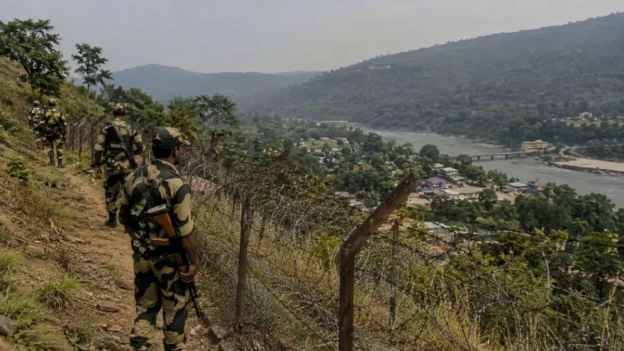
For India, the declaration carries particular significance because of the country’s geographical location and the complex security challenges posed by its long international borders. Nowhere is this challenge more evident than in the North East, where nearly 98 per cent of the region’s geographical boundary is shared with neighbouring countries.
The North East borders Bangladesh, Bhutan, China and Myanmar, while remaining closely connected to Nepal through eastern India. This strategic location has made the region vulnerable not only to illegal migration and arms smuggling but also to narcotics trafficking and other forms of transnational organised crime.
Over the years, security agencies have repeatedly intercepted consignments of heroin, methamphetamine, yaba tablets, opium and precursor chemicals entering India through these routes. Myanmar, in particular, continues to be a major source of heroin and synthetic drugs flowing into India through the notorious Golden Triangle, one of the world’s largest narcotics-producing regions.
Trafficking networks have also exploited routes through Bangladesh, while the open India-Nepal border has presented its own set of enforcement challenges. The Sashastra Seema Bal, which guards the India-Nepal frontier, has intensified surveillance to curb both the inflow and outflow of narcotics and prevent the movement of criminal networks operating across the border.
Against this backdrop, the Guwahati Declaration assumes greater importance.
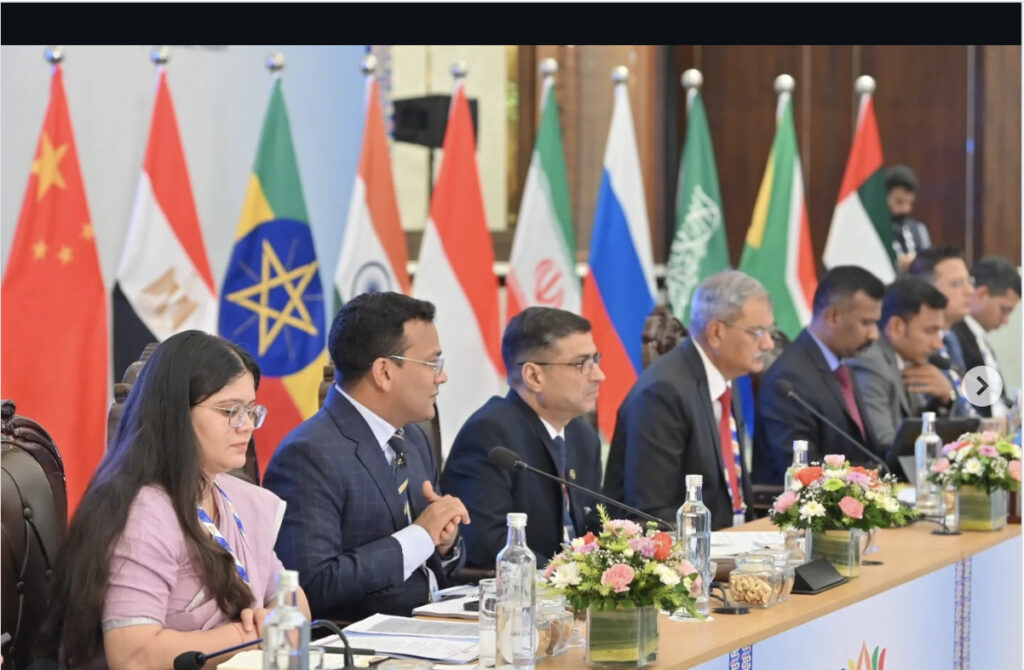
Adopted on July 7 after two days of deliberations by the Heads of Anti-Drug Agencies of the BRICS nations, the declaration reflects a growing international recognition that drug trafficking has become increasingly sophisticated, technology-driven and deeply interconnected with organised crime. It also highlights the need for countries to move beyond isolated national responses and embrace coordinated international action.
According to the United Nations Office on Drugs and Crime, synthetic drug production has expanded rapidly across Southeast Asia over the past decade. Methamphetamine originating in the Golden Triangle continues to flood regional markets, while traffickers have diversified their methods by using encrypted communication platforms, cryptocurrencies, online marketplaces and complex financial networks to evade law enforcement.
India has witnessed this changing trend firsthand.
The Narcotics Control Bureau has reported a substantial rise in drug seizures in recent years, particularly involving heroin, methamphetamine and synthetic narcotics. Authorities believe the increase reflects both stronger enforcement and the growing scale of trafficking networks operating across South and Southeast Asia.
Official figures show that Indian agencies seized narcotics worth more than ₹24,000 crore between 2022 and 2024 under the government’s intensified anti-drug campaign. Large consignments intercepted in Assam, Manipur, Mizoram and other northeastern states have underscored the region’s growing importance as both a transit corridor and an enforcement priority.
Recognising these evolving challenges, the BRICS countries agreed that stronger international cooperation would be essential to counter increasingly sophisticated trafficking networks.
In their Joint Declaration, the Heads of Anti-Drug Agencies emphasised the need for timely exchange of intelligence, operational information and best practices, while respecting national laws and international obligations.
The declaration also calls for greater use of innovative technologies, digital tools and data-driven policing to strengthen law enforcement capabilities against illicit drug trafficking.
Another important aspect of the declaration is its acknowledgement that the global narcotics trade is changing rapidly.
The member countries expressed concern over the proliferation of synthetic drugs and new psychoactive substances, the diversion of precursor chemicals, misuse of emerging technologies and virtual assets, and the growing use of maritime routes and digital platforms by transnational criminal organisations.
These developments have transformed drug trafficking from a traditional border security issue into a highly sophisticated global criminal enterprise.
Criminal syndicates today increasingly rely on encrypted messaging applications, darknet marketplaces, digital payment systems and international logistics networks to move narcotics across continents while concealing their financial transactions.
Recognising this shift, delegates participating in the Guwahati meeting discussed the need to harness technology as an equally powerful tool for law enforcement.
Technical sessions focused on leveraging digital technologies for real-time drug interdiction, countering trafficking through the darknet, responding to the growing challenge posed by new psychoactive substances and strengthening global supply chains against the diversion of precursor chemicals and chemical leakage.
The declaration, however, does not focus solely on enforcement.
The BRICS countries also underlined the importance of reducing drug demand through specialised programmes aimed at promoting healthy lifestyles and protecting vulnerable groups, particularly children and young people.
The member nations stressed that awareness campaigns, treatment facilities, de-addiction services and rehabilitation programmes should complement law enforcement efforts in addressing the broader social consequences of drug abuse.
India echoed this comprehensive approach during the meeting.
Addressing the gathering, India called upon BRICS anti-drug agencies to establish a partnership built on speed, mutual trust and seamless real-time intelligence sharing capable of responding swiftly to transnational drug syndicates.
Leading the Indian delegation, Director General of the Narcotics Control Bureau, Anurag Garg, reiterated India’s zero-tolerance policy against narcotics.
He outlined India’s three-year roadmap for 2026-2029, which adopts a network-centric strategy designed to dismantle entire criminal ecosystems rather than merely arresting individual traffickers.
The roadmap combines intelligence-led investigations with mass awareness campaigns, treatment, de-addiction and rehabilitation initiatives, reflecting the government’s effort to tackle both the supply and demand sides of the narcotics problem.
Delegates from all participating countries also reviewed the prevailing drug situation within their respective jurisdictions and exchanged experiences on emerging threats.
The discussions reflected a growing consensus that no country, regardless of its enforcement capabilities, can effectively combat international drug syndicates without sustained cross-border cooperation.
For India, hosting the meeting in Guwahati carried considerable strategic symbolism.
Assam serves as the gateway to the North East and occupies a critical position in India’s connectivity with Southeast Asia under the Act East Policy. The city’s selection as the venue highlighted the central role that the North East now plays in India’s security architecture.
The region has increasingly become the frontline in India’s battle against narcotics trafficking, particularly as instability in neighbouring Myanmar has created fresh opportunities for organised criminal groups to expand their operations.
The declaration is therefore especially relevant for the North East, where drug trafficking often overlaps with other forms of transnational crime, including arms smuggling, money laundering and, in certain cases, financing of insurgent groups.
Greater intelligence sharing among BRICS countries could help authorities identify trafficking routes earlier, trace financial networks more effectively and dismantle organised criminal syndicates operating across multiple jurisdictions.
India’s BRICS Chairship this year is guided by the theme, “Building for Resilience, Innovation, Cooperation and Sustainability.”
The Guwahati Declaration reflects that vision by seeking to transform international cooperation from periodic dialogue into sustained operational collaboration among member countries.
Beyond its diplomatic significance, the declaration signals an acknowledgement that the fight against narcotics has entered a new phase.
Drug trafficking is no longer confined to remote border crossings or isolated smuggling networks. It increasingly exploits digital technologies, international financial systems and global supply chains, requiring equally sophisticated responses from governments.
For India’s North East, where geography has long presented both opportunities and vulnerabilities, the declaration could strengthen ongoing efforts to disrupt cross-border trafficking while enhancing cooperation with international partners.
As the meeting concluded, Director General Anurag Garg urged the participating anti-drug agencies to carry forward the spirit of the Guwahati Declaration and translate its commitments into concrete action.
His appeal reflected the broader message emerging from the two-day meeting in Guwahati—that combating the global drug menace requires coordinated enforcement, timely intelligence sharing, technological innovation and sustained international cooperation if future generations are to inherit a safer and healthier world.