Politics is often shaped not merely by institutions or elections, but by the indomitable will of individuals who refuse to surrender to the verdict of adversity.
Throughout history, certain leaders have transformed exile into resurgence and apparent defeat into astonishing political redemption.
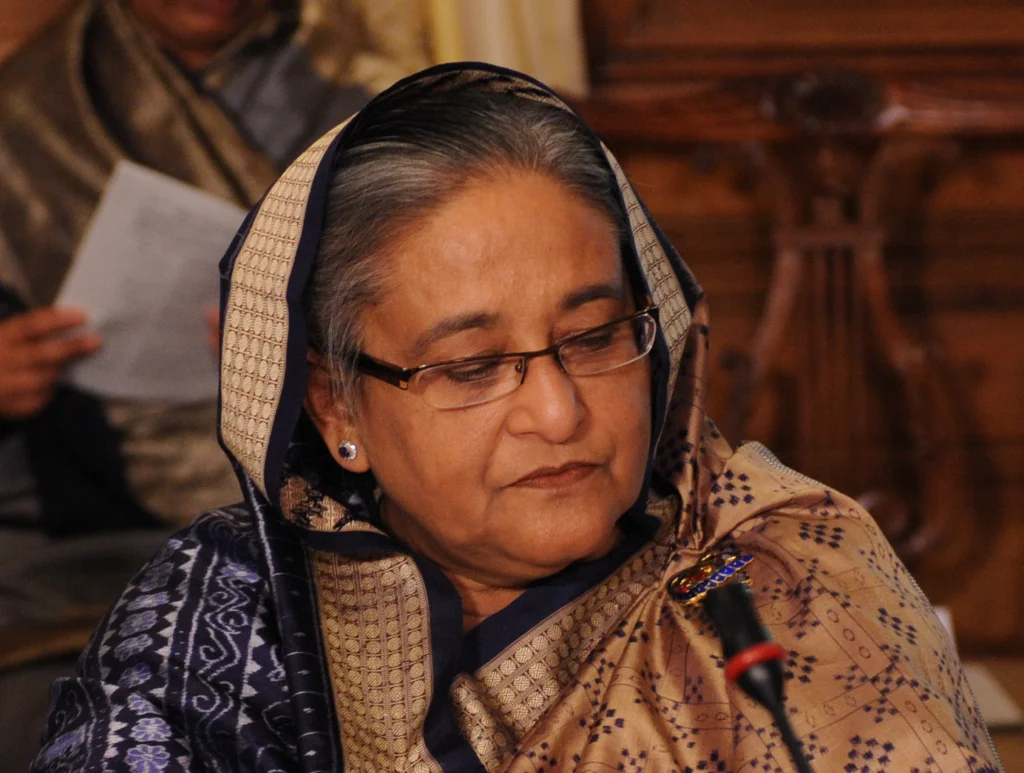
It is within this historical framework that Bangladesh’s exiled Prime Minister Sheikh Hasina’s recent declaration has ignited intense debate across Bangladesh and beyond.
For the first time since Bangladesh’s violent terrorist assault in 2024, Sheikh Hasina has publicly announced a definitive timeframe for her return to her homeland.
In an exclusive email interview with the Indian broadcaster NDTV, she declared her unwavering intention to return to Bangladesh before the end of 2026.
The announcement has reverberated across political circles, diplomatic corridors, and public discourse alike.
Her declaration immediately raises profound questions. How can an exiled prime minister, confronted by legal proceedings, severe political restrictions, and the prohibition of her party’s activities, confidently proclaim such a return?
What calculations—political, diplomatic, or strategic—underlie this remarkable assertion? Is it simply an expression of personal determination, or does it reflect confidence in changing political realities?
NDTV drew a striking historical parallel by invoking one of the twentieth century’s most celebrated military declarations.
During the darkest days of the Second World War, General Douglas MacArthur, compelled to withdraw from the Philippines under overwhelming Japanese assault, made his immortal pledge: “I shall return.”
At the time, many dismissed those words as little more than rhetoric born of defeat.
Yet history vindicated MacArthur. He returned, liberated the Philippines, and transformed a promise into one of the defining moments of modern military history.
Whether the comparison ultimately proves appropriate remains uncertain.
Military campaigns and democratic politics occupy profoundly different realms.
Nevertheless, the symbolism is undeniable.
Both declarations reflect an unwavering refusal to accept political or strategic defeat as permanent.
History repeatedly demonstrates that exile has seldom marked the end of political careers.
Numerous leaders have returned from political isolation to reclaim positions of influence after circumstances evolved in their favour.
Political landscapes are rarely static.
Alliances shift, international priorities change, public sentiment evolves, and institutions themselves undergo transformation.
Against this backdrop, Sheikh Hasina’s announcement inevitably invites profound contemplation about the forces that may shape Bangladesh’s future political trajectory.
Equally significant was her apparent rejection of speculation regarding clandestine negotiations or secret understandings with her political adversaries.
Rumours of back-channel communication have circulated widely for months, fuelled by Bangladesh’s deeply polarised political climate.
Her public stance appears intended to dispel perceptions that her anticipated return rests upon the international actors which have deposed her from power unlawfully and unconstitutionally on 5 August 2024 for their geopolitical and economic interests which Hasina boldly and patriotically refused to cede to their diktat to save Bangladesh’s independence and sovereignty.
Yet unanswered questions remain.
What developments lead her to project such confidence?
Does she anticipate significant domestic political realignments?
Does she foresee changing regional dynamics that could reshape Bangladesh’s political environment?
Or is her confidence rooted solely in the enduring support of her political constituency?
These questions remain matters of legitimate political boldness.
Bangladesh today stands at an extraordinarily delicate historical juncture.
The nation confronts complex economic challenges, political polarisation, institutional tensions, and evolving geopolitical pressures.
Within such an environment, every statement by a major political figure carries consequences extending far beyond partisan politics.
Words become signals.
Declarations become strategic messages directed simultaneously toward supporters, opponents, regional actors, and the international community.
Political history teaches those symbolic declarations often possess extraordinary power.
Sometimes they inspire loyal followers to remain steadfast.
Sometimes they unsettle adversaries.
Occasionally they reshape political expectations long before events themselves unfold.
Strengthened by Bangladesh’s oldest and founding political party, the Awami League, and sixteen years of unprecedented national advancement under Sheikh Hasina’s dynamic leadership, her declaration may endure as one of history’s most defining political promises, rekindling confidence, resilience, aspiration, and transformative national progress.
Unlike MacArthur’s wartime campaign, democratic politics unfolds through institutions, public opinion, constitutional processes, and the unpredictable evolution of national events.
Nevertheless, her announcement has unquestionably altered the political conversation.
It has shifted debate from whether she intends to return to when and how such a return might occur.
The months ahead will determine whether this pledge becomes a defining chapter in Bangladesh’s political history or remains an ambitious declaration made amid extraordinary uncertainty.
Until then, the comparison with General MacArthur serves less as a prediction than as a powerful historical metaphor—one illustrating how leaders often seek to project resilience even when confronted by formidable obstacles.
History, however, is never written by promises alone.
It is ultimately shaped by events, institutions, public legitimacy, and the collective choices of an entire nation.
Sheikh Hasina’s solemn pledge may ignite a historic resurgence, ushering Bangladesh into a glorious new epoch, where visionary leadership rekindles progress, prosperity, stability, and enduring national greatness.