The Election Commission of India (ECI) will launch a month-long Special Intensive Revision (SIR) of the electoral rolls across East Khasi Hills from June 30 to July 29, with authorities assuring the public that the exercise is aimed at ensuring inclusion rather than exclusion and that genuine electors have “nothing to worry about.”
Announcing the exercise, East Khasi Hills Deputy Commissioner Abhilash Baranwal said Booth Level Officers (BLOs) will undertake a comprehensive house-to-house verification across all constituencies in the district. During the month-long exercise, BLOs will visit every household to distribute self-enumeration forms to electors whose names are reflected in the 2005 electoral roll.
The district administration has urged all voters to treat the exercise with utmost seriousness while dispelling fears over possible exclusions. Officials stressed that the Special Intensive Revision is intended to update and verify the electoral roll so that it remains accurate, transparent and free from errors.
Chief Electoral Officer (CEO) of Meghalaya BDR Tiwari also sought to reassure voters, saying the Election Commission’s focus is to facilitate genuine electors rather than create unnecessary hurdles.
“For anyone whose name is already reflected in the 2005 voter list, the verification will not be very strict. You only need to return the self-enumeration form that has been given to you,” Tiwari said.
He clarified that electors whose names appear in the 2005 electoral roll will not be required to submit any supporting documents during the initial house-to-house verification.
“The proof for anyone whose name is already in the 2005 voter list is there. So, there is no need to worry. During the first visit, you simply have to fill in and return the enumeration form,” he said.
According to the Deputy Commissioner, once the house-to-house enumeration is completed, the Election Commission will provide a one-month period for filing claims and objections. This will be followed by another month during which Electoral Registration Officers (EROs) will examine and decide on the claims before publishing the final electoral roll on October 7, 2026.
Baranwal said the objective of the Special Intensive Revision is to prepare a clean, accurate and error-free electoral roll while ensuring that every eligible elector is properly accounted for.
He explained that the 2005 electoral roll has been adopted as the baseline because it was the last occasion on which the Election Commission carried out a comprehensive nationwide revision of electoral rolls.
At the current stage, electors are not required to attach or submit any supporting documents. The only requirement is to correctly fill in the self-enumeration form and hand it over to the visiting Booth Level Officer.
Officials expressed confidence that the overwhelming majority of electors would complete the exercise smoothly on the basis of the self-enumeration forms alone.
Only in a limited number of cases, where further clarification becomes necessary, will electors be contacted and given adequate time to furnish additional documents.
Tiwari explained that a different procedure would apply only to those whose names are not reflected in the 2005 electoral roll.
Such individuals will first be checked against the current electoral roll. If their names are already present in the existing voters’ list, the verification process will proceed accordingly.
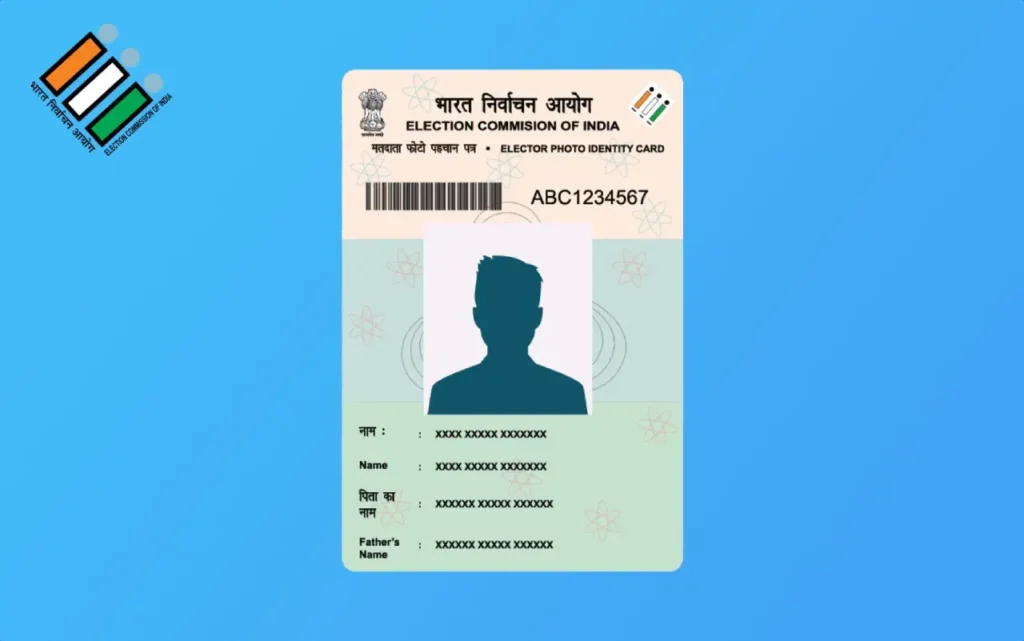
However, if their names do not appear in the present electoral roll, they will be required to provide the EPIC (Elector’s Photo Identity Card) details of at least one parent along with one additional supporting document to establish their eligibility.
“This is important because nearly 10 lakh people are expected not to have their names in the 2005 electoral roll. They can still be verified and included through the prescribed process without any difficulty,” the CEO said.
The Election Commission has circulated an indicative list of 11 standard documents that may be used wherever additional verification becomes necessary. However, both the CEO and the district administration clarified that the list is not exhaustive.
Baranwal said Booth Level Officers have been specifically instructed to accept any relevant document submitted by citizens, including certificates issued by churches, village headmen or other recognised local authorities.
The final decision in such cases will rest with the Electoral Registration Officer, who will consider all documents submitted by an elector rather than relying solely on the standard list of eleven documents.
To make the process more convenient, the Election Commission has enabled online submission of self-enumeration forms through its official portal.
Tiwari said the entire Special Intensive Revision process is supported online, making it easier for electors to verify their details without visiting government offices unnecessarily.
“The 2005 electoral roll is already available in the public domain. Anyone can download it from the website of the Chief Electoral Officer or from the respective district election office websites and check whether their own name or that of a family member is included,” he said.
He added that people do not need to be physically present merely to verify whether their names appear in the 2005 electoral roll.
“If your name is already there, you simply need to complete and return the self-enumeration form. If you are filling it online, you can enter the information that is available with you,” Tiwari said.
Electors requiring assistance may also approach their local Booth Level Officers during the house-to-house visits.
In addition to the Election Commission’s nationwide 1950 helpline, the East Khasi Hills district administration has established two dedicated local helpline numbers—0364-25012550 and 0364-2501228—to assist electors and address any queries during the revision exercise.