A sudden burst of intense monsoon rainfall triggered flash floods across parts of Arunachal Pradesh on Tuesday morning, leaving a trail of destruction in Lower Subansiri and Keyi Panyor districts and raising fears of downstream flooding in neighbouring Assam.
The worst-hit areas were around Yazali and Posa, where fast-rising waters inundated villages, damaged homes, submerged agricultural land, and washed away critical infrastructure within a matter of hours.
Authorities have also reported disruptions to road connectivity as landslides and floodwaters cut off several stretches of key routes, leaving residents stranded and emergency teams racing to assess the damage.
According to the Meteorological Centre in Itanagar, Yazali in Lower Subansiri district recorded 72.8 mm of rainfall during the 24-hour period ending Tuesday morning.
However, weather officials noted that the majority of this rainfall occurred within a narrow three-hour window between 6 am and 9 am. The intense downpour caused streams and rivers to swell rapidly, overwhelming local drainage systems and triggering flash floods across vulnerable settlements.
Officials said the concentrated rainfall led to a substantial increase in river discharge in the upper catchment areas, creating dangerous conditions downstream.
The impact was particularly severe in Keyi Panyor district.
At the NEEPCO Colony in Posa, floodwaters caused extensive damage to residential infrastructure. Preliminary reports indicate that 15 quarters were destroyed, while the main highway bridge connecting the area was washed away, severely affecting movement and connectivity.
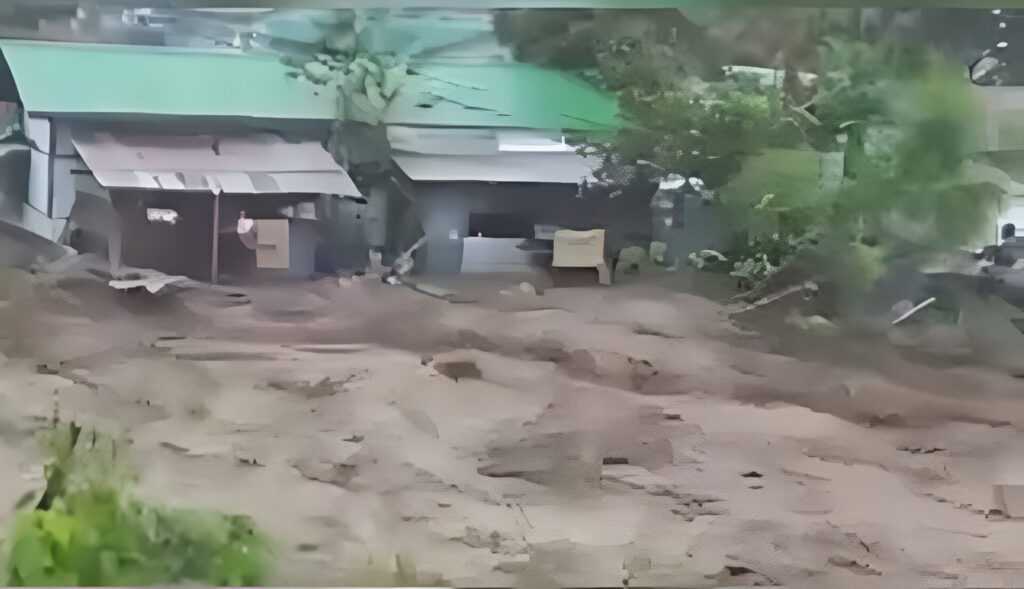
Images emerging from the area showed floodwaters cutting through roads and settlements, highlighting the force with which the water descended from the surrounding hills.
Several villages also bore the brunt of the sudden flooding.
In Luksin village and Yiyee-I and Yiyee-II villages under Toru Circle, residents reported that floodwaters began entering homes shortly after 6:30 am. Within a short period, agricultural fields and low-lying areas were inundated, forcing many families to scramble to safety and move belongings out of harm’s way.
For many rural households in the region, the flooding comes as a major setback, as agriculture and allied activities remain the backbone of local livelihoods. Damage to standing crops and farmland could have long-term economic consequences for affected communities.
The deluge also disrupted transportation networks.
Several vehicles, including trucks carrying commercial goods, remained stranded at the Kalamati block point after flash floods and landslides deposited debris across the roadway. Continuous rainfall and unstable hill slopes have complicated efforts to clear the route and restore traffic movement.
The latest incident is a reminder of the growing vulnerability of Arunachal Pradesh’s mountain districts to extreme weather events.
The state’s steep terrain, fragile geology and dense river network make it particularly susceptible to flash floods and landslides during the monsoon. In recent years, scientists and environmental experts have increasingly pointed to the role of changing rainfall patterns and short-duration extreme precipitation events in amplifying disaster risks across the Eastern Himalayan region.
The situation in Arunachal has also triggered concern in Assam, where rivers originating in the Himalayan foothills often carry large volumes of water into the plains during periods of heavy rainfall.
The Assam government has placed all agencies on high alert after receiving reports of flash floods and sharply rising river discharge from the upper catchments of Lower Subansiri district.
Officials warned that the sudden surge in water levels could lead to downstream flooding in several districts bordering Arunachal Pradesh.
According to government assessments, a substantial increase in river levels and flow velocity is expected in Dhemaji, Lakhimpur, Biswanath and Sonitpur districts over the next one to two days as the flood wave moves downstream.
In response, district administrations have been directed to closely monitor vulnerable locations and remain prepared for any emergency situation.
The State Disaster Response Force (SDRF), National Disaster Response Force (NDRF), and other emergency response agencies have been placed on standby to respond swiftly if conditions worsen.
Authorities have also issued advisories urging residents in low-lying and flood-prone areas to remain vigilant, follow official warnings, avoid inundated locations, and refrain from travelling in small boats as river currents are expected to strengthen considerably.
The coming days will be crucial for both Arunachal Pradesh and Assam as officials continue to monitor rainfall patterns and river levels across the region.
With monsoon activity expected to remain active over the Eastern Himalayas, disaster management agencies are maintaining close surveillance of vulnerable river systems, while communities downstream wait anxiously to see whether the rising waters remain within their banks or develop into a larger flood emergency.