The International Day of the World’s Indigenous Peoples is observed every year on 9 August following the adoption of United Nations General Assembly Resolution 49/214 on 23 December 1994. The date commemorates the first meeting of the UN Working Group on Indigenous Populations, held in 1982. The observance aims to promote and protect the rights of Indigenous Peoples while raising global awareness about the challenges they face.
The day also recognises the invaluable contributions of Indigenous Peoples to preserving cultural diversity, traditional knowledge, biodiversity, and environmental sustainability. This year’s UN theme, “Honouring Indigenous Midwives: Safeguarding Life and Well-being,” highlights the vital role Indigenous midwives play in protecting maternal and newborn health while preserving traditional knowledge and community well-being.
Indigenous peoples across the globe
Indigenous Peoples constitute approximately 5% of the world’s population, representing hundreds of millions of people living in around 90 countries and belonging to more than 5,000 distinct Indigenous groups. Despite their rich cultural heritage and significant contributions to environmental conservation and sustainable development, Indigenous communities remain among the world’s most marginalised populations. They account for a disproportionately high share of people living in extreme poverty and continue to face widespread discrimination, social exclusion, and barriers to education, healthcare, and economic opportunities.
Across the globe, Indigenous Peoples strive to preserve their unique languages, traditions, and cultural identities in the face of increasing globalisation and external pressures. Many communities, particularly those living in remote regions such as the Amazon and Alaska, remain vulnerable to land encroachment, environmental degradation, disease, and the loss of their traditional way of life.
Protecting their rights and respecting their cultural heritage are therefore essential for achieving inclusive and sustainable development worldwide.
The overall scenario of indigenous peoples in Bangladesh
Bangladesh is often celebrated for its remarkable cultural heritage and social cohesion. It is home to a rich mosaic of ethnic and cultural diversity, with more than 54 Indigenous communities speaking at least 35 languages alongside the majority Bengali population. According to the 2022 Population Census, the Indigenous population stands at approximately 1.65 million, representing about 1% of the country’s total population, although Indigenous organisations estimate the actual figure to be closer to 4 million.
Indigenous communities are distributed across both the Chittagong Hill Tracts (CHT) and the plains districts, where groups such as the Chakma, Marma, Tripura, Mro, Bawm, Santal, Oraon, Garo, and Manipuri have long maintained their distinct cultural identities.
The Constitution of Bangladesh provides a strong foundation for equality and justice. Article 27 guarantees that all citizens are equal before the law and entitled to equal protection. Article 28 prohibits discrimination based on religion, race, caste, sex, or place of birth and affirms equal rights for women in all spheres of public life. These constitutional commitments leave little room for ambiguity. However, greater clarity could be achieved by explicitly including the term “ethnicity” in the relevant provision.
Although Bangladesh ratified ILO Convention No. 107 in 1972, significant challenges remain. The Constitution, following the 15th Amendment of 2011, acknowledges the country’s ethnic diversity but does not officially recognise Indigenous communities as “Indigenous Peoples.” While certain cultural rights receive recognition, critical issues relating to land ownership, political participation, and economic rights remain largely unresolved.
International monitoring bodies, including the ILO Committee of Experts on the Application of Conventions and Recommendations (CEACR), have repeatedly emphasised the importance of ensuring an environment in which Indigenous Peoples can fully enjoy their fundamental rights.
Violence against indigenous women and girls
More recent monitoring suggests that violence against Indigenous women and girls in Bangladesh has remained a serious human rights concern. According to documentation by the Kapaeeng Foundation, 29 incidents of violence involving 32 Indigenous women and girls were recorded across 2025. The reported cases included rape, gang rape, attempted rape, killings, torture, and sexual harassment.
These incidents reflect the widespread vulnerability of Indigenous women across the country. The figures are widely considered to represent only a fraction of the actual number of incidents due to underreporting and social stigma.
Justice delayed, justice denied
The phrase “Justice delayed, justice denied” reflects the painful reality faced by many Indigenous women and girls in Bangladesh. For countless survivors of violence, justice is not only slow but often remains entirely out of reach. Cases are frequently met with delayed investigations, prolonged court proceedings, inadequate evidence collection, intimidation of victims and witnesses, and, in many instances, a lack of accountability for perpetrators.
These delays erode public confidence in the justice system, discourage other survivors from reporting abuse, and allow a culture of impunity to persist.
Violence against Indigenous women and girls continues to be significantly underreported due to fear of retaliation, social stigma, geographical isolation, limited access to legal and support services, and a lack of confidence in law enforcement and judicial institutions. Human rights organisations have repeatedly documented that Indigenous communities continue to face discrimination, violence, and substantial barriers to obtaining timely and effective legal remedies.
The persistence of these obstacles not only denies justice to survivors but also perpetuates cycles of violence, marginalisation, and inequality. This highlights the urgent need for stronger legal protections, prompt investigations, effective prosecution, victim-centred support services, and meaningful institutional reforms.
The Chittagong Hill Tracts Accord: Twenty-nine years of unfinished commitments
Nearly three decades after the signing of the Chittagong Hill Tracts Peace Accord in 1997, many of its central commitments remain unrealised. The Accord was intended to establish lasting peace through greater local autonomy, effective land dispute resolution, and confidence-building measures.
Successive governments have highlighted progress in implementing its provisions, while Indigenous representatives maintain that several fundamental commitments—including meaningful decentralisation, an effective Land Commission, and the resolution of longstanding land disputes—remain incomplete. This implementation gap continues to fuel mistrust and uncertainty among the Indigenous peoples in the area.
A renewed opportunity for inclusive dialogue
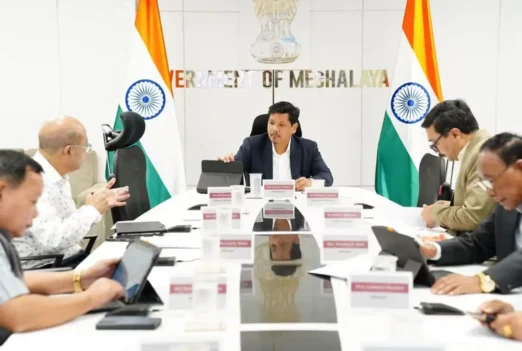
Against this backdrop, recent developments have once again brought the issue of Indigenous peoples to the forefront of national discourse. Representatives of the Indigenous peoples living in the plains recently met with the Hon’ble Prime Minister, Tarek Rahman. The delegation was led by Anna Minz, MP, Member of Parliament (Reserved Women’s Seat No. 19).
During the meeting, held in the presence of Mirza Fakhrul Islam Alamgir, Minister of LGRD&C and Secretary General of the Bangladesh Nationalist Party, the representatives submitted a comprehensive set of recommendations outlining their legitimate demands.
These proposals deserve careful and constructive consideration. Addressing them should not be viewed as granting special privileges but as fulfilling constitutional obligations and strengthening democratic governance. Inclusive development cannot be achieved if vulnerable communities continue to remain on the margins of national policymaking.
Building an inclusive future
Bangladesh has repeatedly demonstrated its ability to overcome enormous national challenges through dialogue, resilience, and collective action. The same commitment is now needed to ensure that Indigenous peoples enjoy the full protection of the Constitution and equal opportunities as citizens.
An important priority is resolving land disputes. The government should establish an effective legal mechanism to resolve land disputes involving Indigenous communities across the country. The establishment of a separate Land Commission for Indigenous peoples in the plains is also indispensable.
Access to justice for Indigenous women and girls must be strengthened through specialised legal support and faster investigation of violence. At the same time, Indigenous languages and cultures should receive sustained institutional support within the national education system.
The National Human Rights Commission should also be empowered to conduct regular and independent monitoring of human rights conditions in Indigenous areas. Finally, renewed dialogue among all stakeholders is essential to accelerate the effective implementation of the Chittagong Hill Tracts Peace Accord.
Unity through diversity
Bangladesh’s Indigenous peoples are not outsiders to the nation they helped build. During the Liberation War of 1971, members of Indigenous communities stood shoulder to shoulder with Bengali compatriots, sacrificing their lives for an independent Bangladesh. Their contribution to the country deserves lasting recognition—not merely through ceremonial acknowledgement but through policies that uphold their rights, dignity, and equal citizenship.
The strength of Bangladesh has never rested on cultural uniformity. It has always lain in the richness of its diversity and the shared aspiration of its people to build a just and inclusive society. Protecting Indigenous languages, cultures, and ancestral lands is therefore not a concession to a minority; it is an investment in the country’s democratic values.