Rethinking the Detailed Project Report through four decades of experience in India’s rivers, dams, watersheds and natural-resource management.
A dam may be measured in metres of height, megawatts of power and billions of cubic metres of storage. But its real greatness is measured in something far more enduring: the lives it improves, the landscapes it sustains, the economy it strengthens and the generations it serves. As India examines the proposed Siang Upper Multipurpose Project, perhaps it is time to look beyond the conventional engineering blueprint. The real challenge is not simply to design a magnificent structure in the Himalayas, but to create a water system that remains economically viable, ecologically responsible, socially trusted and institutionally sustainable long after construction is over. That is where the true responsibility of a Detailed Project Report (DPR) begins.
A dam is built once. Its consequences continue for generations.
In water-resources development, a DPR is generally regarded as the comprehensive blueprint for converting an infrastructure proposal into an implementable project. It brings together engineering designs, financial estimates, construction schedules, environmental provisions and operational requirements. Yet, drawing upon my experience of more than four decades (1985–2026) across India’s rivers, irrigation systems, reservoirs, agricultural watersheds, forests and degraded landscapes, I have come to appreciate a larger truth: the quality of a water project is ultimately determined not simply by what is constructed, but by how well the entire system performs throughout its life.
A dam may be completed within a decade, but its influence on water allocation, local economies, river morphology, ecosystems and communities can continue for generations. If SUMP progresses through the necessary feasibility, environmental, social and statutory processes, its DPR could offer an opportunity to develop a broader management and development vision for the Siang–Brahmaputra system.
From construction economics to a river economy
The conventional economic assessment of a multipurpose project understandably concentrates on capital investment, power generation, construction costs, revenue streams and expected returns. These are indispensable, but perhaps they do not capture the entire regional economic opportunity. Considering the scale of investment publicly discussed for SUMP, reportedly in the range of ₹1.5–2 lakh crore, I feel that a regional economic perspective could add considerable value to its planning. Beyond construction expenditure, it may be worth examining how much economic opportunity could remain within Arunachal Pradesh & wider Northeast.
A proposed Siang Regional River Economy Plan could be a useful complementary idea. It might explore local employment and skill development, opportunities for regional contractors and small enterprises, technical partnerships with local institutions, and long-term employment in reservoir management, dam safety, environmental monitoring and catchment restoration. In my opinion, the more meaningful economic indicator would not simply be the number of jobs generated during construction, but the extent to which lasting economic value reaches and remains within the region.
The overlooked economics of maintenance
My experience with small and large water-resource interventions has repeatedly demonstrated that construction often receives considerable attention, whereas post-construction maintenance does not always receive comparable institutional and financial commitment. A watershed structure may be completed, but its effectiveness can decline without regular maintenance. An irrigation system may have adequate physical infrastructure, yet poor distribution and upkeep can undermine its benefits. Similarly, reservoir sedimentation gradually changes the relationship between designed and available storage.
For a project of SUMP’s magnitude, I believe the concept of a Maintenance Economy of Water Infrastructure deserves greater attention. A whole-life asset-management perspective could be valuable, covering regular inspections, instrumentation, mechanical and electrical systems, sediment management, reservoir surveys, safety upgrades and eventual rehabilitation.
Perhaps every major asset could be associated with clearly identified maintenance responsibilities, predictable financial provisions and independently reviewed performance indicators. One question deserves particular attention: what will it cost not merely to construct the infrastructure, but to keep it safe, efficient and useful over the next fifty years?
The reservoir needs an operating philosophy
The real value of a multipurpose reservoir is influenced not only by its storage capacity but also by how intelligently it is operated. Hydropower generation, flood moderation, seasonal storage, downstream requirements and ecological considerations may sometimes demand competing operating priorities. In this context, I would consider a Dynamic Reservoir Operations Charter a potentially useful component of the future DPR. Developed through hydrological modelling, safety analysis and consultation with relevant stakeholders, it could provide a transparent basis for seasonal storage and release decisions.
Such an arrangement might bring together operating objectives, flood forecasting, periodic revision of reservoir rule curves, coordination with downstream river systems, environmental-flow monitoring and advance communication of significant operational changes. It may also be worthwhile to examine how the reservoir could respond to changing upstream flow conditions, including credible sudden-release scenarios. Its actual flood-protection capability would need to emerge from rigorous modelling and operational analysis rather than assumptions based on total storage capacity. A reservoir, after all, is not simply a container of water. It is a continuously operated infrastructure system whose decisions influence people and landscapes far beyond its immediate boundaries.
Connecting the dam with the landscape economy
My experience in watershed development across Himalayan, plain, forested, agricultural and degraded landscapes has reinforced one important understanding: the performance of water infrastructure is closely connected with the condition of its surrounding landscape. A catchment is not merely an area draining into a reservoir. It is an ecological and economic asset. Forests, grasslands, agricultural lands, tributaries, wetlands and soil systems influence water movement, erosion, sediment supply and livelihood opportunities. A complementary Siang Landscape Investment Programme could therefore be worth exploring. Depending on local conditions, it might include native forest restoration, bamboo-based bioengineering, riparian protection, gully stabilisation, slope treatment, soil-moisture conservation and community-managed watershed development.
My experience with bamboo-based solutions and soil and water conservation suggests that appropriately selected nature-based interventions can complement conventional engineering. Their suitability, however, must be established through site-specific assessment rather than assumed uniformly across the landscape. Community nurseries, native species production, ecological restoration enterprises and sustainable forest-based livelihoods could also provide opportunities to connect landscape restoration with local economic development.
The people must be partners in the operating future
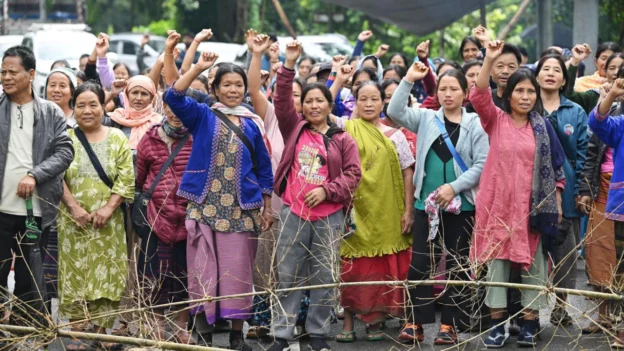
A socially responsible project is about much more than one-time compensation. For communities potentially affected by an intervention of this magnitude, the relevant considerations include continuity of livelihoods, access to forests and rivers, cultural identity, community institutions and opportunities for future generations. I feel that a long-term Community Development and Benefit-Sharing Framework could be a meaningful component of the DPR, developed in consultation with affected communities and consistent with applicable laws and rights.
It might encompass livelihood restoration, educational opportunities, healthcare, technical training, community infrastructure and transparent arrangements for sharing project-related economic benefits. The Adi community and other potentially affected groups could also have meaningful representation in monitoring mechanisms. An independently reviewed Community Benefit and Livelihood Account might provide a useful way of tracking commitments, actual expenditure, employment, livelihood restoration and unresolved grievances. The underlying principle is simple: communities should not remain merely recipients of decisions made elsewhere; their legitimate interests deserve continued recognition throughout the project’s operating life.
The digital life of a modern river project
Given the complexity of the Eastern Himalayan environment, I see considerable potential in integrating digital technologies with conventional infrastructure management. A future DPR could explore a connected system of rainfall stations, river gauges, reservoir sensors, dam-safety instrumentation, sediment observations, water-quality monitoring and downstream warning networks. Satellite observations, GIS, artificial intelligence and hydrological modelling could further support forecasting, asset management and risk communication.
I would particularly like to introduce the idea of a Siang River Operations and Intelligence Centre, developed through appropriate technical institutions and public agencies. Beyond powerhouse operations, such a facility could support flood preparedness, infrastructure safety, water accounting, environmental monitoring and communication with downstream communities.
The essential consideration, however, is that technology must strengthen accountable institutions. Even the most sophisticated forecasting system has limited value if warnings do not reach people in time or operational decisions are not communicated transparently.
Measuring success beyond megawatts
Perhaps the ultimate performance of SUMP deserves to be assessed through a broader lens, extending beyond installed capacity, annual electricity generation and construction progress. This calls for a more holistic approach, which could be conceptualised as a Whole-Life River Value Framework, encompassing five interconnected dimensions.
These would include infrastructure value, reflected in safety, reliability and structural performance; water-system value, measured through storage effectiveness, operational flexibility and downstream water security; and landscape value, determined by catchment health, sediment management and ecological performance. Equally significant are human value, encompassing employment, livelihood security, community development and equitable benefit-sharing, and legacy value, reflected in financial sustainability, institutional capacity, climate resilience and long-term maintenance. Together, these dimensions offer a more comprehensive measure of the project’s long-term contribution and sustainability.
These dimensions could eventually be translated into measurable and independently reviewed indicators, with appropriate baselines and realistic targets established through detailed investigation.
Designing a legacy, not merely a project
As of November 2026, SUMP remains at the PFR stage. Its future development will depend on technical feasibility and the applicable environmental, social and statutory processes. The DPR, therefore, is a possible subsequent stage, not an already completed or approved blueprint. If the project progresses, India has an opportunity to demonstrate a more comprehensive philosophy of water infrastructure development. The question is not simply whether we can construct a major dam in Eastern Himalayas, but whether we can create an institutionally sound, economically productive, ecologically responsible & socially trusted river system.
My experience across India’s small and large dams, watersheds, irrigation networks, forests and agricultural landscapes has reinforced one conviction: water infrastructure achieves its greatest value when the engineering structure and the surrounding human and natural systems succeed together.
The Siang could therefore become an opportunity to think of a major reservoir not merely as a powerhouse and storage facility, but as part of a long-term regional development asset. A dam is an engineering achievement. A well-managed river system is a civilisational achievement. In my considered view, that is the larger legacy towards which a DPR should aspire.